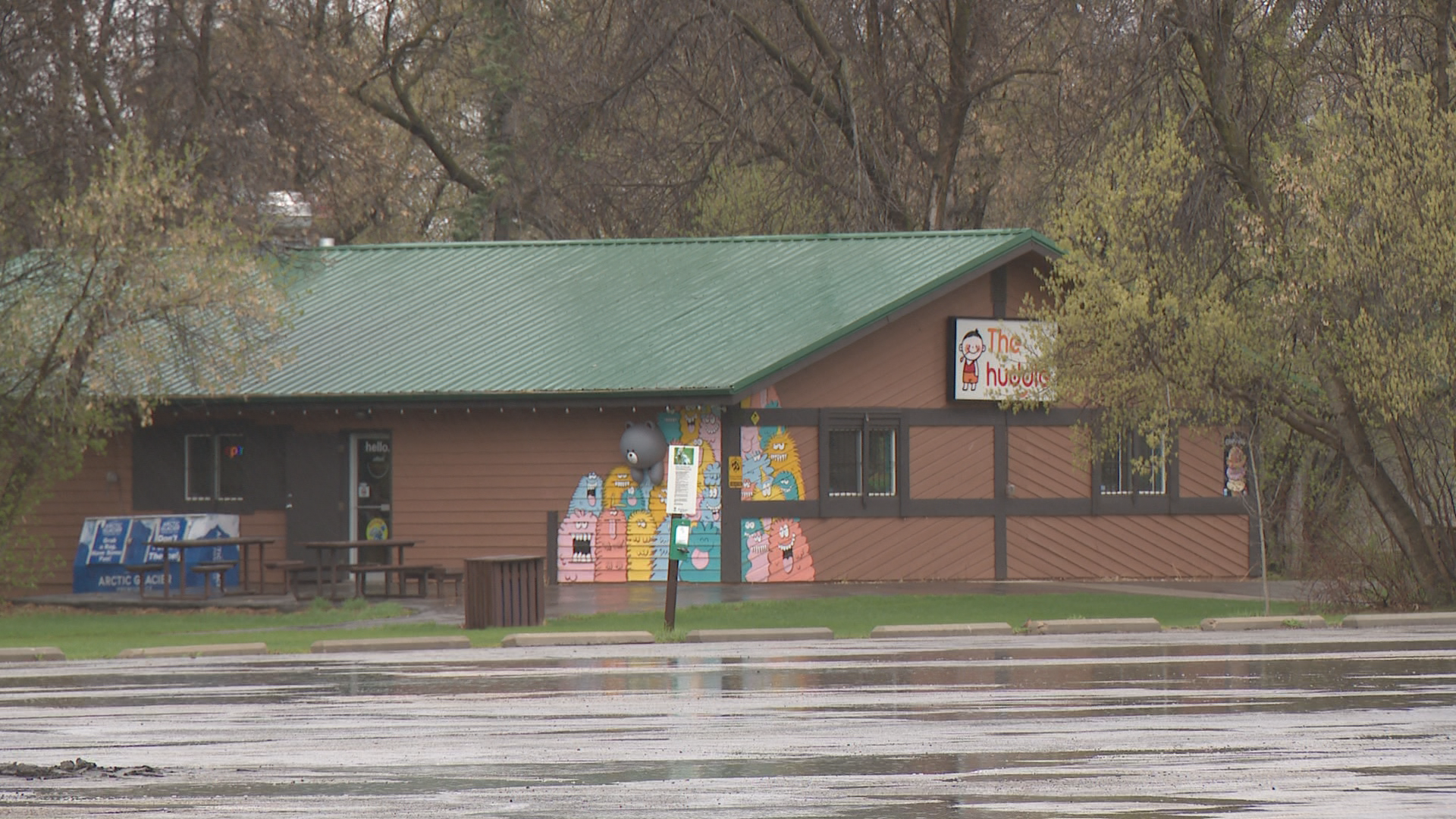
The Victoria Day long weekend serves as the traditional opening of the Canadian outdoor recreation season, forcing a highly compressed window of consumer activity that operates independently of real-time meteorological indicators. When regional forecasts predict sub-optimal conditions—specifically wet, cool weather in provinces like Saskatchewan—standard economic models suggest a sharp contraction in demand for outdoor leisure. Instead, historical data and behavioral patterns reveal a highly inelastic demand curve among core regional campers. Understanding this phenomenon requires looking past general enthusiasm to analyze the psychological sunk costs, infrastructure adaptations, and risk-mitigation strategies that drive individuals to execute outdoor excursions under adverse environmental conditions.
The Tri-Factor Framework of Inelastic Recreational Demand
The decision to proceed with outdoor recreation during a compromised shoulder-season weekend rests on three distinct operational pillars. Provincial park systems and private operators frequently miscalculate consumer intent by focusing solely on weather forecasts, ignoring the structural variables that lock consumers into specific behavioral paths.
                  ┌────────────────────────────────────────┐
                  │  TRI-FACTOR FRAMEWORK OF INELASTIC DEMAND│
                  └────────────────────────────────────────┘
                                       │
         ┌─────────────────────────────┼─────────────────────────────┐
         ▼                             ▼                             ▼
┌─────────────────┐           ┌─────────────────┐           ┌─────────────────┐
│ Sunk-Cost Anchor│           │ Resource Scarcity│           │ Gear/Capability │
│ (Reservations)  │           │ (Time-Window)   │           │ (Infrastructure)│
└─────────────────┘           └─────────────────┘           └─────────────────┘
The Non-Refundable Sunk-Cost Anchor
Provincial booking systems, such as the Saskatchewan Parks reservation platform, enforce rigid cancellation policies. Non-refundable reservation fees and tiered cancellation penalties create an immediate financial friction point. For a standard consumer, the immediate liquidation of a $30-to-$120 investment acts as a psychological anchor. The consumer converts a potential variable loss (the discomfort of cold weather) into a certain financial loss (the forfeited booking fee). To avoid the psychological pain of direct financial forfeiture, consumers choose to absorb the physical discomfort of the environment.
Temporal Resource Scarcity
The statutory long weekend represents a scarce temporal resource within the Canadian climate. Unlike flexible leisure activities, a three-day statutory holiday cannot be shifted horizontally across the calendar. The fixed nature of the Victoria Day weekend means that cancelling an excursion represents the total loss of a rare time-window rather than a simple postponement. Because the marginal utility of a statutory long weekend is exceptionally high, campers accept significantly higher physical risks and discomfort levels to extract value from that fixed timeframe.
Capital-Intense Infrastructure Overrides
The modern camping landscape has shifted from basic survival gear to highly advanced infrastructure. The proliferation of recreational vehicles (RVs), thermal-regulated tents, off-grid heating systems, and specialized technical apparel alters the consumer's internal cost-benefit equation.
- Thermal Retention Systems: Enclosed trailers and RVs decouple the sleeping environment from ambient outdoor temperatures.
- Microclimate Creation: Propane-powered fire tables, screened canopy tents with wind-breaking sidewalls, and portable heaters allow campers to construct a controlled microclimate within a hostile macroenvironment.
- Moisture Barriers: Advanced technical outerwear utilizes membrane laminates to maintain core body temperatures during prolonged precipitation events.
This capital investment lowers the operational barrier to entry, transforming what would have been a hazardous primitive camping trip into an insulated, highly manageable asset-utilization exercise.
The Risk-Mitigation Matrix: Operational Adaptations on the Ground
Executing a successful camping excursion during a wet, cool long weekend requires shifting from a passive leisure mindset to an active risk-mitigation framework. Experienced campers optimize their sites across three primary vectors: thermal management, moisture control, and caloric intake.
Thermal Management Mechanics
Ambient temperature drops during a prairie spring are exacerbated by wind chill and moisture. The human body loses heat up to 25 times faster when wet due to the thermal conductivity of water. Campers must manage their personal microclimate using a strict layering system designed to prevent moisture accumulation from sweat while blocking external cold.
$$Q = \frac{k \cdot A \cdot (T_{core} - T_{ambient})}{L}$$
Where:
- $Q$ is the rate of heat loss.
- $k$ is the thermal conductivity of the clothing layer.
- $A$ is the surface area of the body.
- $T_{core} - T_{ambient}$ is the temperature differential.
- $L$ is the thickness of the insulation layer.
To minimize $Q$, campers must select materials with an exceptionally low thermal conductivity ($k$), such as merino wool or synthetic hollow-fiber insulation, while maximizing layer thickness ($L$) and ensuring the system remains entirely dry to prevent $k$ from spiking due to the presence of water.
Moisture Isolation Engineering
Site selection and tent orientation dictate the success of moisture mitigation. Setting up camp in low-lying areas creates a high vulnerability to pooling surface water, whereas elevated, well-drained terrain utilizes natural gravity to divert runoff.
                       [Precipitation]
                              │
                              ▼
                 ┌─────────────────────────┐
                 │    Elevated Terrain     │
                 └─────────────────────────┘
                   /                     \
                  /                       \
                 ▼                         ▼
   ┌──────────────────────────┐       ┌──────────────────────────┐
   │ Windward Side: Barrier   │       │ Leeward Side: Living     │
   │ (Tightly Guyed Fly)      │       │ Zone (Ventilation Open)  │
   └──────────────────────────┘       └──────────────────────────┘
The windward side of the shelter must be sealed completely using a tightly guyed rainfly to deflect incoming rain, while the leeward side must maintain adequate ventilation to prevent interior condensation. When warm, moisture-laden air exhaled by occupants contacts the cold interior fabric of a sealed tent, it condenses back into liquid water, compromising the dry status of sleeping systems.
Systemic Pressures on Provincial Infrastructure
The persistence of campers during adverse weather conditions introduces specific operational challenges for park management teams, conservation officers, and local supply chains. While high attendance maintains revenue targets, it strains natural and physical assets under delicate seasonal transitions.
Ecological Vulnerability of Trail Systems
During the early spring thaw, trail beds are highly saturated with moisture. The structural integrity of the soil is compromised, making it exceptionally vulnerable to compaction and erosion.
When a high volume of hikers traverses muddy paths, it causes deep rutting. This forces subsequent trail users to walk along the outer edges of the path, a behavior known as trail widening. This process destroys peripheral vegetation, disrupts local root systems, and permanently alters the hydrological drainage patterns of the area.
[High Saturated Foot Traffic] ──► [Deep Center Rutting] ──► [Trail Widening] ──► [Peripheral Vegetation Destruction]
Resource Management and Emergency Response
Cold and wet weather increases the statistical probability of localized hypothermia cases, vehicle strandings on unpaved access roads, and equipment failures. Park ranger services must reallocate staff from standard maintenance and educational programming to active monitoring and emergency response standby. The operational cost per visitor increases when weather conditions degrade, squeezing the net profitability of the long weekend for the managing agency.
Supply Chain Dynamics and Micro-Economic Adjustments
The shift toward cold-weather camping triggers rapid, hyper-local reallocations of capital within supply chains adjacent to provincial parks. Standard long-weekend purchasing habits—which typically favor ice, charcoal, light apparel, and fresh grilling items—pivot sharply toward survival and comfort commodities.
Fuel and Energy Consumption Surges
Propane, dry firewood, and liquid camp fuels see immediate demand spikes. Retailers located along major transit corridors leading to recreational areas must adjust inventory levels well ahead of the weekend based on early meteorological shifts. A failure to secure adequate dry firewood supplies can completely halt local secondary consumer spending, as campers shorten their trips if they cannot maintain external heat sources.
High-Calorie, Low-Prep Food Logistics
The physiological demand for calories increases significantly in cold environments to fuel shivering and maintain core homeostatic temperatures. Campers alter their food selection strategies, prioritizing shelf-stable, high-fat, high-carbohydrate items that require minimal preparation time. Complex cooking setups become unviable during heavy precipitation, driving up the consumption of freeze-dried meals, dense proteins, and easily consumable carbohydrates.
Operational Limitations of the Inelastic Model
While the tri-factor framework explains why core enthusiasts proceed with outdoor excursions despite poor forecasts, this model contains definite operational thresholds. Understanding these boundaries helps park operators and outdoor brands predict exactly when a consumer will transition from an inelastic state to a total cancellation.
The Thermal Floor Collapse
There is a definitive temperature floor below which even advanced infrastructure fails to provide a viable leisure experience for the general public. When forecasts drop below 0°C (32°F) concurrently with sustained winds exceeding 40 km/h, the risk of frozen plumbing systems in RVs and catastrophic tent failures rises exponentially. At this threshold, the financial cost of potential equipment damage overrides the sunk-cost anchor of the booking fee, triggering a mass wave of cancellations.
The Duration-Dependent Attrition Rate
Inelastic demand degrades progressively over the course of a multi-day event if weather conditions remain consistently poor. While consumers will eagerly depart their urban centers on Friday afternoon under a rain forecast, sustained dampness over a 48-hour period breaks down physical and psychological resilience.
Equipment saturates, firewood reserves deplete, and internal battery systems draw down. This creates a distinct attrition curve, where park occupancy drops sharply by Sunday morning as consumers choose to forfeit the final 24 hours of the long weekend to seek climate-controlled environments.
Strategic Playbook for Park Operators and Outdoor Brands
To capitalize on inelastic camper behavior while minimizing ecological and structural damage, regional stakeholders must deploy specific operational adjustments during compromised shoulder-season events.
- Implement Dynamic Trail Management: Rather than leaving trail systems completely open to degradation, park authorities should implement temporary, weather-triggered closures on high-risk, low-drainage clay routes, routing foot traffic toward elevated gravel loops.
- Deploy Localized Infrastructure Support: Position mobile firewood and propane distribution hubs directly at park entry check-stations, removing the friction of off-site sourcing and securing high-margin retail revenue within the provincial park system.
- Execute Targeted Product Positioning: Outdoor retailers along transit corridors must systematically adjust front-of-store product displays 72 hours prior to long weekends, replacing summer leisure gear with high-efficiency windbreaks, specialized gear-drying sealants, and premium thermal baselayers.