The coffee at the diner counter is lukewarm, tasting faintly of the brass urn it has lived in since six in the morning. Outside, the autumn wind strips the maples bare along the highway, driving dry red leaves against the cold asphalt. Across from me, a mechanic named Tom wipes grease from his knuckles with a rag that has seen better decades, staring at a gas bill that looks like a mortgage payment.
He is not thinking about politics in the abstract. He is thinking about how his compressor runs twenty hours a day and how the meter outside keeps spinning faster than the world around it.
This is where every grand political debate actually begins. Not in the polished mahogany chambers of state capitols, nor under the blinding glare of television studio lights where candidates posture for thirty-second soundbites, but right here. At the intersection of a frozen paycheck and a burning utility bill.
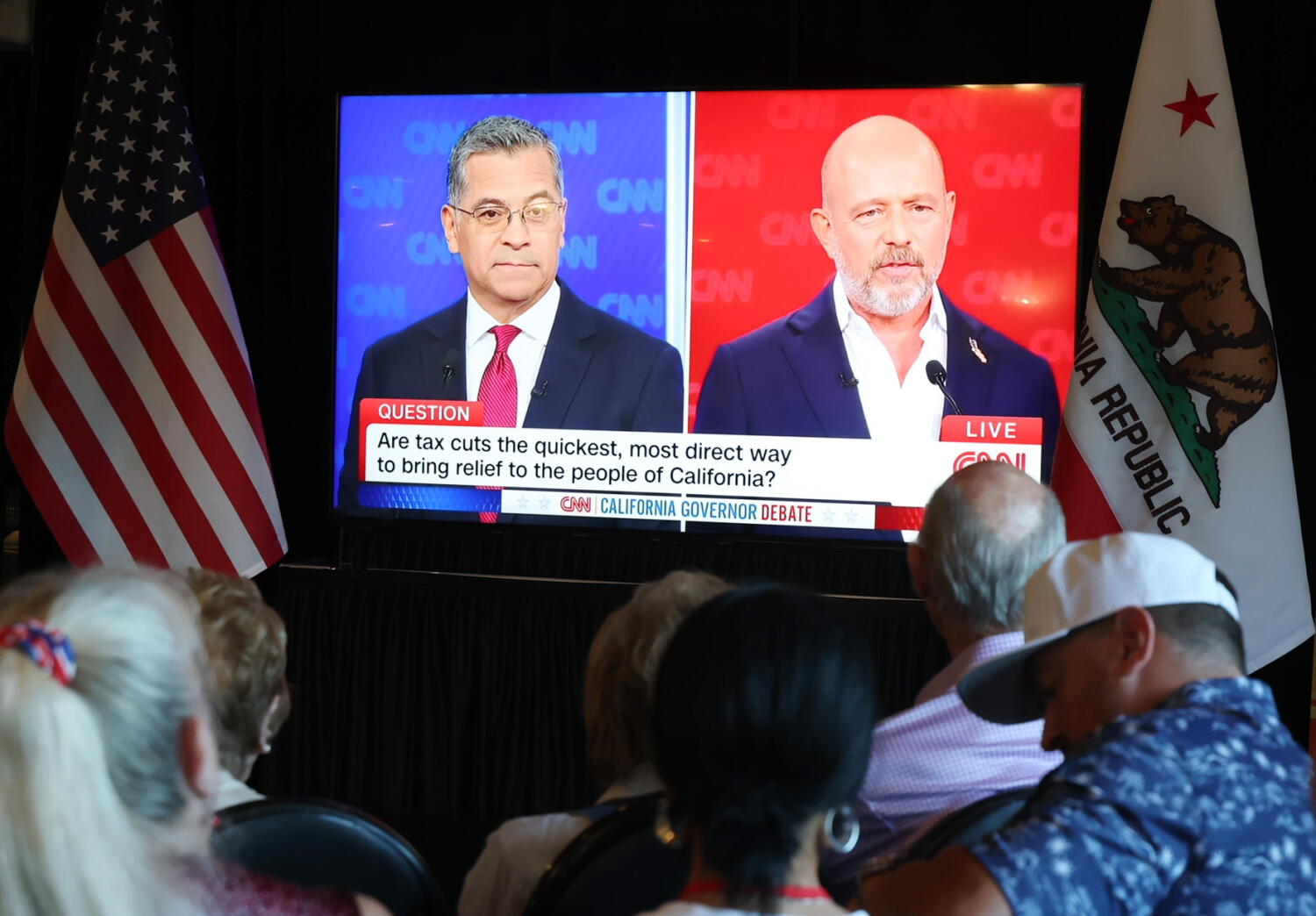
When the candidates squared off behind their podiums under the heavy autumn lights, they spoke of grand visions, economic engines, and the shifting winds of national power. Yet beneath the rehearsed talking points and the sharp elbows of a bitter governor's race, three ghosts haunted the room. Gas prices that squeeze families until they gasp. Artificial intelligence data centers descending on local grids like thirsty giants. And the long, heavy shadow of a former president whose name still pulls every needle on the political compass, regardless of whether he is on the local ballot.
Consider the first ghost. Gasoline is the financial oxygen of ordinary life here. You cannot drive your kids to school, reach a construction site thirty miles out of town, or stock grocery shelves without burning it. When the price at the pump creeps upward, it acts as a silent tax levied on every single movement.
During the debate, the candidates sparred over energy independence, pipeline permits, and state taxes. One side pointed fingers at regulatory overreach, arguing that every added restriction chokes the local economy and drives fuel costs skyward. The other countered with the urgent need for transition, pointing toward cleaner futures and relief packages meant to bridge the gap.
(As a hypothetical scenario to illustrate the math: imagine a delivery driver named Sarah who logs six hundred miles a week across the state. A fifty-cent swing in a gallon of gas is not a political talking point for her; it is eighty dollars a week vanishing from her grocery budget. Multiply Sarah by a million, and you begin to understand why the room grew tense when fuel prices took center stage.)
The arguments sound sophisticated on television, but down here on the ground, the mechanics and the teachers and the truck drivers feel trapped between two impossible choices. They are told they must pay for today while funding a tomorrow they cannot yet afford.
Then came the second ghost, hovering quietly in the corner of the debate hall, invisible to most but terrifyingly real to anyone paying attention to the local power grid: the data centers.
We are building a new digital cathedral across the landscape. We want our artificial intelligence queries answered in milliseconds, our video streams crystal clear, our financial transactions settled instantly. But these silicon brains do not run on air. They run on raw, unyielding electricity. Millions of megawatts of it, humming night and day in massive warehouses cooled by industrial fans that roar like jet engines.
In communities across the state, utility companies are quietly cutting deals to power these massive server farms. On paper, it sounds like progress. It brings temporary construction jobs and a burst of municipal tax revenue. But ask the people living down the road what happens to their local substations, and the story changes.
During the debate, the candidates stumbled awkwardly around this modern paradox. How do you welcome the future of technology without burning out the lights for the people who already live here? When a single data center can consume as much electricity as a small city, the math gets brutal. Power grids strain. Wholesale prices tick upward. And suddenly, Tom the mechanic is subsidizing the training wheels of machine learning algorithms with the sweat of his labor.
It is a profound conflict between the digital aspirations of global corporations and the physical survival of local residents. The candidates had plenty of slogans for the tech boom, but very few answers for the person whose basement flooded because the local grid upgrade was delayed to feed a server farm twenty miles away.
And finally, overarching everything, stretching long and dark across the floorboards of the debate stage, was the shadow.
You could feel the former president's presence in every question about federal mandates, in every barb traded over immigration, in every defense or condemnation of populist fury. Local elections used to be about potholes, school boards, and county zoning. Now, they are proxy wars. Every candidate is forced to position themselves not just relative to their opponent, but relative to a polarizing national monolith.
This creates a strange optical illusion. Voters tune into a debate to figure out who will fix their roads, lower their utility bills, and manage their schools. Instead, they get a referendum on national identity.
When national grievances crowd out local realities, nobody wins except the political consultants. The candidates spent crucial minutes trying to prove their loyalty or opposition to a figure hundreds of miles away in Mar-a-Lago, while the audience out in the districts sat wondering if anyone was actually listening to their immediate, grinding concerns.
This is the exhaustion of modern civic life. We are living through a compression of scales where every local problem is magnified into a national existential threat, and every national argument is fought out over the kitchen tables of regular towns.
To walk out of that debate hall and back into the cool night air is to feel the disconnect sharply. The studio lights are off. The cameras have been packed into black flight cases and loaded onto trucks. The candidates have retired to private dinners with donors, analyzing focus group data to see which soundbite played best in the suburbs.
Meanwhile, Tom locks up his garage, counts the cash in the register, and wonders how he will handle next month's utility bill if the grid keeps bending under the weight of progress he never asked for.
The race is not really about the talking points we heard on television. It is a referendum on whether the machinery of government can still feel human. Can it see the person behind the gas receipt? Can it protect the local grid from being swallowed by invisible algorithms? Can it look past the long shadow of national theater and notice the actual ground we are standing on?
The maples keep shedding their leaves in the dark. The highway stretches out, silent and heavy under the headlights. The answers are not coming from the stage. They are waiting in the quiet spaces where people live, work, and bear the cost of what comes next.