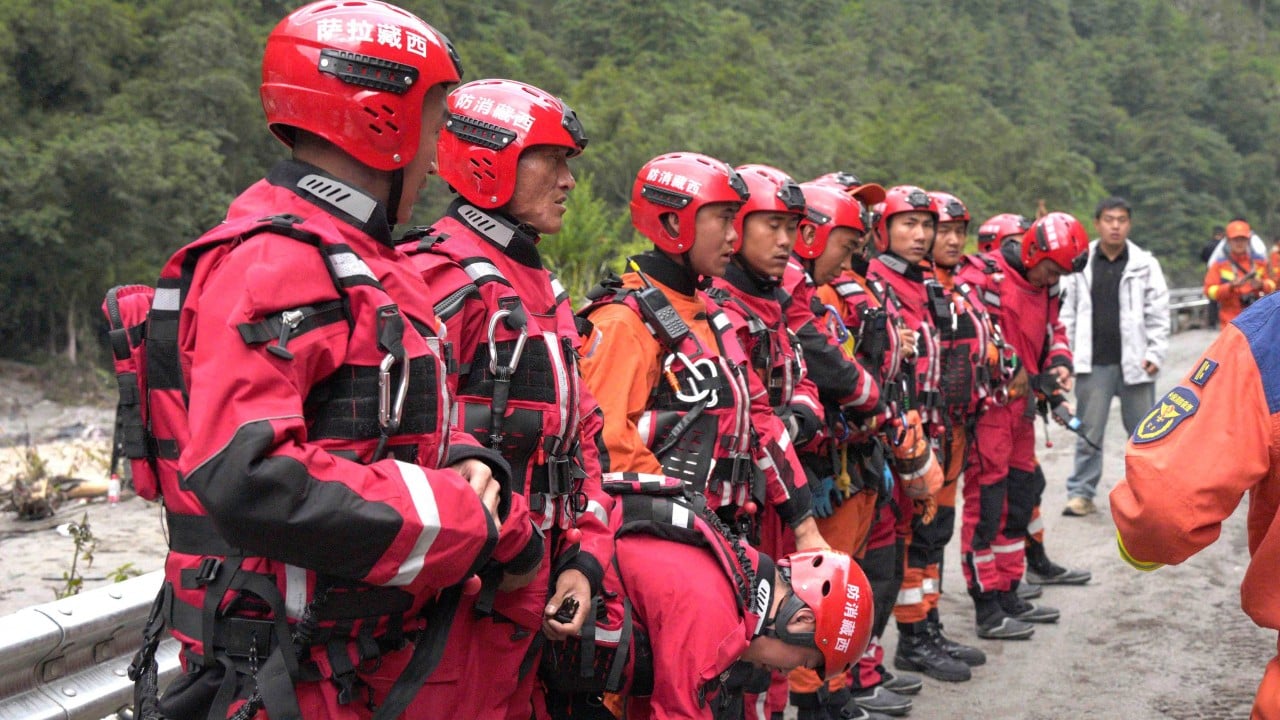
Geographic fragility in mountainous terrain dictates that disaster response is never purely humanitarian; it is an exercise in resource logistics, supply chain routing under duress, and statecraft. When a high-magnitude landslide strikes Nepal, the immediate casualty count and structural damage trigger a predictable cascade of international pledges, most notably from strategic neighbors like China. Yet, standard news coverage routinely treats emergency aid as a static monetary figure or a shipment of supplies, entirely omitting the operational friction of high-altitude deployment. Examining foreign disaster response requires dissecting the mechanics of international aid delivery, the bottlenecks imposed by rugged topography, and the geopolitical calculus governing bilateral relief operations.
The Structural Mechanics of Himalayan Disasters You might also find this related article insightful: The Sailor King Who Stood Guard Over Time.
Geological instability along the Himalayan arc stems from active tectonic convergence between the Indian and Eurasian plates, amplified by intense seasonal monsoon precipitation. When saturation thresholds are breached, massive slope failures occur, transforming entire hillsides into kinetic debris flows that routinely obliterate primary transport corridors.
The primary operational constraint in Nepal is not the availability of international capital or pledged relief goods, but the distribution bottleneck. The Arniko Highway and the Rasuwagadhi corridor serve as the primary economic and logistical arteries connecting China and Nepal. Landslides routinely sever these routes, isolating epicenters of damage from heavy machinery required for clearance. As discussed in recent articles by BBC News, the effects are widespread.
When external actors pledge emergency assistance, the operational sequence must solve three distinct logistical tiers:
- Airlift and Tarmac Capacity: Limited heavy-lift helicopter availability within the region restricts the immediate deployment of rescue teams and medical units to landlocked, high-altitude zones. Tribhuvan International Airport in Kathmandu acts as a single point of failure for international cargo, creating customs and sorting bottlenecks before secondary distribution.
- Secondary Transshipment: Once goods reach regional hubs, road washouts necessitate manual offloading or specialized all-terrain transport. International relief items must transition from heavy freight trucks to localized pack animals or light utility vehicles, drastically reducing the volume-to-time efficiency ratio.
- Last-Mile Coordination: Local municipal authorities, frequently operating under severed communication lines, struggle to aggregate accurate needs assessments. This creates a supply-demand mismatch where high-volume shipments of generic items arrive while specialized medical equipment or potable water purification systems remain scarce at the local level.
Bilateral Relief as an Instrument of Regional Strategy
Disaster response deployed by major powers into buffer states operates within an established framework of regional influence. Pledging urgent emergency aid serves immediate humanitarian imperatives while simultaneously reinforcing diplomatic positioning.
China's rapid response following major geological events in Nepal reflects a calculated interest in border stability and trade corridor restoration. The North-South economic corridor envisioned under broader regional frameworks depends entirely on uninterrupted transit routes through the Himalayas. Consequently, restoring functionality to these corridors is a mutual economic imperative.
Aid delivery mechanisms typically follow a dual-track approach:
- State-to-State Financial Transfers: Direct budgetary support or central bank allocations designed to stabilize immediate macroeconomic shocks caused by infrastructure paralysis.
- Direct Material Provision: Deployment of prefabricated shelters, emergency food rations, dewatering pumps, and heavy excavation equipment. This track prioritizes speed and visible operational impact over monetary transfers.
The efficacy of material aid depends on standardization. When international aid agencies dispatch equipment that is incompatible with local electrical grids, municipal vehicle parts, or local fuel specifications, the net utility of the transfer drops toward zero. Effective intervention requires prior alignment of logistical protocols, an area where bilateral coordination historically outperforms ad-hoc multilateral responses.
The Economic Cost Function of Infrastructure Paralysis
Every day a major trade artery remains blocked by a landslide introduces quantifiable economic friction. For Nepal, prolonged isolation of northern border ports translates into immediate revenue contraction for customs collection, supply shortages for construction materials, and inflationary spikes in basic foodstuffs.
The economic recovery curve following a mass-wasting disaster is defined by the speed of debris clearance and structural shoring. International assistance that bypasses the customs bottleneck through direct military or specialized engineering corps deployment yields a steeper recovery trajectory than financial aid alone. Heavy engineering assets capable of stabilizing compromised slopes prevent secondary failures triggered by aftershocks or lingering monsoon rains.
Operational Priorities for High-Altitude Relief Operations
- Deploy modular, containerized water filtration units directly to municipal distribution points to prevent secondary public health crises driven by contaminated water tables.
- Prioritize heavy-duty tracked excavators and rock-splitting explosives over consumer goods in initial airlifts to accelerate the reopening of primary transport arteries.
- Establish decentralized regional staging depots outside Kathmandu to decouple secondary distribution from the capital's single-airport bottleneck.
- Implement pre-cleared customs protocols for certified international emergency response teams to eliminate bureaucratic clearance delays during the critical seventy-two-hour rescue window.


