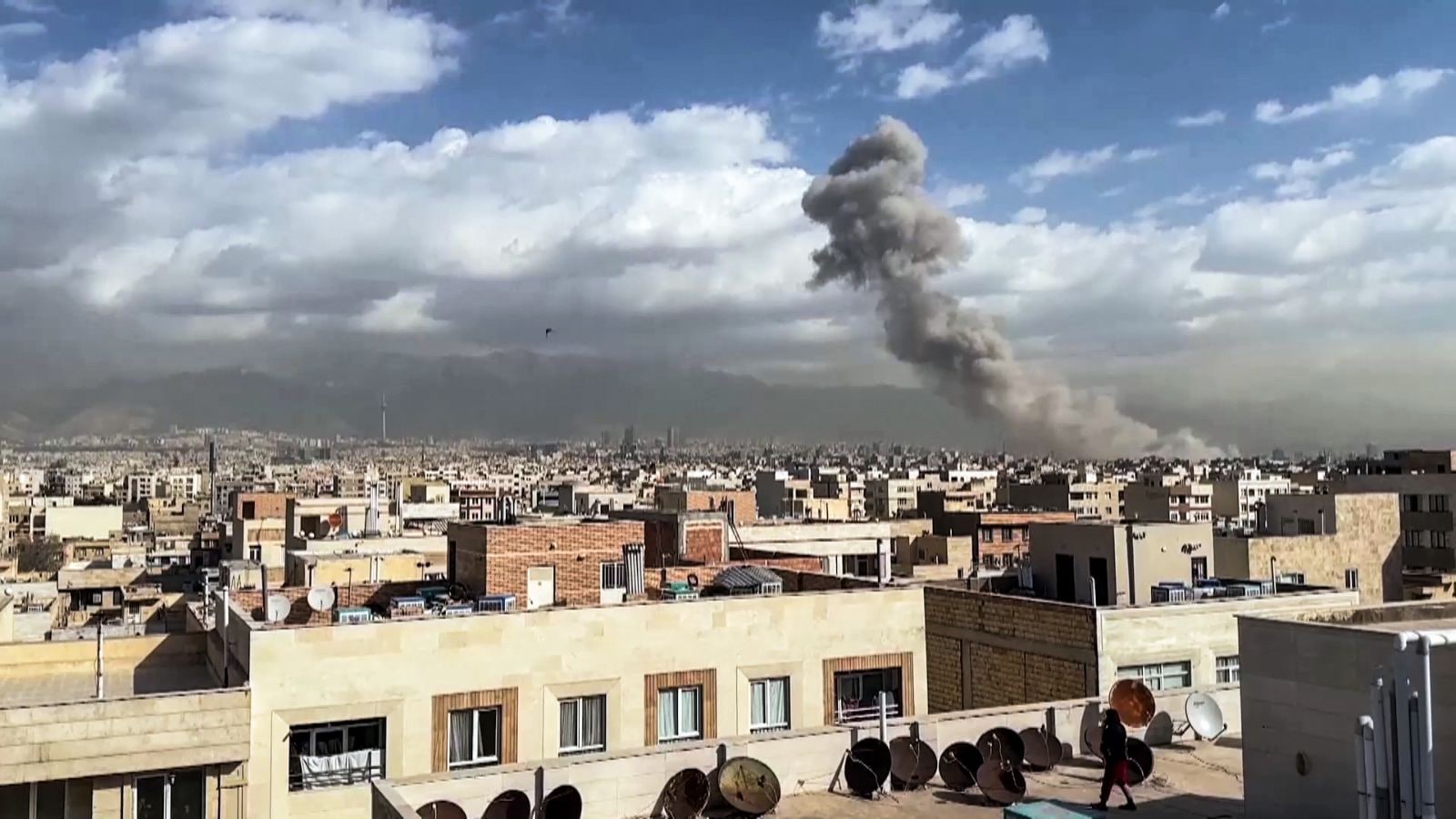
Aviation analysts love a good map of empty skies. When a missile flies over Tehran or a drone hits a refinery, the flight trackers light up with rerouted lines and sudden voids. The headlines scream about "chaos" and Indigo tells you to "be prepared" for delays.
This is lazy reporting. It treats geography as if it were still 1945.
The empty airspace over Iran and Israel isn't the story. The story is the utter failure of airline risk management to price in geopolitical volatility before the first siren sounds. If your flight is canceled because of a "sudden" escalation in the Middle East, you aren't a victim of war. You are a victim of an airline’s inability to hedge against the obvious.
The Myth of the Surprise Conflict
The competitor narrative suggests that airlines are reacting to an "unforeseen" shift in security. This is nonsense. The tension between Tehran and Tel Aviv has been the baseline of global logistics for decades.
Airlines like Indigo or Lufthansa act shocked when a NOTAM (Notice to Air Missions) drops, but their operational models should have already accounted for the "Ghost Route" scenario. When an airline tells you to "be prepared," what they are really saying is: "We didn't spend the money on fuel reserves or standby crew to handle a 90-minute detour, so you're going to sit in the terminal while we figure it out."
True industry insiders know that the real cost isn't the fuel. It's the network fragility.
Modern aviation operates on a "Just-in-Time" arrival system. Every plane is a domino. When you pull Iran out of the map, you aren't just adding distance; you are shattering a synchronized global dance. The "empty airspace" is a visual symptom of a deeper, systemic refusal to build slack into the system.
The Geometry of Fear
Let’s talk about the math they ignore.
The Great Circle route—the shortest distance between two points on a sphere—is a theoretical ideal. In reality, we fly through a jagged mess of political ego and toll booths.
When the skies over Iran go dark, planes are pushed into narrow corridors over Iraq or forced into massive loops around the Arabian Peninsula. This creates "bottleneck turbulence." It isn't weather; it’s a traffic jam at 35,000 feet.
- Fuel Burn Paradox: Flying longer routes actually increases the carbon footprint of the "green" airlines more than a year of short-haul flights. Yet, they mask this under "safety protocols."
- Duty Time Expirations: The real reason your flight gets canceled during a conflict isn't because the plane can't fly. It's because the detour adds two hours to a twelve-hour flight, and the pilots "time out" legally.
If an airline were actually "prepared," they would have relief crews staged at secondary hubs like Istanbul or Dubai. They don't. It’s cheaper to let you sleep on a plastic chair in Mumbai than it is to pay for a standby captain.
Stop Asking if it’s Safe
The most common question on travel forums right now is: "Is it safe to fly near the Middle East?"
It’s the wrong question.
Safety in commercial aviation is binary. If it weren't safe, the insurance companies—who actually run this industry—wouldn't let the hull leave the tarmac. The question you should be asking is: "Is this airline financially stable enough to survive a week of 20% higher fuel costs?"
When airspace closes, the profit margins of low-cost carriers (LCCs) evaporate. A 500-mile detour on a flight from Delhi to London can turn a profitable route into a massive liability.
"I’ve seen carriers burn through their entire quarterly profit margin in forty-eight hours of rerouting because they didn't have fuel hedging contracts that accounted for 'Regional Kinetic Events.'"
If you see an airline asking customers to "be prepared," check their balance sheet. They are passing the volatility onto your schedule because they can't afford to absorb it.
The Insurance Shadow Government
The news focuses on the military hardware. The real power is in the London insurance market.
War risk insurance premiums can spike 1,000% in an afternoon. When airspace "empties," it’s often not because of a direct threat to a civilian jet. It’s because the cost of insuring that hull for those twenty minutes of transit has become more expensive than the revenue from the passengers on board.
We are watching a real-time auction of risk.
- Level 1: Normal operations. High volume, low margin.
- Level 2: Heightened tension. Premiums rise; some carriers divert to save on "stress" costs.
- Level 3: Kinetic action. The sky clears because the underwriters pulled the plug, not because the missiles are seeking out Boeing 787s.
The Diversion Delusion
The "empty sky" photos are used to justify price surges. You’ll hear that tickets are more expensive because "the world is a dangerous place."
Actually, tickets are more expensive because the airline industry has spent ten years optimizing for "efficiency" while stripping away "resiliency." They have no Plan B. Their Plan B is you, the passenger, waiting in an email queue for a voucher that expires in six months.
We need to stop treating these events as "Black Swans." A conflict in the Middle East affecting flight paths is a "Grey Rhino"—a massive, obvious threat that we choose to ignore until it starts charging.
How to Actually Navigate This
If you are a traveler or a logistics manager, ignore the "Stay Tuned" alerts from the airlines. They are reactive. You need to be predictive.
- Avoid Hub-and-Spoke Reliance: If your route requires a transit through a "choke point" hub during a period of empty airspace, you are gambling. Direct flights, even at a premium, are the only way to bypass the duty-time-expiration trap.
- Watch the Cargo: Keep an eye on air freight rates. Cargo moves before people. If the cost to ship a pallet from Shanghai to Frankfurt via the southern route spikes, expect passenger cancellations within 72 hours.
- The 3-Hour Rule: If your reroute adds more than 180 minutes to a long-haul flight, the flight is functionally dead. The crew logistics, fuel weight vs. passenger load, and connecting flight arrivals will fall apart. Don't wait for the notification. Rebook yourself on a different meridian.
The empty sky over Tehran isn't a tragedy for aviation; it's a diagnostic report. It shows us exactly which airlines are built on a house of cards and which ones actually understand the geography they claim to conquer.
Stop looking at the maps and start looking at the motives. The airspace isn't empty because of the missiles. It's empty because the industry's business model can't handle the truth of a volatile world.
Demand better than a "be prepared" tweet. Demand an airline that built its schedule for the world as it is, not as they wish it to be.