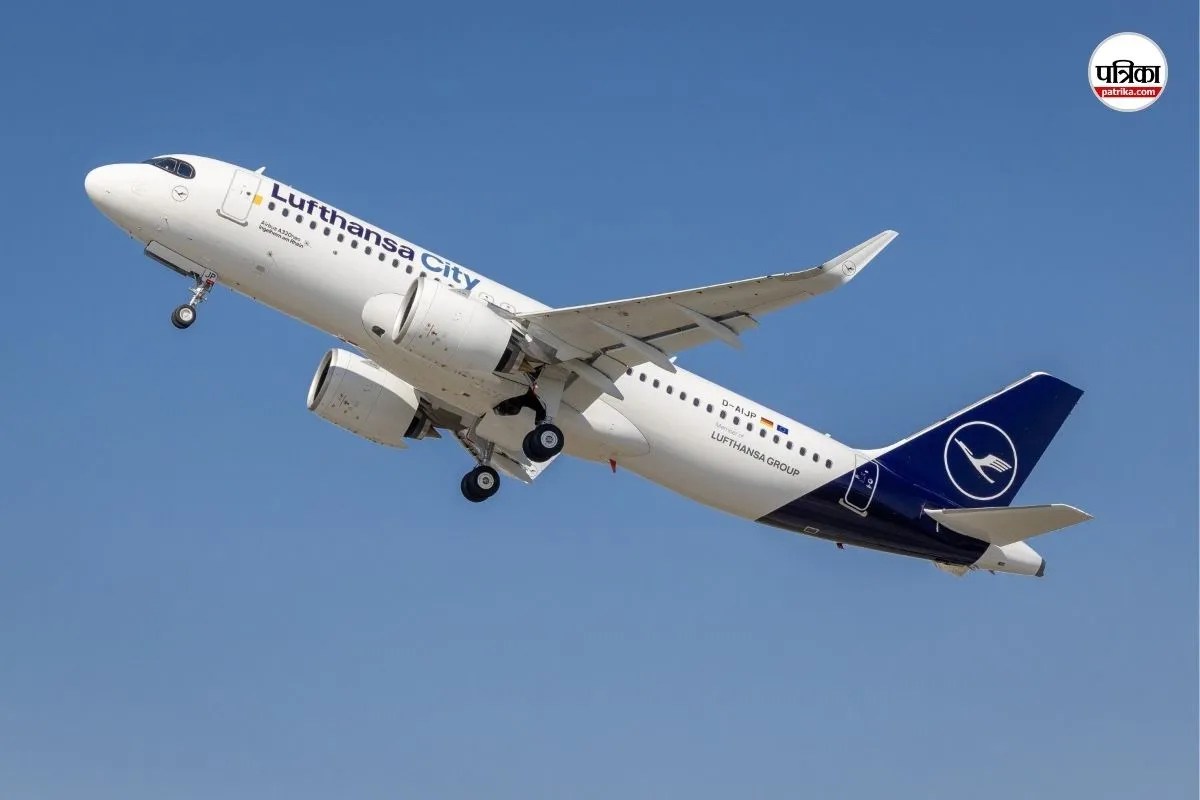
The silence of a grounded fleet has a specific, heavy frequency. It is not the peaceful silence of a library or a sleeping house. It is the ringing, pressurized quiet of a machine that has suddenly forgotten how to breathe.
At Frankfurt Airport, the marble floors usually hum with the rhythmic clicking of thousands of rolling suitcases—a mechanical heartbeat that signals the world is in motion. But when Lufthansa made the decision to erase 20,000 flights from the schedule, that heartbeat faltered. It wasn't just a logistical adjustment. It was a mass vanishing. Expanding on this idea, you can find more in: Why Benin Does Not Have a Coral Reef and Why the Conservation Hype is Dangerous.
Twenty thousand flights represent more than just fuel saved or carbon credits calculated. They represent millions of human intersections that simply ceased to exist.
The Arithmetic of an Empty Gate
Lufthansa didn't wake up one morning and decide to abandon its passengers. The math was cold, calculated, and, from a corporate perspective, entirely logical. Fuel prices were no longer a line item; they were a predator. Observers at Condé Nast Traveler have also weighed in on this trend.
Imagine you are running a marathon. You’ve trained for years. But halfway through, someone tells you that every breath you take will now cost you five dollars. You wouldn't keep sprinting. You would slow down, calculate exactly how many breaths you could afford to reach the finish line, or you would simply sit down on the curb.
Lufthansa sat on the curb.
By cutting these flights, the airline wasn't just saving kerosene. They were attempting to preempt a total systemic collapse. The aviation industry is a delicate spiderweb of staffing, maintenance, and razor-thin margins. When fuel costs spiked, the web began to tear. The cancellation of 20,000 flights was a desperate attempt to stitch the remaining pieces together before the whole thing fell into the dirt.
The Faces in the Departure Lounge
Statistical data rarely captures the smell of stale coffee and the sound of a child crying in Terminal 1.
Take a hypothetical passenger—let’s call her Sarah. Sarah isn't a data point. She is a surgical consultant who hasn't seen her parents in three years. She is standing at a kiosk that refuses to scan her boarding pass. The screen flashes a generic error message, a digital shrug of the shoulders.
Behind her stands Arjun. He’s a student heading to a final interview for a dream job in London. His entire future is tied to a metal tube that is currently sitting in a hangar because it’s too expensive to move.
For Sarah and Arjun, the "optimization of flight schedules" isn't a business triumph. It is a betrayal. They are the collateral damage of a world that grew too used to cheap motion. We spent decades believing that the sky was a permanent highway, as reliable as the ground beneath our feet. We forgot that flight is a miracle sustained by fragile economics.
The Invisible Cost of Stability
The airline’s defense is anchored in the concept of "operational stability." In the boardroom, this sounds noble. It suggests a captain steering a ship through a storm by throwing heavy cargo overboard to keep the vessel afloat.
But when you are the cargo, the view is different.
The aviation industry is currently caught in a pincer movement. On one side, there is the undeniable reality of a labor shortage. Thousands of pilots and ground crew members left the industry during the global lockdowns, and they didn't all come back. On the other side, the cost of the very energy required to defy gravity has skyrocketed.
When Lufthansa cancels a flight months in advance, they are trying to be "responsible." They are telling the public, "We would rather tell you now than have you stranded at the gate five minutes before takeoff."
Yet, the result is a landscape of ghost itineraries.
The ripple effect moves through the economy like a slow-motion shockwave. It isn't just the airline ticket. It’s the hotel room in Munich that stays empty. It’s the rental car that sits in the lot. It’s the business deal that happens over a glitchy Zoom call instead of a handshake. We are relearning the price of distance.
The Architecture of Frustration
If you’ve ever spent twelve hours in an airport chair designed to be just uncomfortable enough to prevent deep sleep, you know the specific madness of the stranded traveler.
The airport becomes a sovereign state. The currency is vouchers for overpriced sandwiches. The law is dictated by a flickering "Delayed" or "Cancelled" sign.
There is a psychological toll to this uncertainty. When an airline removes 20,000 flights, they are essentially withdrawing a promise. The social contract of travel—that your money guarantees your arrival—is being renegotiated in real-time.
We are entering an era of "Selective Mobility." Travel is becoming a luxury again, not because of the ticket price alone, but because of the emotional and temporal risk involved. You don't just buy a ticket; you buy a gamble.
Why the Fuel Argument is a Double-Edged Sword
Lufthansa’s pivot toward fuel conservation is often framed as an environmental necessity disguised as a business hardship. It’s a convenient narrative. If the flights don't happen, the carbon isn't burned.
But let’s be honest: this wasn't an environmental crusade. It was a balance sheet survival tactic.
The irony is that as airlines cut capacity to save money, the remaining seats become exponentially more expensive. The people who must travel—the Sarahs and Arjuns of the world—end up paying more for a service that is less reliable.
We are witnessing the thinning of the global nervous system. Each cancelled flight is a severed nerve.
The Terminal at Midnight
There is a moment at a major international hub like Frankfurt where the sun sets, and the blue light of the terminal windows meets the dark tarmac outside.
In the old days, you could see a constant parade of lights—descending stars bringing people home. Now, there are gaps. Long, dark stretches where there used to be noise.
The 20,000 cancelled flights are more than a headline about a German carrier. They are a warning. Our ability to move across the planet is not a guaranteed right; it is a complex, expensive, and increasingly volatile privilege.
As you walk through the terminal today, you might see a sea of people sleeping on their luggage. They aren't just waiting for a plane. They are waiting for a world that works the way it used to. They are waiting for the math to finally favor the human again.
The planes remain on the ground, silver ghosts in the moonlight, perfectly preserved, perfectly efficient, and utterly useless to the woman in Terminal 1 who just wanted to say goodbye to her father.