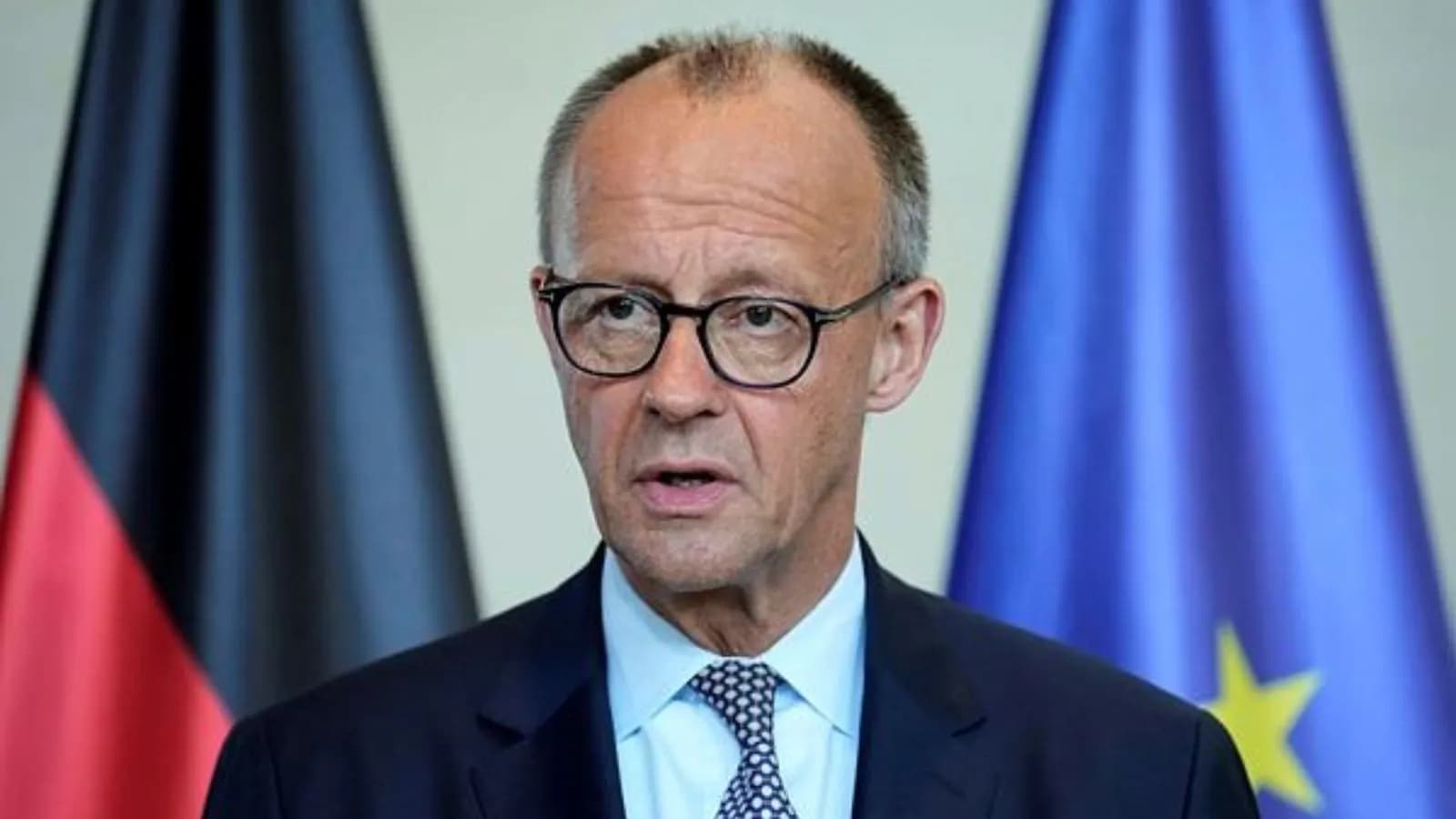
The post-war era is officially over. When German Chancellor Friedrich Merz recently signaled that the rules-based international order has effectively dissolved, he wasn’t just making a diplomatic observation. He was acknowledging a tectonic shift that leaves Europe—and specifically Germany—scrambling for a survival strategy in a world where the United States is no longer the predictable guarantor of stability. The divide between Berlin and Washington is no longer a matter of policy disagreements or personality clashes; it is a structural separation driven by competing economic survival instincts.
For decades, the transatlantic relationship functioned on a simple premise. The U.S. provided the security umbrella and the consumer market, while Germany provided the industrial precision and high-end exports that fueled the European engine. That machinery has broken. With Washington pivoting toward aggressive protectionism and Berlin facing an existential energy and manufacturing crisis, the "special relationship" is being replaced by a transactional coldness. Merz is signaling to the German industrial base that the old safety nets have been shredded.
The Death of the Rules Based Illusion
We have spent thirty years pretending that global trade was governed by a neutral set of laws. That was always a convenient fiction, but it was a fiction that worked as long as the dominant powers found it profitable. Today, the U.S. has decided that the World Trade Organization and similar frameworks are no longer serving its national interest. By prioritizing domestic industrial policy over global cooperation, Washington has effectively walked away from the very system it built.
Merz's rhetoric reflects a hard-nosed realization. If the world’s largest economy decides the rules no longer apply, the rules cease to exist for everyone else. This puts Germany in a uniquely precarious position. Unlike the U.S., which has a massive internal market and energy independence, Germany is an export-heavy nation that relies on open borders and stable supply chains. When the U.S. moves toward "America First" policies—regardless of which party occupies the White House—it isn't just a political shift. It is a direct threat to the German business model.
Why the Divide is Permanent
The current friction isn't a temporary glitch. It is the result of a fundamental divergence in economic priorities. The U.S. is currently engaged in a massive effort to re-industrialize through subsidies and tax breaks, often at the direct expense of European firms. While the Biden administration's Inflation Reduction Act (IRA) set the stage, the trajectory toward protectionism has only accelerated. For a German Chancellor, watching high-tech manufacturing flee to South Carolina or Texas isn't just annoying. It’s a national emergency.
Furthermore, the security architecture of Europe is under intense scrutiny. Germany has long been criticized for "freeloading" on American defense spending. Merz knows that the days of the U.S. carrying the lion's share of the NATO burden are ending. The American electorate is tired of subsidizing the security of a continent that they now view as a commercial competitor. This creates a double-squeeze on Berlin: they must spend more on defense while their tax base shrinks as industries migrate across the Atlantic.
The Energy Trap and the Industrial Exodus
You cannot run a first-world industrial economy on high hopes and expensive electricity. Germany’s decision to decouple from Russian gas was a moral necessity, but the economic cost has been staggering. The U.S., meanwhile, is swimming in cheap shale gas. This creates a massive competitive disadvantage for German chemicals, steel, and automotive sectors.
- Energy Costs: German manufacturers are paying three to four times more for energy than their American counterparts.
- Subsidies: The U.S. is offering billions in "green" subsidies that are explicitly designed to lure foreign companies.
- Infrastructure: While Germany struggles with aging rail networks and a slow digital transition, the U.S. is pouring capital into modernized production hubs.
It is a vacuum. The U.S. is effectively sucking the industrial soul out of Europe, and Merz is the first German leader to state clearly that the "friendship" will not save them. When the Chancellor says the rules-based order "no longer exists," he is telling German CEOs to stop waiting for a return to normalcy. Normalcy is dead.
The Failure of European Unity
If Germany is the engine of the EU, the engine is currently misfiring. The divide isn't just between the EU and the U.S.; it’s internal. While Merz talks about a unified European response, the reality is a fractured bloc where every nation is cutting its own deals. France has its own industrial ambitions, and Eastern Europe remains more interested in direct security ties with Washington than in a centralized European defense identity.
Merz is attempting to position Germany as the leader of a "Sovereign Europe," but that sovereignty requires a level of military and economic independence that the EU currently lacks. To become a third pole between the U.S. and China, Europe would need to integrate its capital markets, harmonize its energy policies, and massively increase its defense R&D. So far, the bureaucracy in Brussels has shown more aptitude for regulation than for innovation.
The China Factor
The most significant wedge between Berlin and Washington is Beijing. For the United States, China is an existential rival that must be contained. For Germany, China is a vital customer. Nearly every major German corporation—from Volkswagen to BASF—is deeply integrated into the Chinese market.
Washington wants a hard "de-risking" that looks a lot like decoupling. Germany, however, cannot afford to lose its largest trading partner while its relationship with its second-largest (the U.S.) is souring. This puts Merz in an impossible spot. If he sides too closely with the U.S. on trade restrictions against China, he kills the German automotive industry. If he stays close to China, he risks sanctions and security retaliation from Washington.
This isn't about "values." It’s about balance sheets. The U.S. can afford a trade war; Germany cannot.
The End of Diplomacy as a Shield
In the old world, a Chancellor could fly to Washington, have a joint press conference, and smooth over differences with a few platitudes about "shared democratic values." Those days are over. The new era is defined by raw power dynamics. Merz’s warning is an admission that Germany has lost its primary lever of influence: the ability to appeal to a common set of global rules.
In a world of "might makes right" economics, Germany’s lack of a massive military or a unified continental fiscal policy makes it a middle-weight fighter in a heavyweight ring. The Chancellor's shift toward a more assertive, perhaps even confrontational, tone toward the U.S. is a desperate attempt to create leverage where little currently exists.
The Strategy for Survival
What does a post-rules-based order look like for the average business? It looks like chaos. It means that contracts can be upended by executive orders and that supply chains are subject to the whims of national security advisors rather than market demand.
For Germany to survive this "deep divide," it must undergo a radical transformation:
- Deregulate and Decarbonize Simultaneously: The German bureaucracy is currently a strangulation hazard for new industry. Merz needs to slash the red tape that makes building a factory in Germany a decade-long project.
- Military Autonomy: Europe must be able to defend its own borders without calling the White House. This is a decades-long project that needs to start immediately.
- Digital Sovereignty: Depending on American cloud providers and Chinese hardware is a strategic dead end.
Merz is right to be worried. The Atlantic has never been wider. The U.S. is moving toward a self-sufficient, fortress-like economic model, leaving Europe to drift in a geopolitical no-man's-land. The warning has been issued. The rules are gone. Now, it is simply a matter of who has the most gravity.
The German Chancellor isn't asking for the U.S. to change; he is telling his own people that the U.S. has already changed. The era of the "partner in leadership" is over, replaced by a world where even your best friend is willing to price you out of existence.
Germany must now decide if it will become a museum of industrial history or a new kind of power that can survive without the permission of Washington. The clock is ticking, and the old rules won't help you tell the time.
Stop looking for a way back to the 1990s and start building a fortress of your own.


