The iron pillar of the Islamic Republic has buckled. On February 28, 2026, a joint U.S.-Israeli aerial operation shattered the guarded silence of Tehran, ending the 37-year reign of Supreme Leader Ali Khamenei. While state media initially scrambled to project a facade of continuity, the confirmation of his death on March 1 has plunged the nation into a visceral, polarized reality. For the first time since 1989, the seat of the Vali-e Faqih—the Guardian Jurist—is vacant, and the mechanisms meant to ensure a "seamless" transition are instead grinding against the friction of a broken economy and a deeply scarred populace.
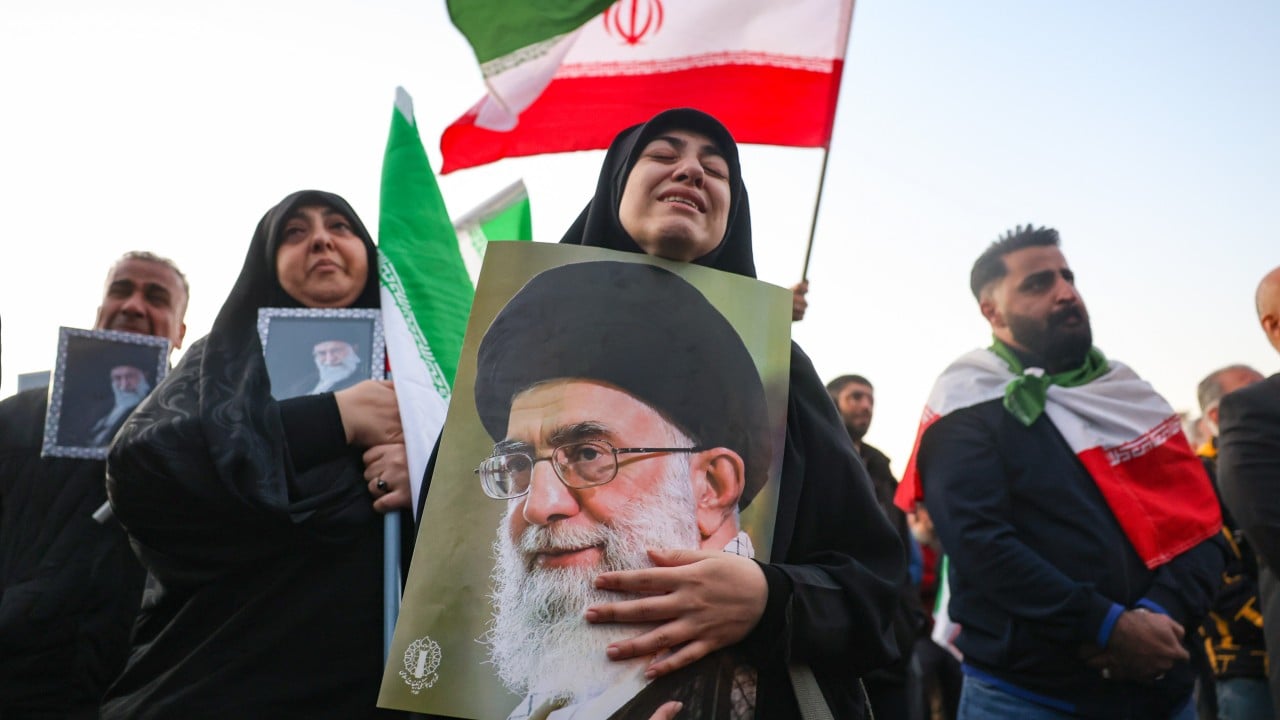
In the immediate wake of the strikes, the streets of Iran have become a theater of contradiction. In the religious strongholds of Qom and Mashhad, and across the government-organized rallies in Tehran’s Enghelab Square, thousands have gathered to mourn. They carry the green flags of the Republic, weeping for a man they viewed as the ultimate arbiter of divine law and the architect of the "Axis of Resistance." Yet, under the cover of night and via encrypted Starlink connections, a different Iran has emerged. From Karaj to Shiraz, the sound of car horns and celebratory fireworks has filled the air. For a generation that survived the brutal crackdown of January 2026—where an estimated 30,000 protesters were killed—Khamenei’s death is not a tragedy. It is a long-delayed reckoning.
The Decapitation of the Deep State
The precision of the strike did more than remove a figurehead; it dismantled the operational brain of the Iranian security apparatus. Reports confirm that the bombardment did not just target the Supreme Leader’s compound. It also claimed the lives of his daughter, grandchild, and several high-ranking military officials, including the defense minister and the army chief of staff. This was a "decapitation strike" in the most literal sense, designed to paralyze the Islamic Revolutionary Guard Corps (IRGC) at the exact moment they would normally be expected to enforce order.
The CIA and Israeli intelligence reportedly tracked Khamenei’s movements for months, waiting for a moment when the leadership would be concentrated. By hitting the nerve center, the coalition has forced the regime into a constitutional emergency it was never truly prepared for. Article 111 of the Iranian Constitution mandates that a provisional council—comprised of the President, the Chief Justice, and a cleric from the Guardian Council—take the reins until the Assembly of Experts can select a successor. But with the military leadership in shambles and the economy in a tailspin, the "interim" period is looking less like a bridge and more like a cliff.
The Mojtaba Gambit and the Succession Crisis
The most pressing question now is who will fill the void. For years, the shadow of Mojtaba Khamenei, the late leader's second son, has loomed over the succession debate. At 56, Mojtaba is a cleric with deep, subterranean ties to the IRGC and the intelligence services. He is the candidate of "Khamenei-ism without Khamenei"—a hardline loyalist who would prioritize regime survival above all else.
However, his path to the throne is far from clear.
- The Dynastic Taboo: The 1979 Revolution was built on the rejection of the Pahlavi monarchy. For the Assembly of Experts to appoint Khamenei’s son would be a bitter irony that many senior clerics find ideologically repulsive.
- The Rival Clerics: Figures like Gholam-Hossein Mohseni-Eje'i (the Chief Justice) and Alireza Arafi (head of Iran’s seminary system) are being floated as "safe" alternatives. They represent the establishment but lack the personal charisma or the revolutionary pedigree of the founders.
- The Reformist Ghost: Hassan Khomeini, the grandson of the Republic’s founder, remains a wild card. While sidelined by the hardliners for years, his name carries a weight that could theoretically bridge the gap between the state and a disillusioned public, though the IRGC is unlikely to let a "liberalizing" influence near the levers of power.
The reality is that no matter who the 88-member Assembly of Experts chooses, they will be inheriting a house on fire. The new leader will not have the luxury of decades to build a cult of personality. They will have to manage a war with Israel, a decimated military, and a citizenry that has lost its fear of the gallows.
A Nation Between Hope and Terror
While the geopolitical world watches the maps, the people inside Iran are watching the grocery shelves. In Tehran, residents have rushed to supermarkets, stripping them of bread, milk, and water. Long lines at gas stations snake through the capital as families attempt to flee toward the northern provinces, fearing that the U.S.-Israeli strikes are only the beginning of a wider invasion.
The euphoria of the protesters is tempered by the very real threat of a wounded regime lashing out. The IRGC, even without its top commanders, remains a formidable domestic police force. History shows that when these systems feel an existential threat, they do not soften; they harden. The "Forty Days of Mourning" declared by the state could easily turn into forty days of martial law.
The assassination of Ali Khamenei has effectively ended the second chapter of the Islamic Republic. The first chapter, written by Ruhollah Khomeini, was defined by revolutionary fervor. The second, under Khamenei, was defined by institutionalized repression and regional expansion. The third chapter is beginning in the smoke of an airstrike, and for the first time in nearly half a century, the ending has not been pre-written by the clerics.
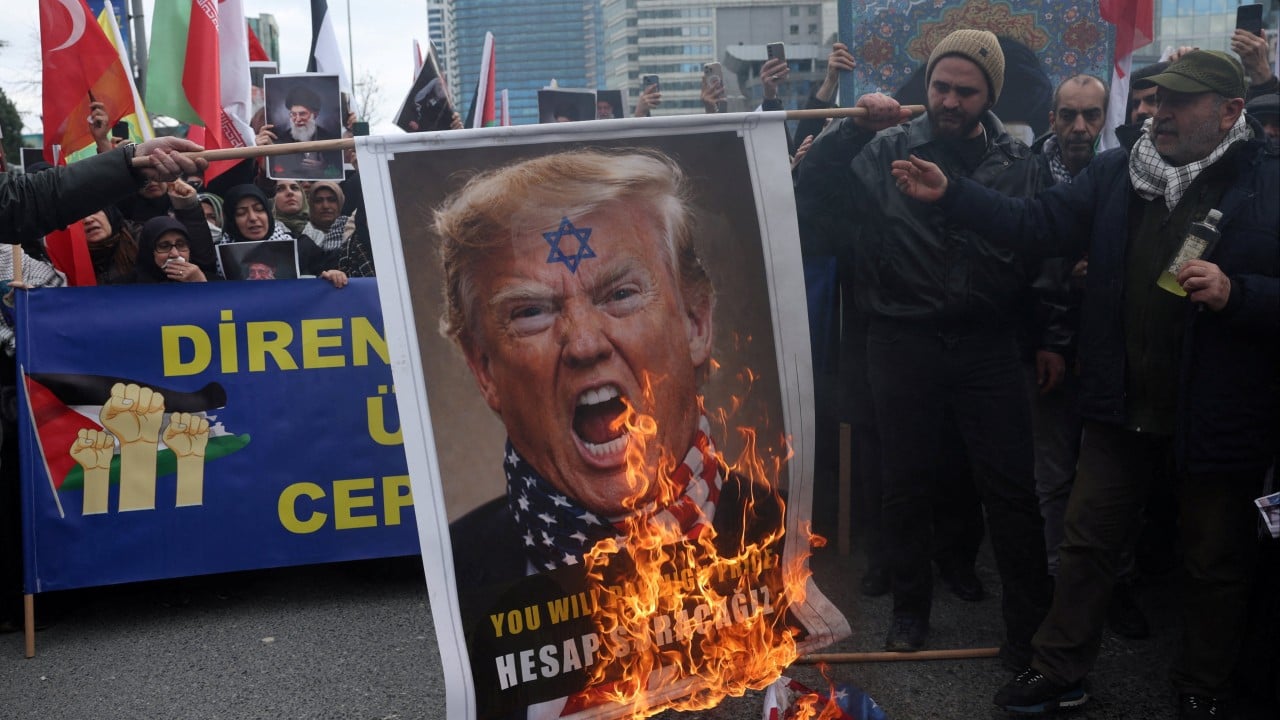
The regime now faces a choice between a desperate, violent doubling down under a figure like Mojtaba or a managed collapse that attempts to bring the opposition to the table. President Trump has already signaled an openness to talk to "new potential leadership," a move that suggests Washington is banking on a pragmatic faction emerging from the chaos. But in the streets of Tehran, where the smell of cordite still hangs in the air, the people aren't waiting for a new leader. They are waiting for the old system to finally let go.