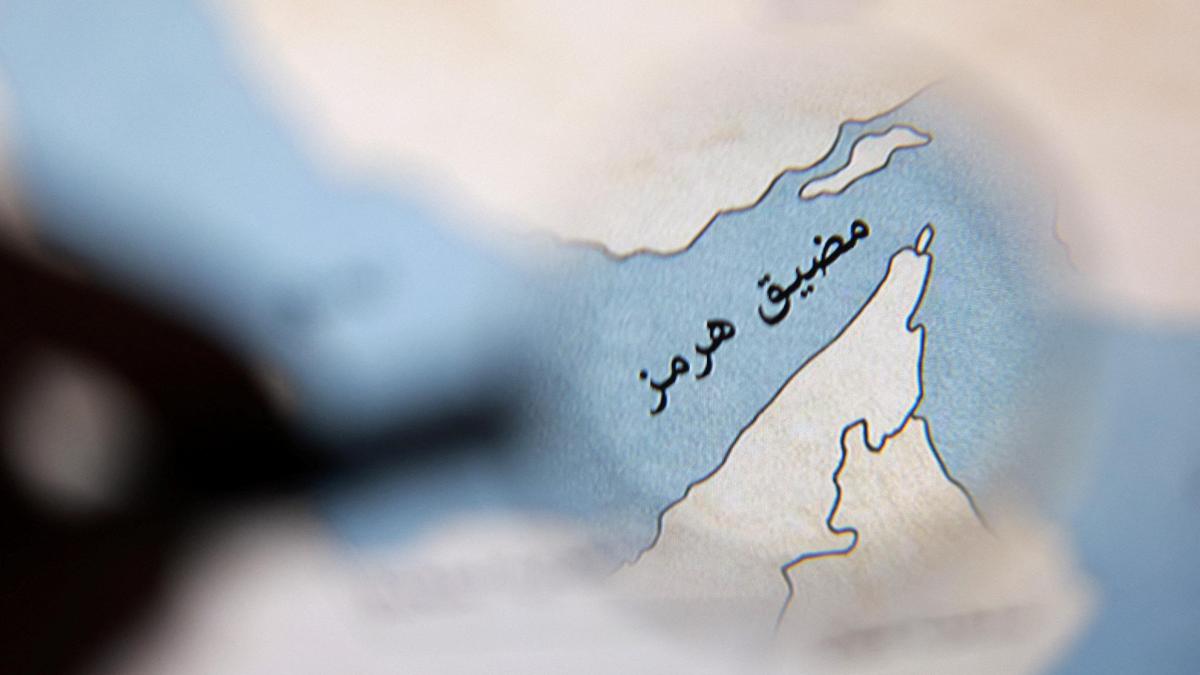
The Strait of Hormuz has ceased to be a simple international waterway and has instead become a geopolitical kill-switch. Recent declarations from the Islamic Revolutionary Guard Corps (IRGC) signal a permanent shift in how Tehran views this twenty-one-mile-wide neck of water. For decades, the global energy market operated under the assumption that the "status quo" meant a free flow of oil, occasionally interrupted by brief skirmishes. That era is over. Iran is no longer posturing for temporary leverage; it is fundamentally rewriting the rules of maritime engagement to ensure that the Strait never returns to its previous state of Western-monitored stability.
This is not a sudden flare-up. It is the culmination of a decade-long "asymmetric naval doctrine" designed to neutralize the conventional superiority of the U.S. Fifth Fleet. By declaring that the Strait will never return to its "previous status," the IRGC is acknowledging a reality that commodity traders and defense analysts have been slow to accept. The waterway is now a theater of active, persistent hybrid warfare where the distinction between peace and conflict has been intentionally blurred.
The Geography of a Global Chokepoint
To understand why this change is permanent, one must look at the cold, hard physics of the region. At its narrowest point, the shipping lanes in the Strait of Hormuz are only two miles wide in either direction, separated by a two-mile buffer zone. Almost 21 million barrels of oil pass through this gap every single day. That represents roughly 20% of global liquid petroleum consumption.
Tehran’s strategy relies on the fact that they do not need a massive blue-water navy to control this space. They have turned the surrounding islands—Abu Musa and the Greater and Lesser Tunbs—into unsinkable aircraft carriers and missile batteries. When the IRGC speaks of a "new status," they are referring to this localized dominance. They have saturated the coastline with anti-ship cruise missiles (ASCMs) and thousands of smart mines that can be deployed in hours.
The math for a commercial shipping company has changed. Insurance premiums for tankers transiting the Gulf are no longer based on the statistical likelihood of an accident, but on the political temperature in Tehran. This "risk tax" is a permanent fixture of the modern energy market. Even if a shot is never fired, the mere capability of the IRGC to shutter the Strait at a moment's notice dictates the price of Brent Crude.
Beyond Oil and Into Subsea Infrastructure
The focus on oil tankers often blinds analysts to a more critical vulnerability: data. The floor of the Strait of Hormuz is a dense web of fiber-optic cables that connect the digital economies of Europe and Asia. In the old status quo, these were considered off-limits. In the new reality, they are primary targets for hybrid interference.
The IRGC has invested heavily in "unconventional" naval assets, including midget submarines and remote-operated vehicles (ROVs) capable of operating at the shallow depths of the Strait. If Tehran feels squeezed by banking sanctions, they have the physical capacity to "accidentally" sever the data arteries that facilitate global financial transactions. This isn't about sinking a ship; it’s about holding the global internet hostage.
Military planners in Washington and Brussels are facing a nightmare scenario where traditional deterrence fails. You cannot deter a swarm of three hundred fast-attack boats with a single multi-billion-dollar destroyer. The cost-to-kill ratio is skewed entirely in Iran's favor. A $20,000 suicide drone can disable a vessel that costs more than the entire IRGC annual budget.
The Failure of International Maritime Protection
Operation Prosperity Guardian and other Western-led maritime coalitions were designed to project strength. Instead, they have exposed the limits of modern naval power. Escorting tankers through the Strait is a logistical drain that the U.S. Navy cannot sustain indefinitely, especially with rising tensions in the South China Sea and the Red Sea.
Iran knows this. Their "new status" involves a calculated waiting game. They are betting that the West will eventually tire of the expense and the constant high-alert status. This isn't a sprint; it’s a siege. By maintaining a constant, low-level threat, the IRGC forces the international community to accept their presence as the primary regulator of the Strait.
We are seeing the emergence of a "shadow toll" system. Ships belonging to nations that maintain favorable diplomatic ties with Tehran, or those willing to bypass Western sanctions, receive safe passage. Those that don't face "inspections," "technical malfunctions," or outright seizure. The Strait is being privatized by a sovereign entity.
The Asymmetric Arsenal and the Swarm Logic
The IRGC's naval wing operates differently than the regular Iranian Navy. While the regular navy handles traditional patrol duties, the IRGC focuses on "mosquito tactics." They utilize thousands of small, fast, and highly maneuverable boats equipped with rockets and torpedoes.
The Components of the New Status
- Mobile Missile Batteries: Coastal defense systems that can be moved within minutes to avoid counter-strikes.
- Loitering Munitions: Drones that can stay airborne for hours, waiting for a specific high-value target to enter the kill zone.
- Large-Scale Mining: The ability to deploy thousands of "bottom mines" that are nearly impossible to detect with current sonar technology in the silt-heavy waters of the Gulf.
- Electronic Warfare: Japping GPS signals to lure commercial vessels into Iranian territorial waters, providing a legal veneer for seizures.
These tools are not meant to win a war against the United States. They are meant to make the cost of maintaining the "old status" too high for the global economy to bear. When a single incident in the Strait can cause a 10% spike in global inflation, the IRGC has already won the economic argument.
The Geopolitical Realignment
China is the silent partner in this transition. As the primary buyer of Iranian oil, Beijing has a vested interest in the Strait remaining "open," but only on terms that favor their long-term strategic goals. Iran’s shift toward a permanent state of control in the Strait aligns with a broader shift away from a US-centric world order.
If Tehran controls the tap, they hold immense sway over the energy security of India, Japan, and South Korea. These nations are now forced to negotiate directly with Iran, bypassing the security guarantees once provided by the American umbrella. This is the "new status" in its most potent form: the replacement of international law with bilateral transactionalism enforced by the threat of blockade.
The infrastructure to bypass the Strait exists, but it is woefully inadequate. Pipelines across Saudi Arabia and the UAE can only handle a fraction of the daily volume. Furthermore, these pipelines are themselves vulnerable to drone strikes, as demonstrated by the 2019 Abqaiq–Khurais attack. There is no easy exit from the geography of the Gulf.
Why Diplomacy is Stalling
Traditional diplomacy relies on the idea that both parties want to return to a baseline of stability. The IRGC has explicitly stated that they do not. For them, instability is a tool. It is the only way an isolated power can exert influence over the G7.
Every time a Western diplomat speaks of "de-escalation," they are operating on an outdated map. Tehran views de-escalation as a sign of weakness and an opportunity to push the boundary further. The "previous status" was a product of unipolar American power. As that power thins, the vacuum is filled by regional actors who have no interest in "freedom of navigation" as defined by the 1982 UN Convention on the Law of the Sea.
The Economic Aftershocks
For the average consumer, this means the era of cheap, predictable energy is dead. The "Hormuz Factor" is now baked into the price of every gallon of gas and every plastic component manufactured in Asia. We are looking at a permanent restructuring of global supply chains. Companies are already beginning to "near-shore" production to avoid the vulnerability of maritime chokepoints, but this process takes decades and trillions of dollars.
The IRGC’s declaration is a funeral notice for the post-WWII maritime order in the Middle East. The Strait of Hormuz is now a regulated gate, and the Revolutionary Guard holds the keys. They have realized that they don't need to win a war to change the world; they just need to make the peace too expensive to maintain.
Governments must stop planning for a return to the way things were. The "previous status" is a ghost. Future maritime security requires a complete overhaul of how we protect commercial shipping, involving autonomous escort vessels and a decentralized energy grid that doesn't rely on a single twenty-one-mile stretch of water. Until that happens, the global economy remains one IRGC commander’s order away from a heart attack.
Move your assets, diversify your routes, and stop waiting for the old world to come back. It isn't.