The collision between aggressive foreign policy and domestic price stability is no longer a theoretical risk. It is a mathematical certainty. As the threat of a wider conflict involving Iran looms over the Middle East, the Trump administration’s central promise—making America affordable again—is hitting a wall of crude oil. The White House is attempting to run a high-pressure economy while simultaneously squeezing a major global energy producer. This friction creates a feedback loop that the Federal Reserve cannot ignore, effectively locking interest rates in a holding pattern that hurts the very consumers the administration claims to be protecting.
High energy prices are a universal tax. They do not care about political affiliation. When the cost of a barrel of oil spikes due to geopolitical instability, the ripples extend far beyond the gas station. It hits the cost of transporting groceries, the price of plastic packaging, and the overhead for every small business in the country. This is the "energy tax" that threatens to undo the progress made on inflation over the last year.
The Crude Reality of Geopolitical Leverage
Washington often operates under the assumption that domestic shale production provides a total shield against global shocks. This is a dangerous oversimplification. While the United States is a net exporter of petroleum, oil is a fungible global commodity. If Iranian supply is throttled or if the Strait of Hormuz—through which 20% of the world’s liquid petroleum passes—is compromised, the price per barrel will jump everywhere.
The administration’s "maximum pressure" campaign against Tehran is designed to limit the regime’s influence, but it simultaneously reduces the global supply cushion. When the margin for error in global production disappears, volatility becomes the new baseline. This volatility is the enemy of the Federal Reserve. For the central bank to cut interest rates, it needs a predictable downward trend in consumer prices. A sudden $20 spike in oil prices destroys that predictability.
Why the Federal Reserve Cannot Blink
The Fed operates on a dual mandate, but its current obsession is price stability. Central bankers generally prefer to "look through" volatile food and energy prices, focusing instead on core inflation. However, there is a limit to this patience. When energy costs remain elevated for months, they begin to seep into the prices of services and durable goods. This is known as "second-round effects."
If the Fed sees that high energy costs are starting to de-anchor inflation expectations, they will keep interest rates "higher for longer." This creates a direct contradiction for the White House. The administration wants lower rates to jumpstart the housing market and reduce the cost of business investment. Yet, by pursuing a confrontational stance in the Middle East that keeps energy markets on edge, they are effectively forcing the Fed to keep the brakes on the economy.
The Logistics of a Price Spike
To understand the severity, one must look at the supply chain. Most goods in the United States move by truck. Diesel fuel is a non-negotiable input for the logistics industry. When diesel prices rise, trucking companies pass those costs to retailers. Retailers, already operating on thin margins, pass them to you.
Consider a hypothetical scenario where a shipment of produce travels from California to New York. If fuel costs rise by 15% due to a crisis in the Persian Gulf, the transport cost per pallet increases significantly. Multiply this by the millions of tons of freight moved daily, and the result is a sustained pulse of inflation that no amount of domestic deregulation can immediately offset.
The Myth of Energy Independence as a Price Ceiling
There is a persistent belief that because the U.S. produces record amounts of oil, it can set its own prices. This is not how the market works. A driller in West Texas will sell their oil to the highest bidder, whether that bidder is in Houston or Rotterdam. Unless the government were to ban exports—a move that would tank the domestic energy industry and violate trade agreements—American consumers remain tethered to the global price.
The administration’s push for "energy dominance" through increased drilling is a long-term play. It takes years for new leases to turn into flowing wells. In the short term, the market is reactive and sentimental. Fear of a closed shipping lane in the Middle East moves prices faster than a new permit in the Permian Basin ever could. This creates a lag time where the economy suffers today for the promise of cheaper energy tomorrow.
The Strategic Petroleum Reserve Gamble
The Strategic Petroleum Reserve (SPR) is the nation’s emergency piggy bank. Following significant drawdowns in previous years, the reserve is at a level that leaves less room for error. Using the SPR to artificially lower prices during a conflict is a temporary fix, not a strategy. Market participants know exactly how much oil is in those salt caverns. If the market senses the SPR is being used for political optics rather than genuine supply emergencies, the "security premium" on oil prices will only grow.
The Interest Rate Standoff
The relationship between the Oval Office and the Eccles Building is notoriously tense during periods of high inflation. The current administration’s push for affordability depends heavily on the Fed lowering the federal funds rate. Lower rates mean cheaper mortgages, more affordable car loans, and a general easing of the credit crunch facing the American middle class.
However, the Fed is a data-dependent machine. It does not respond to political pressure as much as it responds to the Consumer Price Index (CPI). If energy prices keep the CPI above the 2% target, the Fed will stay the course. This leaves the administration in a self-imposed trap. They are chasing a foreign policy goal that actively undermines their most important domestic economic goal.
Housing and the Hidden Energy Link
We often talk about housing affordability in terms of interest rates and inventory. We rarely talk about it in terms of energy. The cost of building a new home is heavily dependent on energy-intensive materials like cement, steel, and lumber. Producing and transporting these materials requires massive amounts of fuel. If a conflict with Iran drives up energy costs, the "all-in" cost of construction rises, further squeezing the housing market even before a single mortgage is signed.
The Geopolitical Risk Premium
Investors hate uncertainty. The "risk premium" is the extra cost added to a commodity because of the possibility of a nightmare scenario. Right now, every barrel of oil has a few dollars of "Iran risk" baked into it. If the situation escalates, that premium could double or triple.
This isn't just about the price at the pump. It’s about the cost of capital. When global tensions rise, investors often flock to "safe-haven" assets like the U.S. Dollar. A stronger dollar makes American exports more expensive for the rest of the world, which can hurt domestic manufacturers. This adds another layer of complexity to the affordability push. The administration wants a booming manufacturing sector, but a global crisis triggered by Middle Eastern tensions could make American goods too expensive for foreign buyers.
The Fragility of the Consumer
The American consumer has shown remarkable resilience, but that resilience is not infinite. Savings accounts depleted during the post-pandemic era have not been fully replenished. Credit card debt is at record highs. In this environment, a sustained increase in energy prices acts as a breaking point.
When people spend more on heat and gasoline, they spend less on everything else. This contraction in discretionary spending can lead to a "growth recession," where the economy technically expands but feels stagnant to the average person. For an administration focused on the "affordability" narrative, this is a political disaster. You cannot tell people the economy is fixed when it costs $80 to fill up a mid-sized sedan.
The Logistics of the Strait of Hormuz
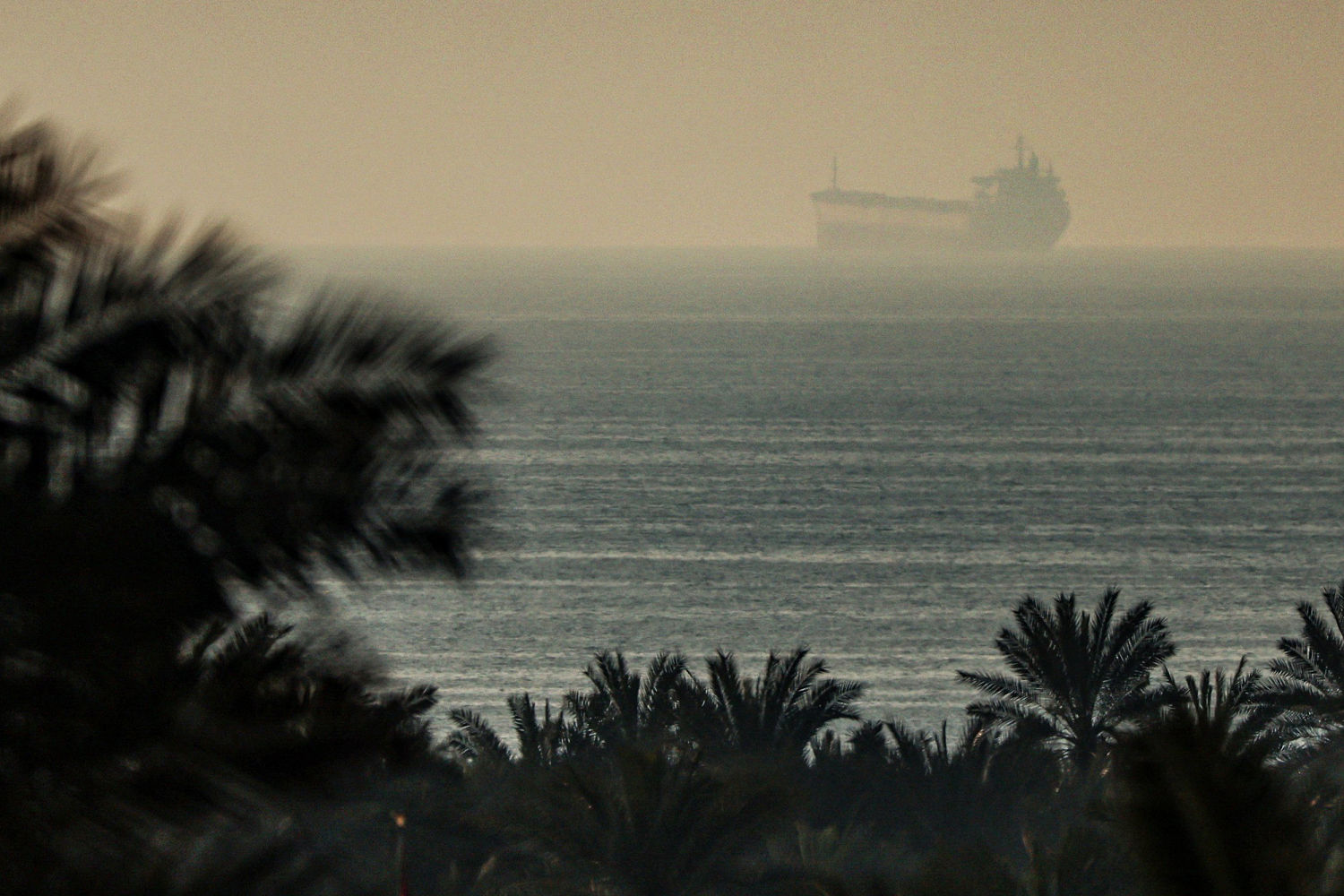
To grasp the "why" behind the market's anxiety, one must look at the geography. The Strait of Hormuz is a narrow chokepoint. It is the only way out of the Persian Gulf for the massive tankers carrying oil from Saudi Arabia, Kuwait, the UAE, and Iraq. If Iran even threatens to mine the strait or use its fast-attack boats to harass shipping, insurance rates for tankers skyrocket.
Those insurance costs are passed directly to the buyer. Even if a single drop of oil isn't spilled, the mere possibility of a disruption adds a layer of cost to the global economy. This is the invisible hand of geopolitical friction, and it is currently pushing back against the Fed’s desire to ease monetary policy.
Counter-Arguments to the Crisis Narrative
Some analysts argue that the shift toward electric vehicles (EVs) and renewable energy has dampened the impact of oil shocks. While the U.S. fleet is slowly diversifying, the heavy machinery of the economy—shipping, aviation, and long-haul trucking—remains almost entirely dependent on petroleum. We are decades away from a world where a Middle Eastern war does not immediately impact the price of a gallon of milk in Iowa.
Others point to the potential for a deal. Diplomacy, however quiet, could stabilize the region. But the current administration has signaled a preference for strength over accommodation. Strength has its merits, but in the commodity markets, strength is often priced as volatility.
The Real Cost of the Policy Contradiction
The fundamental issue is a lack of synchronization between the Treasury, the State Department, and the Federal Reserve. You cannot have a hawk’s foreign policy and a dove’s interest rate environment simultaneously when the hawk’s targets control the world’s energy taps.
This is the hard truth that the current "affordability" push ignores. If the U.S. moves closer to a hot conflict or even a more intense cold war with Iran, the "peace dividend" that fueled decades of low-inflation growth will officially be dead. The Fed will be forced to act as the "inflation cop" indefinitely, keeping interest rates high to counteract the inflationary pressures of a de-globalizing, conflict-prone energy market.
Americans waiting for 3% mortgage rates may find themselves waiting for a peace that the current geopolitical trajectory simply won't allow. The administration is gambling that it can overwhelm the market with domestic production, but the market is proving that it cares more about the potential for fire in the Middle East than it does about new rigs in North Dakota. This isn't just a complication; it's a structural barrier to the very prosperity being promised.
Stop looking at the polls and start looking at the Brent Crude ticker. That is where the real election is being held.