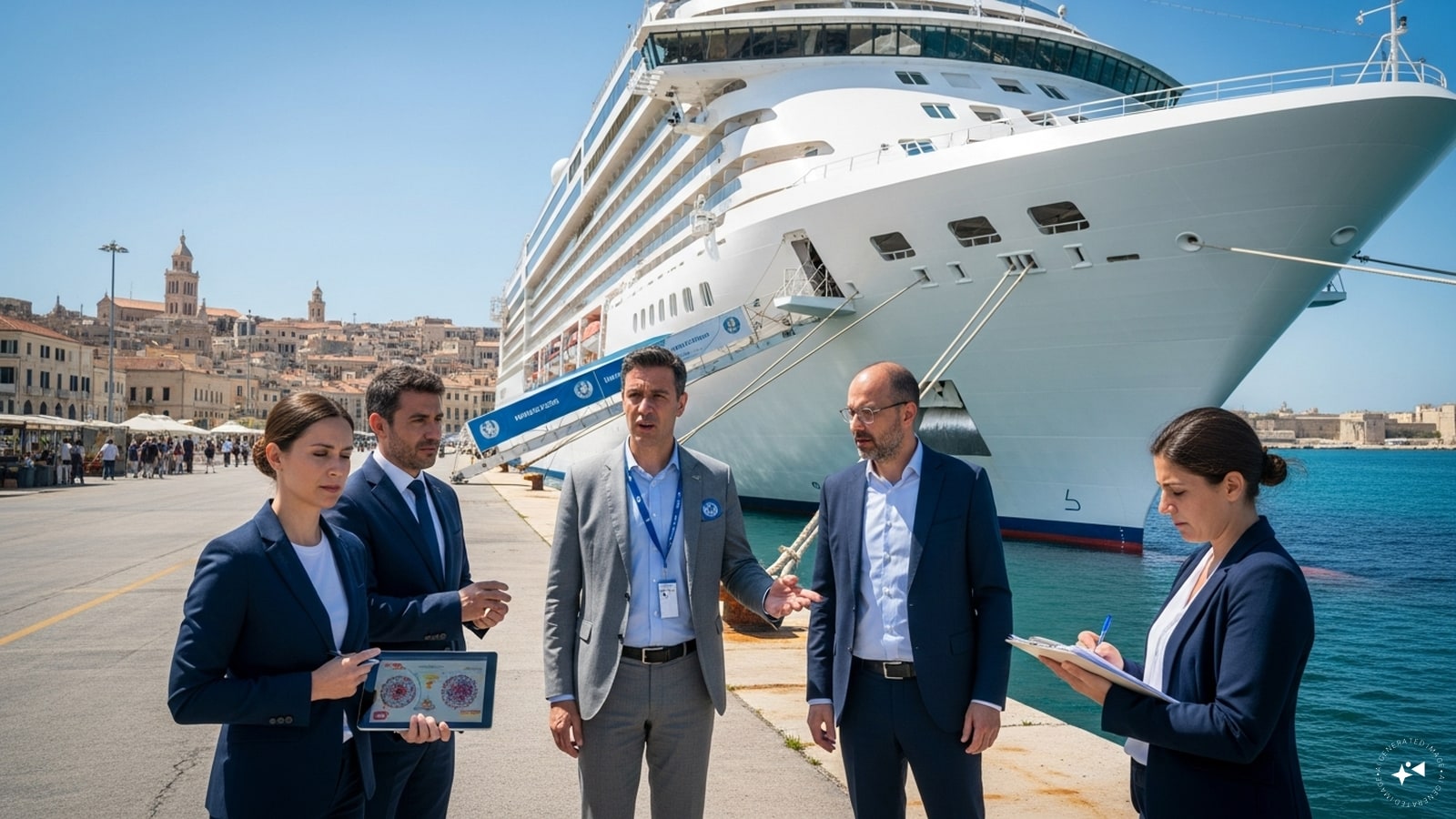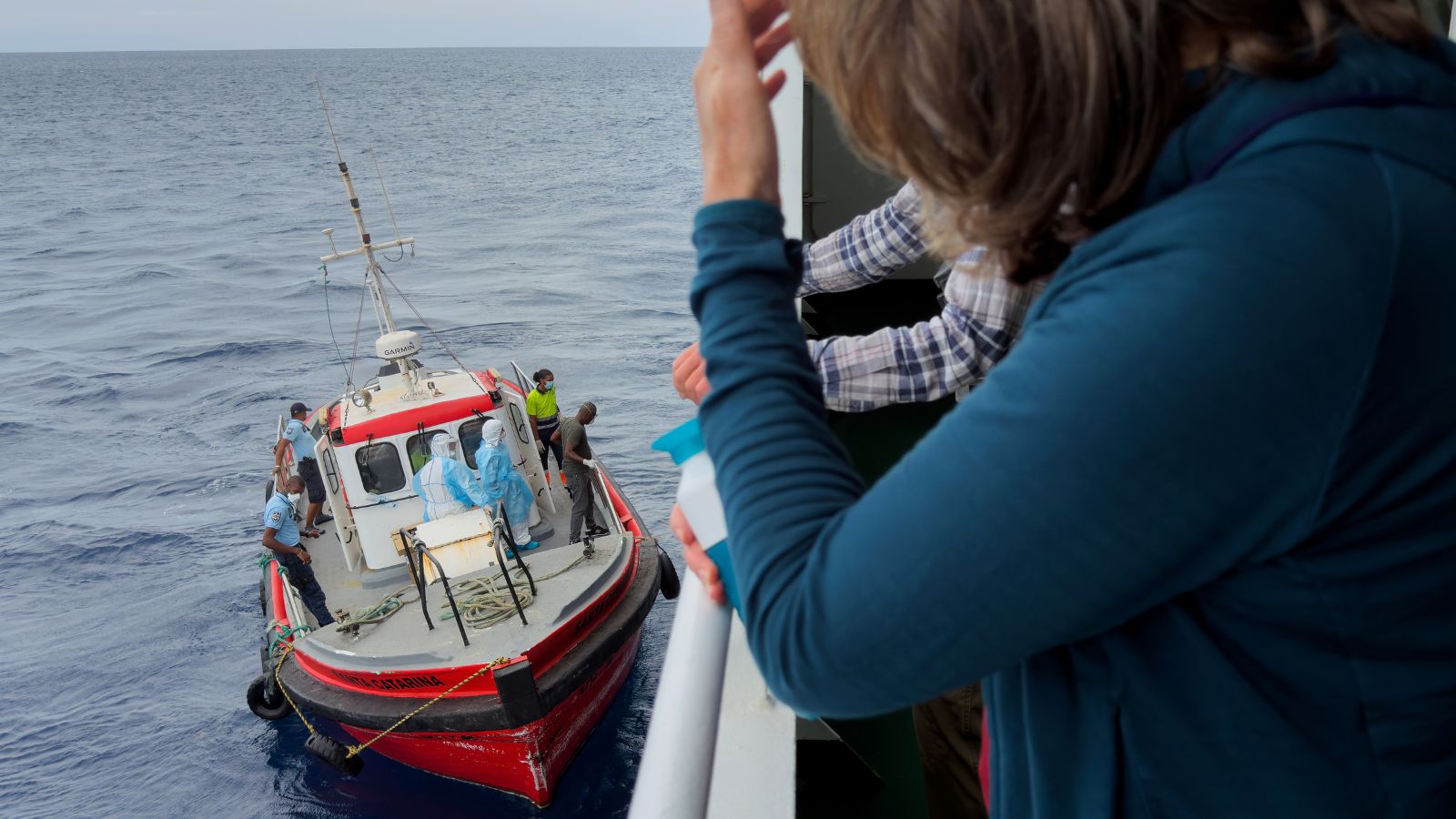
The detection of six confirmed hantavirus cases on a Spain-bound cruise vessel reveals a critical failure in maritime biosafety protocols and a misunderstanding of zoonotic transmission vectors in enclosed environments. While public perception often focuses on direct human-to-human contagion, the actual risk profile of this outbreak is defined by the intersection of rodent biology, aerosolization physics, and the logistical constraints of international shipping. This event serves as a diagnostic case study for the fragility of global travel sanitation and the specific mechanical pathways through which Orthohantaviruses infiltrate high-density mobile populations.
The Transmission Mechanics of Orthohantavirus
Hantavirus is not a standard respiratory pathogen in the vein of influenza or SARS-CoV-2. Its presence on a cruise ship indicates a breakdown in three distinct operational layers: vector exclusion, waste management, and HVAC filtration efficiency. To understand why six individuals were infected, one must analyze the virus through the lens of its environmental stability and delivery mechanism.
The virus is primarily shed through the saliva, urine, and feces of infected rodents—specifically mice and rats. In the context of a cruise ship, the transmission occurs through Aerosolization of Desiccated Excreta. When rodent waste dries, the viral particles remain viable for several days depending on humidity and temperature. Any mechanical disturbance—ranging from a passenger walking across a carpet to a maintenance crew using a vacuum cleaner without HEPA filtration—suspends these particles in the air.
The Kinetic Pathway of Infection
- Vector Infiltration: Rodents enter the vessel via mooring lines or contaminated food supply chains during the pre-departure victualing process.
- Nesting and Shedding: The rodents establish nests in "dead zones"—areas of the ship with low human traffic but high access to structural cabling or piping (e.g., behind bulkheads or within ceiling voids).
- Environmental Loading: As rodents shed the virus, the viral load in the micro-environment increases.
- Aerosolization: Airflow from the ship’s ventilation system or manual cleaning activities lofts the dried particles.
- Inhalation: Passengers inhale the particulate matter, leading to pulmonary or renal infiltration.
Unlike Norovirus, which is famously common on cruises due to foms-to-mouth or person-to-person contact, Hantavirus (specifically the strains found in Europe and Asia like Puumala or Dobrava-Belgrade) typically does not spread between humans. The six cases on the Spain-bound ship represent six separate successful transmission events from the environment to the host, suggesting a localized "hot zone" within the ship's architecture.
Quantifying the Risk: HFRS vs. HPS
The clinical outcome of this outbreak depends entirely on the specific strain involved, which is determined by the geographic origin of the rodent vector. There are two primary clinical manifestations:
- Hemorrhagic Fever with Renal Syndrome (HFRS): Predominant in Europe and Asia. It targets the kidneys and causes vascular leakage. The mortality rate varies significantly by strain, ranging from less than 1% (Puumala) to 15% (Dobrava).
- Hantavirus Pulmonary Syndrome (HPS): Predominant in the Americas. This is a far more lethal manifestation with mortality rates approaching 35-40%, characterized by rapid respiratory failure.
Given the Spanish destination and the likely European or Mediterranean transit route, the cases are almost certainly HFRS. However, the "confirmed" status by the WHO implies that laboratory diagnostics (likely RT-PCR or IgM/IgG serology) have identified the specific viral RNA. The structural problem for the cruise operator is that HFRS has an incubation period of 1 to 8 weeks. This creates a Diagnostic Lag, where passengers may have been exposed in the first few days of the voyage but only show symptoms after they have disembarked and dispersed into the general population of Spain or their home countries.
The Structural Vulnerabilities of Maritime Architecture
Cruise ships are essentially floating HVAC ecosystems. The air is recirculated and filtered to balance energy efficiency with passenger comfort. This creates a specific vulnerability to aerosolized pathogens.
The Problem of Pressure Differentials
In a standard building, pressure differentials are used to isolate contaminated areas. On a ship, the vibration of the engines and the constant movement of the vessel create micro-fissures in ducting. If a rodent infestation occurs within a central air handling unit or a primary supply duct, the virus is distributed with mathematical precision to every cabin on that circuit.
Material Porosity
Modern cruise ships use a variety of composite materials and textiles that are difficult to deep-clean. Once desiccated rodent excreta becomes embedded in porous surfaces (carpeting, heavy drapes, acoustic ceiling tiles), standard cleaning protocols are insufficient. The removal of the virus requires high-level disinfection with bleach solutions or specialized virucidal fogging, which is impossible to perform while a ship is occupied by 3,000+ passengers.
Economic and Operational Implications of the WHO Report
When the WHO issues a formal report on a cruise-bound outbreak, it triggers the International Health Regulations (IHR 2005). This is not merely a health advisory; it is a signal to port authorities that the vessel may be considered "suspect" under maritime law.
The Cost of Quarantine and Remediation
For the cruise line, the six confirmed cases represent a total loss of the current voyage's profitability and a significant liability for future bookings. The remediation steps are rigorous:
- Vessel Sanitize-in-Place: All passengers must be offboarded, and the ship must undergo a professional "deratting" process.
- Structural Audit: Identification and sealing of all potential rodent entry points, including "rat guards" on mooring lines which were clearly bypassed or improperly installed.
- HVAC Sterilization: Total replacement of filters and chemical cleaning of miles of ductwork.
The "Spain-bound" nature of the cruise adds a layer of diplomatic and logistical complexity. Spanish health authorities (Ministerio de Sanidad) will likely enforce Article 27 of the IHR, which allows for the inspection of the ship and the potential refusal of entry if the "source of infection" is not proven to be eliminated.
The Misidentification Trap
A primary reason these outbreaks escalate is the "flu-like" nature of early symptoms. Fever, chills, and muscle aches are non-specific. In a cruise environment, medical staff often default to diagnosing common respiratory infections or seasickness.
The mechanism that distinguishes Hantavirus is the Vascular Leak Syndrome. As the virus attacks the endothelial cells lining the blood vessels, fluid leaks into the surrounding tissue. In HFRS, this causes intense back pain and kidney failure. If the ship’s medical facility is not equipped with serum creatinine tests or does not have a high index of suspicion for zoonotic diseases, the window for effective supportive care closes. There is no specific antiviral treatment or vaccine for Hantavirus; management is purely supportive (hydration, dialysis, or mechanical ventilation).
Strategic Prevention Framework for Cruise Operators
To prevent a recurrence of the Spain-bound outbreak, the industry must move beyond reactive cleaning and toward a predictive biosafety model.
Integrated Pest Management (IPM) 2.0
The standard use of traps is insufficient. Operators must implement:
- Ultrasonic Deterrents: Deploying high-frequency sound emitters in "dead zones" to prevent nesting.
- Thermal Imaging Audits: Using thermography during port stays to identify rodent heat signatures behind bulkheads.
- Supply Chain Forensic: Every pallet of food and linen must be inspected in a "sterile" staging area before being brought on board.
Environmental Monitoring
Ships should be equipped with air-quality sensors capable of detecting high concentrations of organic particulates. While these sensors cannot "see" the virus, they can identify the dust-loading conditions that make aerosolization possible.
The presence of Hantavirus on a modern cruise ship is an anomaly that highlights a regression in basic sanitary discipline. It suggests that while the industry has focused on high-tech amenities and "frictionless" passenger experiences, it has neglected the fundamental biological reality of maritime travel: if you provide a warm, food-rich environment with infinite hiding spots, nature will fill it.
The immediate strategic priority for health authorities is contact tracing—not to stop person-to-person spread, which is a negligible risk, but to identify the specific geographic location on the ship where these six individuals spent their time. If all six cases originated from the same deck or used the same elevator bank, the source of the aerosolization can be pinpointed and destroyed. Failure to do so will result in a "ghost ship" scenario where the vessel remains a persistent reservoir for infection long after the original six passengers have recovered.