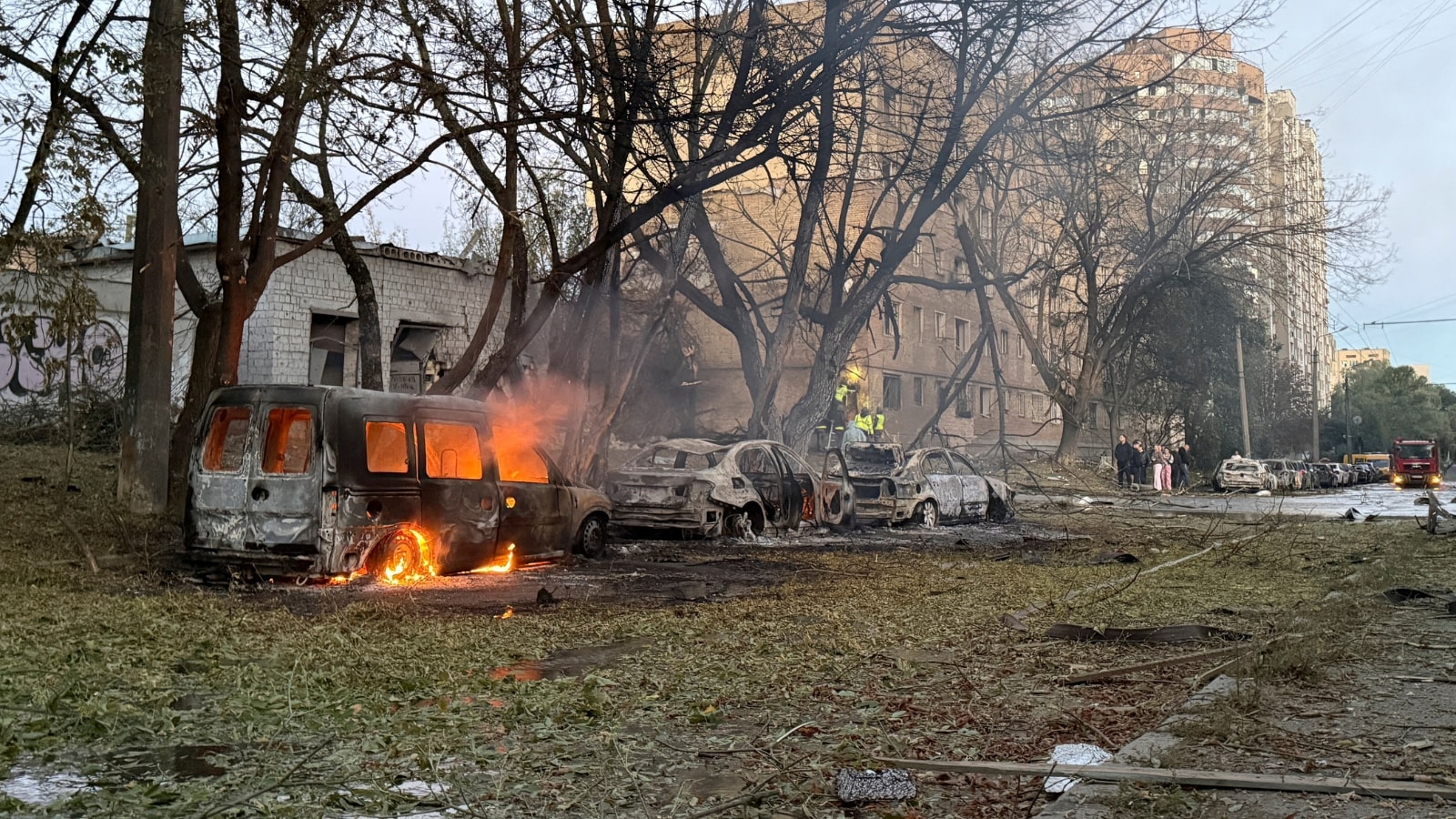
The timing of missile strikes on urban centers following high-level diplomatic departures is rarely coincidental. It represents a calculated calibration of signaling mechanics between opposing state actors. When diplomatic missions conclude without formal alignment, the ensuing kinetic activity functions as an operational punctuation mark. This sequence maps a distinct transition from verbal friction to physical demonstration, designed to re-establish bargaining leverage through force projection.
The Diplomatic Signaling Vacuum
Negotiation failure creates an immediate information void. When peace envoys depart a capital without securing concessions, both sides face a renegotiation of their baseline assumptions.
- The Signaling Window: Strikes executed immediately post-diplomacy exploit the temporary vulnerability of the adversary's psychological posture.
- The Deterrence Deficit: The absence of foreign intermediaries removes a physical and diplomatic buffer, lowering the political cost of executing long-range strikes.
- The Cost Function of Failure: Each collapsed diplomatic track raises the domestic and international threshold required to restart negotiations, incentivizing military signaling to maintain initiative.
The causal mechanism operates through coercive diplomacy. State actors utilize conventional strike packages not merely for tactical attrition of infrastructure, but as a communication channel. The message targets the adversary command structure directly, signaling that diplomatic intransigence carries an escalating security penalty.
The Operational Logistics of Retaliated Strikes
Executing precision-guided munitions attacks against heavily defended urban airspaces requires extensive preparation windows. The synchronicity between diplomatic exits and kinetic arrivals points to pre-planned strike packages held in a state of operational readiness.
- Targeting Calculus: Munitions allocation shifts from frontline tactical support to deep-penetration assets targeting logistical nodes, power transmission grids, and command and control centers inside capital regions.
- Air Defense Saturation: Modern urban defense architectures, such as those protecting Kyiv, force attackers to deploy mixed packages of ballistic missiles, cruise missiles, and loitering munitions to overwhelm interceptor replenishment rates.
- Resource Depletion Metrics: Each launched wave forces defenders to expend high-value interceptor inventory, widening the cost-asymmetry inherent in modern missile warfare.
This operational reality explains why strikes often materialize hours or days after high-level meetings dissolve. The military apparatus requires a brief window to confirm political authorization, process intelligence updates, and configure launch assets for maximum psychological disruption.
Strategic Objectives Beyond Tactical Damage
Viewing capital-city strikes solely through the lens of battlefield destruction misses the primary strategic utility. The objectives are systemic and psychological rather than purely tactical.
- Elite Coercion: Targeting metropolitan centers exerts direct pressure on political leadership by generating civilian friction and visual proof of ongoing vulnerability.
- Narrative Control: Domestic audiences within the aggressor state demand visible responses to diplomatic deadlocks, framing military action as a necessary countermeasure against perceived Western obstruction.
- Allied Resolve Testing: Strikes following diplomatic visits test the commitment threshold of supporting nations, measuring whether capital destruction accelerates allied aid delivery or induces risk aversion.
The interplay between diplomatic engagement and military escalation forms a continuous feedback loop. Each phase resets the parameters for future negotiation, making durable conflict resolution increasingly complex as the baseline of violence shifts upward.
To anticipate the trajectory of urban missile campaigns, analysts must monitor the cadence of back-channel communications rather than public rhetoric alone. When quiet diplomatic channels close completely, the operational pause between political friction and kinetic execution compresses to zero, establishing a permanent state of high-intensity signaling until a new equilibrium of force or diplomacy is reached.