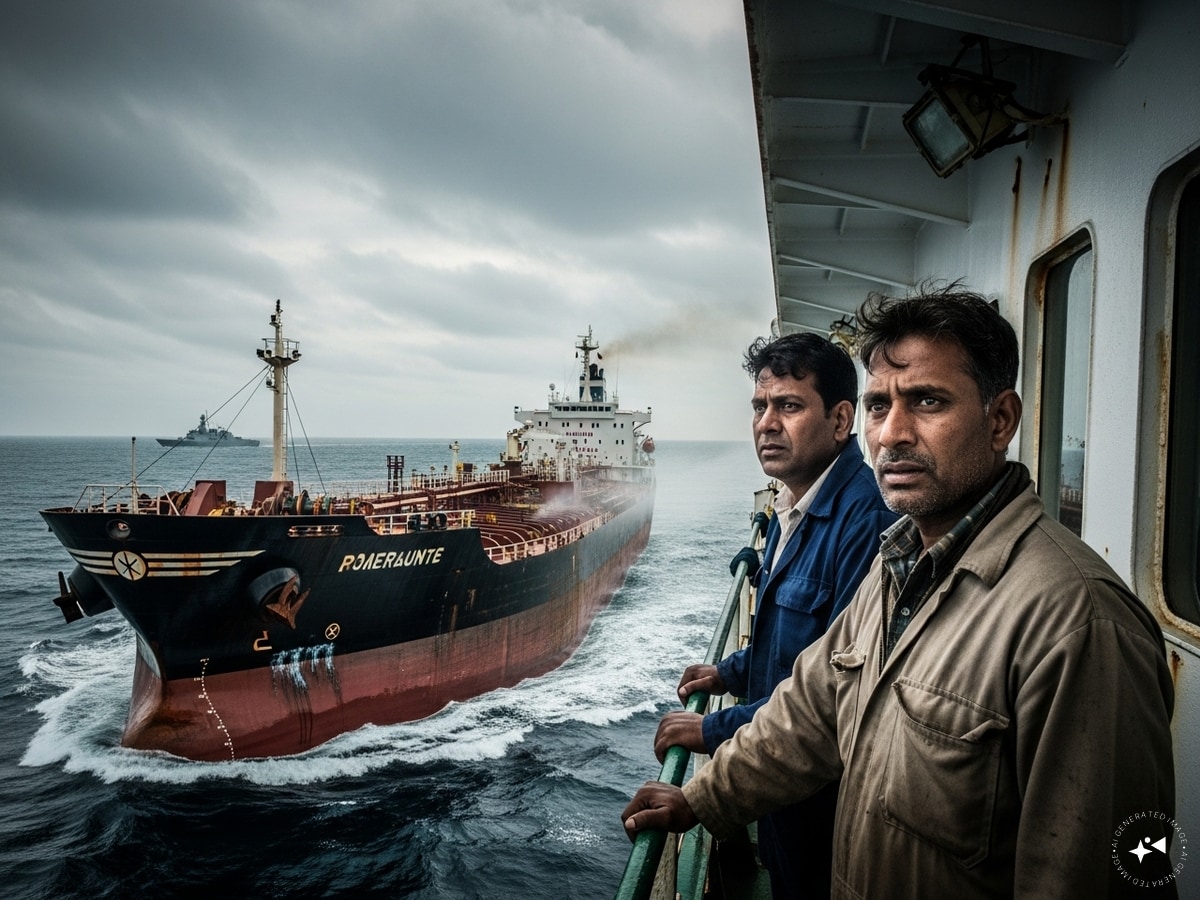
The Gulf of Oman is turning into a kinetic shooting gallery, and the latest casualties aren't military combatants. They're civilian mariners. When the US Navy fired Hellfire missiles into the engine room of the Guinea-Bissau-flagged tanker MT Jalveer, it marked a terrifying shift in how the Western coalition enforces its naval blockade against Iran.
This wasn't an isolated warning shot. It was the third commercial merchant ship targeted by American forces in a four-day blitz. The fallout has reached far beyond Washington and Tehran. Three Indian seafarers are dead, New Delhi is furious, and Iran is using the crisis to score a massive diplomatic point against American foreign policy.
If you think this is just another minor skirmish in the Middle East, you're missing the bigger picture. The rules of engagement for civilian shipping have completely broken down.
Tehran Calls Out State Piracy
Iran didn't waste any time capitalizing on the tragic deaths of the Indian mariners. Iranian Foreign Ministry spokesperson Esmaeil Baqaei took to social media to hammer the United States, branding the military actions as "brutal" and labeling Washington's strategy as "armed robbery and State piracy."
Geopolitics is all about seizing the narrative. By framing the US Navy as a lawless actor threatening global navigation, Tehran wants to flip the script. Remember, Iran is the country that effectively blocked the Strait of Hormuz back in early March, a move that triggered this whole mess after US and Israeli strikes hit the Islamic Republic on February 28.
Now, Tehran is playing the diplomat. Baqaei offered public condolences to the families of the slain sailors and the Indian government, attempting to position Iran as the defender of international norms and maritime safety. It's a calculated move to drive a wedge between Washington and New Delhi, two capitals that have spent the last decade building a tight strategic partnership.
The Cost of the Blockade
To understand why American warships are shooting at civilian tankers, look at what happened on the water over those four bloody days. The US Central Command (CENTCOM) confirmed the strikes, arguing that these vessels were actively trying to breach the US-enforced naval blockade by transporting Iranian oil or violating maritime restrictions.
The targets weren't flying the Indian flag, but they relied entirely on Indian labor to run.
- MT Marivex & MT Settebello: Both Palau-flagged oil tankers were disabled by US forces on June 8 and June 10. The attack on the Settebello turned deadly, killing three Indian sailors: Aditya Sharma, Suresh Patnala, and Shivanand Chaurasiya.
- MT Jalveer: A Guinea-Bissau-flagged bitumen tanker carrying 20 Indian crew members. On June 11, US forces fired two Hellfire missiles straight into its engine room off the coast of Oman, completely disabling the vessel.
CENTCOM maintains that these ships were acting as economic lifelines for Tehran. From Washington's perspective, a blockade is useless if foreign-flagged shadow tankers can sneak past the line. But using lethal force against unarmed merchant ships to enforce an economic embargo is a massive gamble.
India Demands Answers
India isn't staying quiet. For a long time, New Delhi tried to balance its relationships, keeping tabs on its huge diaspora in the Persian Gulf while maintaining ties with both Washington and Tehran. That quiet diplomacy shattered this week.
The Ministry of External Affairs (MEA) took the rare step of publicly calling out the US Navy. MEA spokesperson Randhir Jaiswal made it clear that using deadly force against civilian shipping is entirely unacceptable. India formally summoned US Charge d'Affaires Jason Meeks to lodge a fierce protest. Former Indian diplomats haven't held back either, calling the American actions "deplorable" and describing the military's approach as worse than a bully going all guns blazing against defenseless crews.
India has a massive stake in this fight. It has one of the largest seafaring populations in the world. Thousands of Indian mariners sail through the Persian Gulf and the Gulf of Oman every single day. If working on a foreign-flagged tanker means you might take a Hellfire missile to the chest from an American destroyer, the global supply chain is going to face a massive labor crisis.
The Fractured Ceasefire
What makes this situation so volatile is that it's happening during an official truce. The active hostilities that exploded earlier this year were supposed to be paused under an April 8 ceasefire agreement. That arrangement was even extended indefinitely.
Clearly, the truce exists only on paper.
While negotiators try to hammer out a final deal behind closed doors, the reality on the water is chaotic. Former diplomats tracking the region note that even if a peace deal is signed, the underlying economic friction won't disappear. Iran is deeply determined to impose a permanent toll on any vessel passing through the Strait of Hormuz once it reopens. Washington is equally determined to prevent Tehran from monetizing the world's most critical energy chokepoint, where nearly 20% of global crude flows.
When big powers play chicken in a narrow body of water, civilian workers pay the price. The shipping companies hide behind flags of convenience like Palau or Guinea-Bissau to dodge taxes and regulations. The US Navy fires to protect its strategic embargo. Iran uses the fallout for political leverage. Meanwhile, everyday mariners are caught in the crossfire.
If you run a maritime logistics firm or rely on Middle Eastern trade routes, stop assuming the old safety guarantees hold weight. You need to adapt immediately.
- Audit your crew routes: Review the nationality of your crews and the flags your vessels fly. Don't send mixed crews into blockade zones under flags of convenience that western navies are actively targeting.
- Prepare for extended route diversions: Factor in the reality that the Gulf of Oman is a live conflict zone. Rerouting around the Cape of Good Hope isn't just an annoying backup plan anymore; for many commodities, it's becoming the only way to keep your crew alive.
- Demand explicit security protocols: Shipping associations must pressure maritime authorities for clear rules on how blockades will be enforced. Demurrage costs are nothing compared to losing a hull or a crew to a missile strike.


