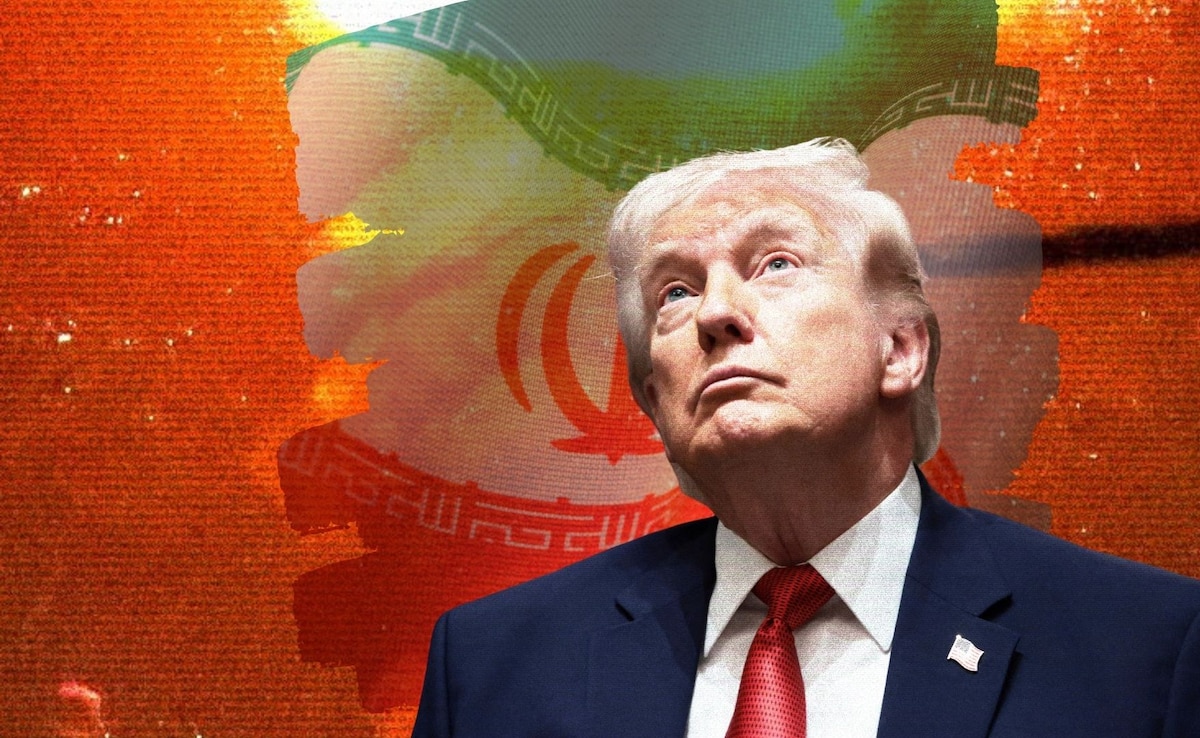
The current communicative friction between Washington and Tehran represents a breakdown of traditional signaling protocols, replaced by a high-stakes game of psychological brinkmanship that masks structural military constraints. When Donald Trump asserts that "whole civilization will die" and Iranian officials counter with clinical diagnoses of "psychopathy," the objective is not a declaration of immediate war but a contest for the dominance of the narrative space. This rhetorical escalation follows a predictable sequence of deterrence-seeking behaviors designed to influence internal political bases and external geopolitical adversaries.
Analysis of this friction requires stripping away the hyperbolic layer to examine the actual mechanisms of escalation, the economic levers at play, and the rigid physical limits that prevent rhetoric from transitioning into a global kinetic catastrophe.
The Triad of Deterrence Theater
The current exchange operates through three distinct functional layers. Each layer serves a specific strategic goal that has little to do with the literal content of the statements.
- Existential Stakes Inflation: By claiming "whole civilization will die," the speaker shifts the debate from a regional policy dispute to a global existential crisis. This creates a "logic of the extreme" where any outcome short of total destruction is framed as a victory of the speaker’s restraint or a failure of the opponent’s sanity.
- Pathologizing the Adversary: Iran’s labeling of the US President as a "psychopath" serves a clinical purpose in international relations: it de-legitimizes the opponent as a rational actor. If a leader is deemed irrational, traditional diplomacy is framed as impossible, which justifies unilateral defensive postures and rallies domestic nationalist sentiment against a "mad" foreign entity.
- Signal Noise Saturation: Massive rhetorical swings create enough noise to mask actual tactical shifts. While the public focuses on the hyperbolic language, the real data points—troop movements, enrichment levels, and sanctions enforcement—become harder for the casual observer to track.
The Economic Barrier to Total Conflict
The structural reality of the global energy market acts as a hard floor for these rhetorical flights of fancy. Regardless of the words spoken, the "Civilizational Collapse" scenario faces a massive friction point: the Strait of Hormuz.
The physics of global energy logistics dictates that any kinetic escalation in the Persian Gulf triggers a nonlinear price response in Brent Crude. A sustained blockage or high-intensity conflict in this corridor risks removing roughly 20% of the world’s petroleum liquids from the market. The resulting economic shock would not just impact the direct combatants but would destabilize the global credit markets.
This creates a Cost Function of Escalation where the rhetorical "price" of threats is cheap, but the "execution price" of a full-scale conflict is prohibitively high for both the US and Iran. The US seeks to maintain global economic stability to protect its domestic growth, while Iran’s regime relies on the survival of its infrastructure to maintain its grip on power. The hyperbole serves as a pressure release valve—allowing leaders to appear strong without actually triggering the economic self-immolation that real war would entail.
Breaking Down the Cognitive Map of Brinkmanship
The logic used in these statements relies on a specific psychological framework known as the Madman Theory, originally popularized during the Cold War. The core premise is that if you can convince your opponent you are volatile enough to do the unthinkable, they will be more likely to concede on smaller, tangible points.
- Calculated Unpredictability: Trump’s rhetoric utilizes the threat of disproportionate response to force a recalibration of the adversary's risk assessment.
- The Credibility Gap: For this to work, the threat must be just believable enough to induce fear, but not so certain that it forces the opponent into a "nothing to lose" defensive strike.
- Reciprocal Radicalization: Iran’s response mirrors this. By calling the US leader a psychopath, they signal that they are not intimidated by "rational" threats because they view the threat-maker as fundamentally detached from reality.
This creates a stalemate of perceived insanity. When both sides claim the other is irrational, the standard diplomatic channels are bypassed in favor of direct-to-public messaging.
The Strategic Bottleneck of Kinetic Action
Moving from rhetoric to action requires overcoming significant logistical and political bottlenecks. Neither side has the current positioning to execute the "civilizational" threats issued in these statements.
The US military posture in the Middle East is currently optimized for counter-terrorism and regional stability, not for the massive, sustained occupation or total neutralization of a nation with Iran's geography and population density. Iran, conversely, possesses an "asymmetric denial" capability—using mines, fast-attack craft, and proxy networks—rather than a "force projection" capability.
This mismatch means that while both sides can hurt each other significantly, neither can achieve a decisive, low-cost victory. The "Whole Civilization" comment is therefore a mathematical impossibility under current force distributions. It is a linguistic placeholder for a lack of viable, low-risk military options.
Decoding the Domestic Incentive Structures
To understand why this rhetoric persists despite its lack of factual grounding, one must look at the domestic ROI (Return on Investment) for each leader.
The US Political Logic
For a US administration, aggressive rhetoric serves to project a "Peace Through Strength" image to a base that favors non-interventionist but dominant foreign policy. It satisfies the demand for American exceptionalism without the political cost of a "forever war." It is a low-cost method of appearing decisive during an election cycle or a period of domestic turmoil.
The Iranian Political Logic
For the Iranian leadership, being "attacked" by a Western power is a potent tool for internal cohesion. It allows the government to frame economic hardships caused by sanctions as a "national defense" issue rather than a management failure. By pathologizing the US President, they convert a complex geopolitical dispute into a simplified struggle against a singular, "evil" individual.
The Risk of Accidental Escalation via Misinterpretation
The primary danger in this rhetorical cycle is not a planned war, but a miscalculation of intent. When the language reaches the level of "civilizational death," the threshold for interpreting a minor technical accident—such as a drone wandering off course or a naval misunderstanding in the Gulf—as an act of war is significantly lowered.
The "Redline Paradox" occurs here:
- Side A sets a rhetorical redline that is impossibly broad.
- Side B inadvertently crosses a minor, unrelated boundary.
- Side A feels compelled to respond to maintain the credibility of its broader threat.
- Side B interprets the response as the start of the "total war" promised in the rhetoric.
This feedback loop is where the true "psychopathy" of the situation lies. The participants become prisoners of their own hyperbole.
Operational Constraints on Iranian Retaliation
Iran’s response mechanisms are limited by a rigid hierarchy of survival. Their strategic depth is their greatest asset, and they are unlikely to trade it for a rhetorical victory. Their "Cost-Benefit Ledger" for responding to US threats usually includes:
- Proxy Activation: Utilizing groups in Lebanon, Iraq, and Yemen to apply pressure without a direct Iranian return address.
- Nuclear Dialing: Increasing enrichment levels by small percentages to create a "time-pressure" variable in negotiations.
- Cyber Operations: Low-attribution attacks on infrastructure that provide a "hit back" without triggering a physical counter-strike.
None of these actions lead to the "death of civilization," but they provide enough tactical friction to keep the US engaged in a costly, low-intensity standoff.
Structural Prose and the Power of the Void
The most striking feature of these exchanges is what they lack: specific, actionable demands. In a functional diplomatic environment, a threat is followed by a condition ("If you don't do X, we will do Y"). The current "Civilization vs. Psychopath" dialogue lacks "X."
Without a clear demand, the threats become pure atmospheric pressure. They are designed to create a feeling of impending doom that makes the eventual return to the status quo feel like a relief. This is the Geopolitical Gaslighting technique, where the "normal" (which is actually a state of heavy sanctions and proxy conflict) is rebranded as "peace" compared to the "total death" being discussed in the headlines.
Technical Limitations of the "Total War" Narrative
A "total war" scenario between these two entities would require a level of mobilization not seen since the mid-20th century.
- Logistical Throughput: The US would need to redirect assets from the Pacific theater, effectively ceding dominance in the South China Sea—a trade-off that is strategically unacceptable.
- Hard Currency Reserves: Iran would need to sustain its economy under a total blockade, which is impossible given its current inflation rates and dependence on grey-market oil sales.
- Public Appetite: Neither population shows a statistical desire for a high-casualty, high-cost conflict.
When the technical requirements for a threat cannot be met, the threat itself must be viewed as a tool of information warfare rather than a statement of intent.
The Strategic Play: Navigating the Rhetorical Fog
The play for any observer or stakeholder in this environment is to ignore the "End of the World" headlines and focus on the Mean-Reversion of Conflict. Historically, these spikes in rhetoric are followed by a quiet period of back-channel negotiation or a shift in focus to a different regional flashpoint.
The immediate tactical moves will likely include:
- Increased Naval Presence: A physical manifestation of the verbal threat, intended to "show the flag" without firing a shot.
- Targeted Sanctions: Specific designations of individuals or companies that provide a tangible "win" for the US administration to present to the media.
- Domestic Posturing: Iranian "war drills" that are filmed and broadcasted to show readiness, intended for internal consumption.
The rhetoric has reached its ceiling. There are no more superlatives left to use after "the end of civilization." When language can no longer escalate, the only remaining options are a catastrophic mistake or a gradual de-escalation into the previous state of "managed hostility." Given the economic and physical constraints, the latter remains the high-probability outcome. The strategy is to monitor the VIX of Geopolitics—the volatility index of these statements—and recognize that the higher the rhetorical volume, the more likely it is covering a lack of viable kinetic options.