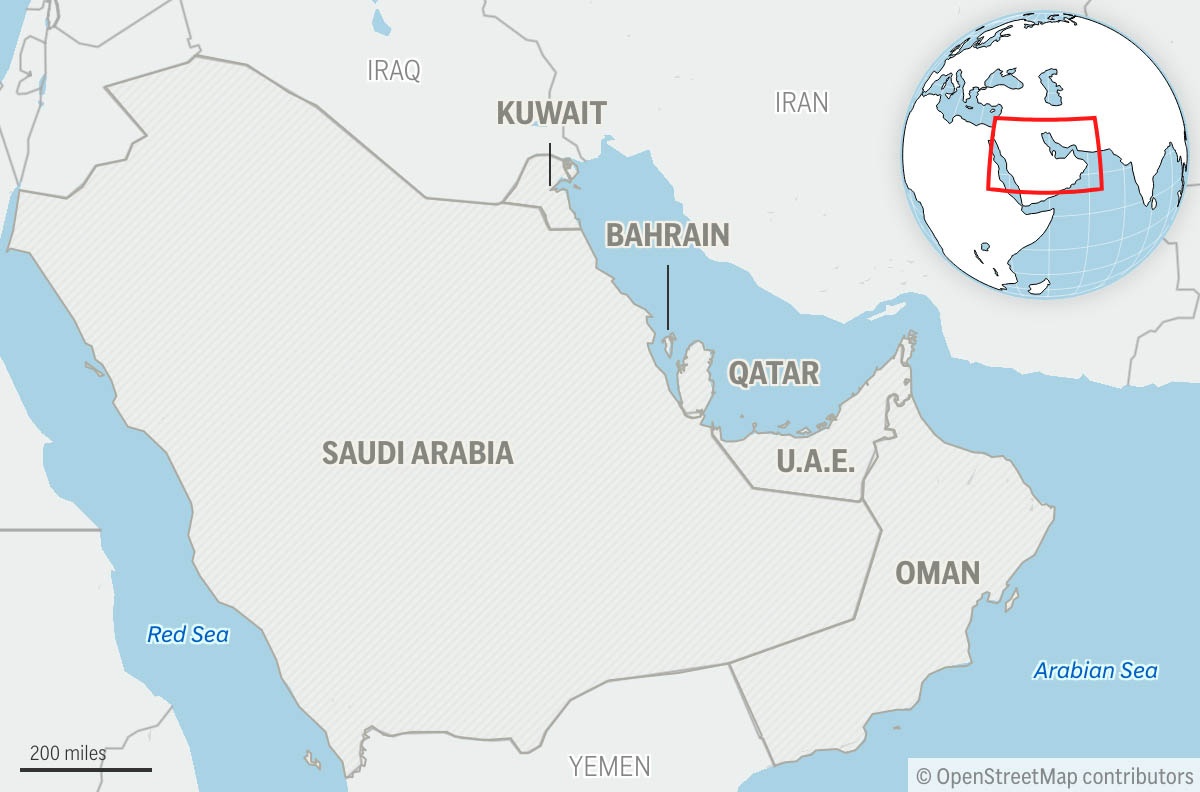
The tactical exchange of kinetic strikes between the United States and Iran over the June 1, 2026 weekend demonstrates a systemic breakdown in asymmetric deterrence frameworks. While regional commentary treats the shootdown of an American MQ-1 Predator drone, subsequent U.S. strikes on Qeshm Island and Geruk, and the retaliatory ballistic missile and drone assault on Kuwait as isolated provocations, these events represent a predictable escalation loop driven by structural flaws in the seven-week-old ceasefire agreement.
Understanding this escalation requires evaluating the strategic motivations of both state actors, the vulnerabilities of regional logistics hubs, and the economic variables currently driving global commodity instability.
The Attrition Cycle of Asymmetric Escalation
The weekend's engagements follow a distinct, structural pattern of horizontal escalation. The cycle initiated when Iranian air defense units brought down a U.S. Army-operated MQ-1 Predator drone over international waters in the Persian Gulf. The U.S. response, executed by Central Command (CENTCOM), utilized precision strike aircraft to neutralize radar systems, an early warning telecommunications tower, and a drone ground control station near Geruk and on Qeshm Island.
Iran's Islamic Revolutionary Guard Corps (IRGC) retaliated through a targeted ballistic missile and one-way attack drone salvo directed at Ali Al Salem Air Base in Kuwait, which serves as the forward command hub for U.S. Army Central.
http://googleusercontent.com/image_content/211
This crossfire illustrates the underlying mechanics of what can be defined as the Kinetic Attrition Function. In this framework, both actors seek to impose costs without crossing the threshold into total theater mobilization. This function is governed by three specific operational variables:
- Symmetric Deniability vs. Proportional Response: The U.S. relies on unmanned aerial vehicles (UAVs) to conduct intelligence, surveillance, and reconnaissance (ISR) without risking human pilots. Iran leverages the economic asymmetry of cheap kinetic platforms—such as Fateh-110 ballistic missiles and one-way attack drones—to offset the superior qualitative capabilities of U.S. fifth-generation fighter aircraft.
- Targeting Infrastructure Neutralization: The U.S. target selection focused specifically on Iran's command-and-control (C2) architecture. By eliminating the ground control station and localized radar arrays, CENTCOM sought to temporarily degrade Iran's maritime domain awareness and drone projection capabilities around the Strait of Hormuz.
- Geographic Displacement of Retaliation: Rather than engaging U.S. naval assets directly within the Gulf, the IRGC directed its response at Kuwait. Kuwait represents a high-value, fixed target hosting critical U.S. logistical infrastructure. Firing upon Ali Al Salem Air Base allowed Iran to signal its ability to penetrate regional air defense umbrellas without directly striking a U.S. Carrier Strike Group, which would necessitate a catastrophic, non-linear escalation.
Air Defense Vulnerabilities and the Kuwaiti Logistics Bottleneck
The interception of Iranian assets by Kuwaiti air defense systems highlights a critical vulnerability in the Gulf Co-operation Council (GCC) defensive architecture. While Kuwaiti military command reported successful engagements against incoming threats, fragments from an intercepted Fateh-110 ballistic missile struck Ali Al Salem Air Base, injuring five American personnel and damaging two MQ-9 Reaper drones on the tarmac.
This outcome exposes the limitation of modern integrated air and missile defense (IAMD) systems. In a high-density saturation attack, terminal-phase interceptions still yield high kinetic energy debris fields. When defensive batteries are co-located with high-value targets, the debris footprint can inflict substantial damage on soft targets, such as parked aircraft, fuel bladders, and personnel accommodations.
Furthermore, targeting Kuwait serves an intentional political-military function for Tehran. The country acts as a primary logistical staging ground for U.S. ground forces in the Middle East. By transforming Kuwait into a kinetic zone, Iran forces a reassessment of the risk calculus for host nations. The strategic objective is to create political friction between Washington and its Gulf allies, demonstrating that hosting U.S. military command elements carries a direct domestic security tax.
Economic Chokeholds: Hormuz and the Chemical Fertilizer Crisis
While the military maneuvers remain confined to localized exchanges, the macroeconomic fallout is expanding globally. The ongoing conflict has paralyzed commercial transit through the Strait of Hormuz. A fifth of globally traded liquefied natural gas (LNG) and crude oil remains bottled up behind the Iranian blockade, but the secondary economic shock is emerging in the agricultural sector.
The Persian Gulf region accounts for approximately 30 percent of globally traded chemical fertilizers, including urea, ammonia, and sulfur products. The enforced blockade has choked off export routes, creating an immediate supply-side deficit in international agricultural supply chains.
[Strait of Hormuz Blockade]
       │
       ├─► Energy Sector: 20% of Global Crude & LNG Supply Interrupted
       │
       └─► Agricultural Sector: 30% of Global Chemical Fertilizer Halted
               │
               └─► Result: Immediate Global Food Supply Chain Inflation
The continuation of this maritime interdiction creates an inflationary bottleneck that cannot be easily mitigated by alternative overland or Western hemisphere production facilities. The U.S. Navy’s recent kinetic intervention against a Gambia-flagged cargo ship attempting to breach the blockade of Iranian ports underscores the rigid enforcement of counter-blockade measures. The resulting disruption to chemical fertilizer distribution introduces a structural lag into global food production, ensuring that even if a diplomatic settlement is reached tomorrow, agricultural yields will face upward pricing pressure for consecutive quarters.
The Ceasefire Negotiation Dilemma
The paradox of the current environment is that these intense kinetic engagements are occurring simultaneously with active ceasefire negotiations. U.S. executive leadership has maintained an optimistic public posture regarding a comprehensive diplomatic settlement, stating that Iran is negotiating under intense economic strain. However, the operational reality on the ground contradicts this optimism.
The primary impediment to a durable agreement is a fundamental misalignment regarding sanctions relief and nuclear enrichment caps. The U.S. position demands verifiable containment of Iran’s highly enriched uranium stockpile before granting access to global financial markets. Conversely, the IRGC’s strategic posture uses tactical escalation as leverage. By demonstrating its capacity to disrupt global energy markets, damage U.S. assets in Kuwait, and threaten regional stability, Tehran attempts to increase the cost of delay for Washington.
This dynamic creates a volatile bargaining framework where both sides utilize kinetic leverage to influence terms at the negotiating table. The risk inherent in this strategy is the thin margin for error; an unintercepted missile resulting in mass U.S. casualties would instantly collapse the diplomatic track and trigger a full-scale theater campaign.
Tactical Recommendation for Regional Asset Protection
To mitigate the immediate operational risks identified in the Kuwaiti theater, U.S. Central Command and its regional partners must transition from a reactive defensive posture to an active defensive re-alignment.
First, defense forces must execute an immediate geographic dispersion of high-value aviation assets currently stationed at Ali Al Salem Air Base. Keeping long-range assets like MQ-9 Reapers concentrated on fixed, well-mapped airfields within the striking range of Iranian short-range ballistic missiles (SRBMs) creates an unacceptable vulnerability.
Second, IAMD engagement doctrines must be modified. Interception profiles should be calculated to engage incoming threats further up the terminal trajectory, shifting the projected debris fields away from base perimeters and into unpopulated desert corridors.
Finally, the U.S. must increase maritime escort frequencies for non-aligned commercial vessels carrying agricultural precursors out of non-Iranian Gulf ports, utilizing localized counter-battery threats to deter Iranian coastal missile installations. This tactical shifts can neutralize Iran's leverage without requiring a formal exit from the broader diplomatic negotiation framework.