Strategic Summary
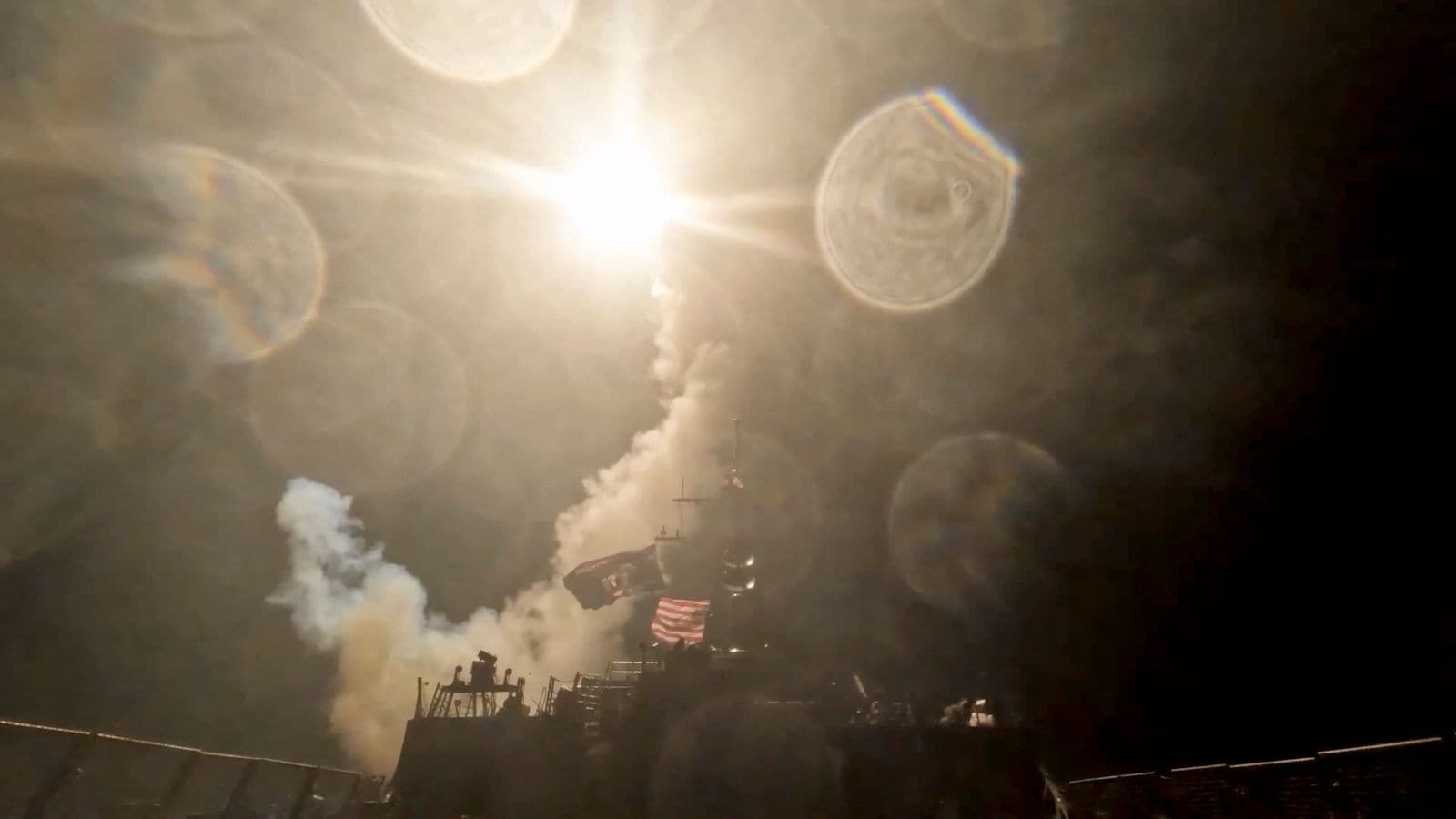
The military exchanges between Western naval forces and Iranian-aligned actors in the Red Sea reflect a structural conflict between asymmetric coastal interdiction and blue-water maritime security. What standard media coverage frames as tactical retaliatory strikes is a friction loop driven by economic asymmetry, geographic leverage, and anti-access/area-denial (A2/AD) economics. Strategic control of the Bab al-Mandab Strait depends on managing asymmetric cost curves rather than total territorial control or naval supremacy.
The Asymmetric Cost Dynamics of Maritime Interdiction
Maritime choke-point conflicts operate under a stark operational imbalance: the cost asymmetry between offensive precision-guided munitions deployed by non-state or regional actors and the defensive capabilities required to counter them. Discover more on a similar topic: this related article.
Defensive Economics
Naval task forces operate high-value surface combatants (such as Arleigh Burke-class destroyers) utilizing integrated air defense systems. The interceptors deployed—such as the SM-2, SM-6, or ESSM—carry unit costs ranging from $1.5 million to over $4 million per launch.
Offensive Economics
Attacking forces utilize a combination of uncrewed aerial vehicles (UAVs), anti-ship cruise missiles (ASCMs), and anti-ship ballistic missiles (ASBMs). Shahed-series loitering munitions cost between $20,000 and $50,000 per unit. Further analysis by Al Jazeera highlights comparable perspectives on the subject.
This creates a negative cost ratio of up to 100:1 on individual engagements. Defensive success maintains the status quo, whereas a single leak through the defensive umbrella results in structural disruption to international trade routes. The economic target is not merely the military asset deployed, but the risk tolerance of commercial maritime insurers.
The Three Pillars of Maritime Chokepoint Disruption
The operational framework of the crisis relies on three distinct operational vectors designed to degrade global shipping throughput without requiring parity in naval force projection.
+-----------------------------------------------------------------------+
|                 MARITIME DISRUPTION FRAMEWORK                         |
+-----------------------------------------------------------------------+
|                                                                       |
|  1. KINETIC THREAT VECTOR                                             |
|     * Anti-ship ballistic/cruise missiles                             |
|     * Low-cost uncrewed aerial vehicles (UAVs)                        |
|     * Goal: Force defensive saturation & physical hull disruption      |
|                                                                       |
|  2. INSURANCE & CAPITAL FRICTION                                      |
|     * War risk premium escalation                                     |
|     * Reinsurance market pullbacks                                    |
|     * Goal: Render routes economically unviable prior to physical attack|
|                                                                       |
|  3. SUPPLY CHAIN EXTENSION                                            |
|     * Cape of Good Hope rerouting (+10 to 14 days transit)            |
|     * Container capital lockup & localized capacity deficits          |
|     * Goal: Amplify global inflationary pressures                     |
|                                                                       |
+-----------------------------------------------------------------------+
1. Kinetic Threat Saturation
Attacking forces deploy mixed-salvo strike tactics combining low-velocity UAVs with high-velocity ballistic assets. The tactical goal is not necessarily sinking guided-missile destroyers, but saturating radar tracking systems, exhausting kinetic interceptor magazines, and increasing the probability of a successful hit on unarmored commercial hulls.
2. Insurance and War Risk Premiums
Physical strikes trigger exponential increases in War Risk Insurance rates. When premiums exceed commercial margins, shipping operators opt out of the route regardless of the presence of naval escorts. The strategic effect is achieved financially rather than purely through physical destruction.
3. Supply Chain Transit Expansion
Forcing commercial traffic around the Cape of Good Hope adds 3,000 to 3,500 nautical miles to East-West transit routes. This incurs significant operational costs:
- Increased fuel consumption per voyage (adding $400,000 to $1,000,000 depending on vessel size and speed).
- Absorbed container capacity, effectively removing 10–15% of global shipping volume due to longer turnaround times.
- Port congestion across European and Mediterranean hubs due to disrupted arrival schedules.
Escalation ladder Logic and Strike Efficacy
Western retaliatory strikes target sensor networks, launch pads, command nodes, and weapon storage sites. The goal is to alter the offensive calculus by destroying inventory and command-and-control infrastructure.
The limits of this strategy stem from the decentralized, highly mobile nature of modern coastal missile operations:
- Target Identification Lag: Transposable, mobile launch platforms (such as light trucks or concealed launcher tubes) possess short setup-to-launch cycles. Counter-battery strikes often hit pre-designated geographical coordinates after launch units have relocated.
- Deep Inventory Reserves: Regional production networks ensure continuous replenishment of low-cost drone components, rendering attritional campaigns against storage facilities slow and resource-intensive.
- Escalation Asymmetry: Escalating kinetic strikes risks broadening regional conflict vectors, opening additional operational fronts in neighboring waterways or land operations.
Strategic Implications for Global Trade Architecture
The Bab al-Mandab Strait handles approximately 12% of global trade and nearly 30% of global container traffic. Continued instability fundamentally alters maritime risk assessment.
Long-Term Operational Adaptations
Major ocean carriers are transitioning from just-in-time logistics toward redundant inventory models. Shippers must accept higher baseline freight rates to accommodate longer transit routes, or absorb volatility spikes driven by spot-market insurance surges.
Limits of Western Naval Power Projection
Standard sea-lane defense doctrine assumes state-on-state engagements with clear targets and symmetric engagement rules. Modern chokepoint warfare demonstrates that low-cost, decentralized standoff weapons can temporarily neutralize high-tech blue-water superiority within restricted maritime corridors.
Naval forces must shift from expensive sea-to-air kinetic interceptors toward scalable soft-kill measures, directed-energy point defense systems, and targeted disruption of supply chains feeding the manufacturing of these strike assets. Until defensive engagement costs mirror offensive production costs, tactical air campaigns will achieve only temporary suppression rather than permanent deterrence.


