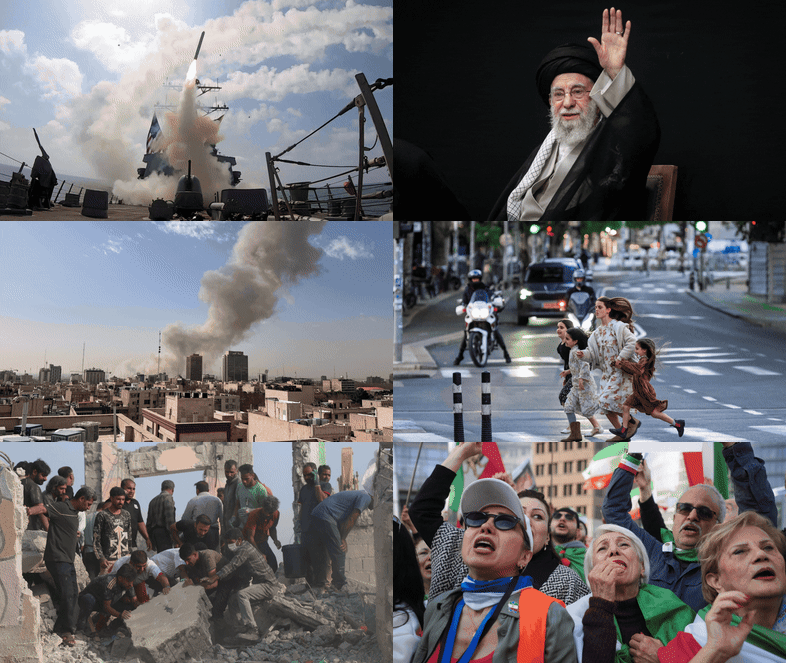
The cycle of direct military engagement between Israel, the United States, and Iran has shifted from a shadow war into a visible, high-stakes theater of kinetic exchange. When Tehran launched its recent retaliatory strikes, it wasn't just responding to a specific tactical loss. It was attempting to redefine a regional "equation" that had leaned too heavily toward unchallenged Israeli and American air superiority. Tehran’s decision to move from proxy-led harassment to direct state-on-state fire signals a collapse of the traditional deterrence models that governed the region for forty years.
Military analysts and intelligence officials have long warned that the "gray zone"—that space where nations fight through cyberattacks, assassinations, and militia movements—was shrinking. It has now vanished. The current reality is a volatile feedback loop where every strike intended to restore order instead invites a more sophisticated counter-strike. This is no longer about symbolic posturing. We are witnessing a calculated test of integrated air defense systems versus mass-coordinated drone and missile swarms, with the geopolitical stability of the global energy market hanging in the balance.
The Failure of Calculated Proportionality
For decades, the doctrine of "proportionality" was the guardrail that kept the Middle East from a total conflagration. If one side hit a drone, the other hit a radar station. This unspoken agreement allowed both sides to save face without mobilizing for total war. That era ended when strikes began targeting high-level diplomatic and military command structures with surgical precision.
When the U.S. and Israel coordinate to degrade Iranian capabilities, they operate on the assumption that superior technology creates a ceiling for escalation. They believe that by showing overwhelming force, they can "educate" the adversary into submission. History suggests otherwise. For the Iranian leadership, the internal political cost of inaction has become higher than the external military cost of retaliation. When a regime feels its core survival or its "revolutionary" credibility is at stake, it stops performing a cost-benefit analysis and starts prioritizing survival through defiance.
This shift has turned the region into a laboratory for twenty-first-century warfare. We are seeing the limits of expensive, high-end interceptors like the Arrow-3 or the Patriot system when faced with the sheer math of low-cost attrition. You cannot continue to fire a $2 million missile to take down a $20,000 drone indefinitely. The economics of this defense are fundamentally broken, and Tehran knows it.
The Infrastructure of Retaliation
Iran’s military strategy is not built on winning a traditional dogfight or a naval engagement in the open sea. It is built on "anti-access/area denial" (A2/AD). By layering thousands of short and medium-range ballistic missiles with autonomous suicide drones, they have created a "porcupine" defense.
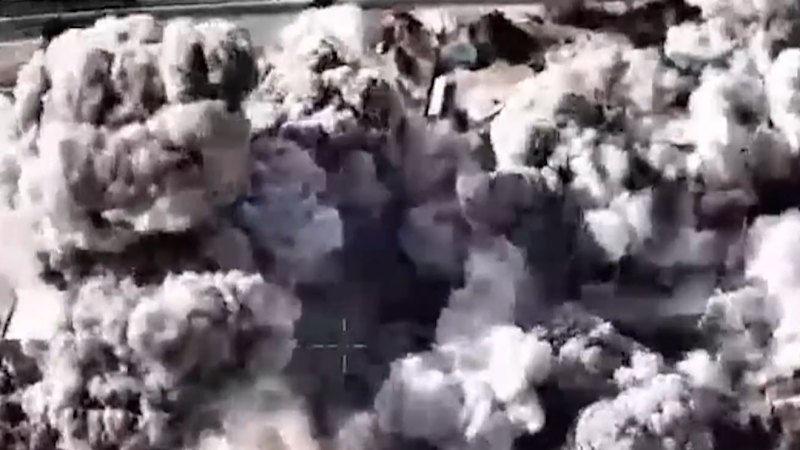
The recent retaliatory waves demonstrate a sophisticated understanding of Western defense architecture. The goal isn't necessarily to level a city; it is to overwhelm the "brain" of the defense system. By launching slow-moving drones first, they force the defenders to activate radars and expend ammunition. Only then do the high-speed ballistic missiles follow, looking for the gaps created by the initial sensory overload.
The Role of the Domestic Audience
We often overlook the fact that these strikes are televised events designed for a domestic and regional audience. In Tehran, the government needs to prove to its hardline base and its regional "Axis of Resistance" that it is not a paper tiger. Every missile launch is a propaganda asset. Conversely, in Jerusalem and Washington, the pressure to show that "no strike goes unanswered" creates a political imperative that often overrides long-term strategic caution.
This creates a "commitment trap." Once a leader publicly vows that the next strike will be the last, they lose the flexibility to de-escalate. They are held hostage by their own rhetoric. The result is a staircase where every step leads upward, and nobody has designed an exit ramp.
The Intelligence Gap and the Risk of Miscalculation
The greatest danger in the current climate isn't a planned invasion. It is a mistake. In a high-tension environment, a technical malfunction or a stray missile hitting a high-casualty civilian target can trigger a full-scale war that neither side actually wants.
Intelligence agencies are currently working overtime to read "signals," but signaling is an imperfect science. If the U.S. interprets an Iranian movement as a defensive posture while Iran intends it as a warning shot, the mismatch in perception can lead to a preemptive strike. This is the "Thucydides Trap" played out in real-time with hypersonic missiles.
The U.S. role has become increasingly complicated. While Washington provides the "ironclad" umbrella for Israel, it is also desperately trying to prevent a surge in oil prices that would crater the global economy. This creates a friction point between the two allies. Israel views Iran as an existential threat that must be neutralized now; the U.S. views Iran as a manageable threat that must be contained to avoid a global recession.
Beyond the Missile Tracks
While the world watches the sky, the real shift is happening on the ground in terms of alliances. This conflict has pushed Iran closer to other global powers looking to challenge Western hegemony. We are seeing an exchange of military technology—drones for fighter jets, satellite data for electronic warfare suites—that makes the Iranian military far more formidable than it was five years ago.
This isn't just a regional spat anymore. It is a peripheral theater of a much larger global realignment. Every time a Western-made interceptor hits a Persian-made drone, data is collected. That data is being analyzed not just in Tehran, but in Moscow and Beijing. The Middle East has become the ultimate testing ground for the weapons that will define the next several decades of global conflict.
The Illusion of a Final Blow
There is a persistent myth in some policy circles that a single, massive strike could "reset" the Iranian regime or eliminate its nuclear and military programs. This is a dangerous fantasy. Iran’s military infrastructure is deeply buried, highly decentralized, and redundant.
A massive strike would likely achieve the opposite of its intended goal. It would solidify nationalistic sentiment within Iran, provide the justification for an overt sprint toward a nuclear weapon, and trigger every proxy group from Lebanon to Yemen to ignite the entire region. The "final blow" doesn't exist in a landscape this complex. There is only the management of friction.
The current situation demands a move away from the "strike and counter-strike" rhythm toward a more grueling, less satisfying form of diplomacy that acknowledges the new military parity. The old world, where one side held all the cards, is gone. We are now in a world of shared vulnerability.
If the goal is truly stability, the focus must shift from how to win the next exchange to how to stop the next exchange from happening. This requires a level of diplomatic creativity that has been absent from the theater for years. It requires understanding that deterrence isn't just about the power to destroy; it's about the credibility of the promise not to destroy if certain conditions are met. Without that second half of the equation, you don't have deterrence. You just have a slow-motion war.
Analyze the telemetry of the last three exchanges. The window between the "trigger" and the "response" is getting shorter. The weapons are getting faster. The room for human intervention is being squeezed out by automated systems. We are approaching a point where the machines of war will dictate the pace of the conflict, leaving the politicians to simply explain the wreckage after the fact.