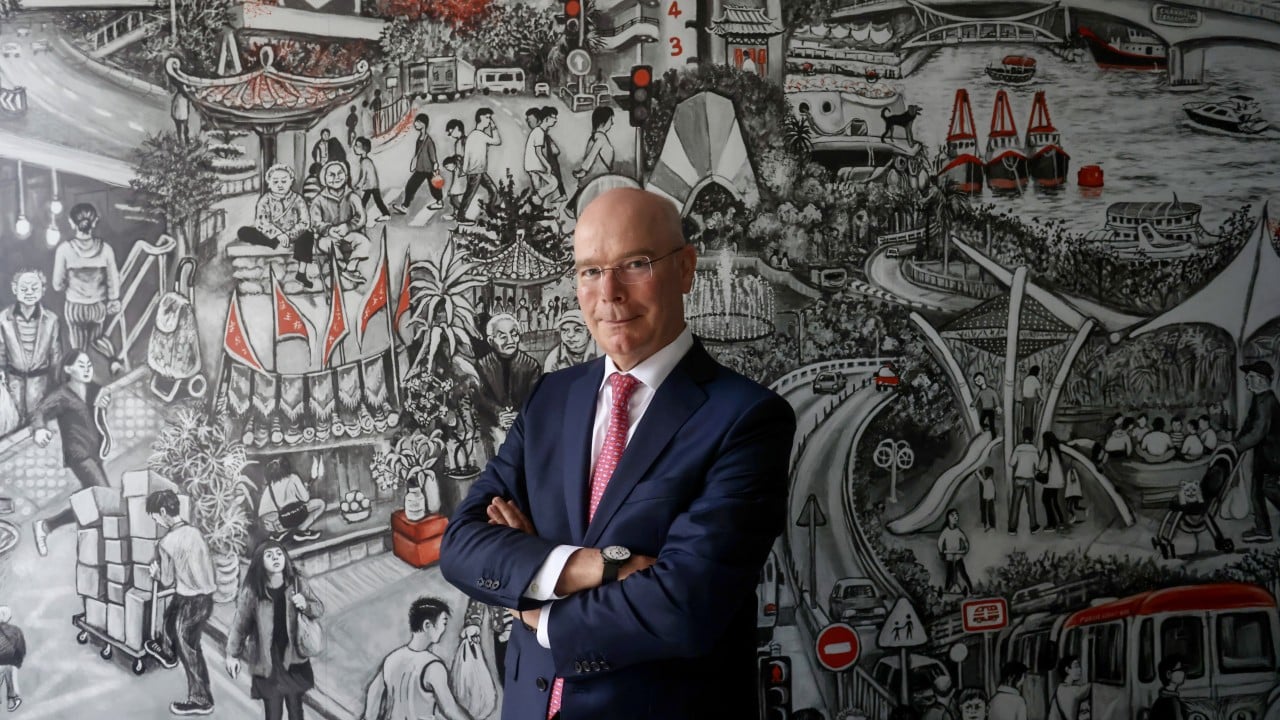
Geographic distance creates an echo chamber. When European executives sit in Frankfurt, Paris, or Brussels offices, their primary stream of information about Asian financial hubs often comes through a filter of geopolitical anxiety and sweeping media narratives. Johannes Hack, chairman of the European Chamber of Commerce in Hong Kong, is packing his bags for Brussels to change that reality.
The core mission is clear: remind European lawmakers and corporate boards that Hong Kong operates under a distinct economic framework, separating it fundamentally from mainland Chinese urban centers despite political integration. If you are a Western investor trying to navigate Asia right now, understanding this divergence matters immensely.
The Brussels Disconnect
Trade tensions between Beijing and the European Union have spiked significantly. Brussels regulators view the Chinese market through an increasingly defensive lens, implementing strict protective measures, anti-subsidy probes, and supply chain restrictions. Unfortunately, Hong Kong frequently gets caught in the crossfire of this broad regulatory brush.
Many European decision-makers assume the city has lost its operational autonomy. They picture a restricted marketplace choked by heavy-handed state control. That perception completely misses the ground reality experienced by foreign companies operating daily inside the city.
Hong Kong still maintains separate legal traditions based on English common law, independent judicial review, a fully convertible currency pegged to the US dollar, and low tax structures. Capital moves freely out of the city. International arbitration remains trusted. These pillars separate Hong Kong from Shenzhen or Shanghai, yet European policy circles routinely blur the lines.
What Corporate Leaders Experience on the Ground
Living and working in the city reveals a different narrative. European chambers point out that companies utilize the territory precisely because it acts as a legal and financial buffer zone.
You can manage regional supply chains, tap into deep liquidity pools, and execute transactions using familiar international legal protections. Johannes Hack's delegation to Brussels intends to put real-world corporate testimonies directly in front of EU officials who rarely hear from executives actually stationed in the region.
European firms operating locally value specific advantages:
- Unrestricted cross-border flow of capital and data, contrasting sharply with mainland data security laws.
- A multilingual, highly international workforce proficient in English and accustomed to Western corporate governance standards.
- Direct operational access to the Greater Bay Area without requiring companies to abandon international legal safeguards.
The Cost of Misunderstanding
Ignoring these operational nuances carries a heavy price tag for European competitiveness. While Western firms hesitate, second-guess, and pull back due to headline-driven fear, competitors from other regions step into the vacuum.
If European multinationals cede ground in Hong Kong based on political optics rather than economic facts, they lose their premier gateway into Asian markets. The city remains a launchpad for regional expansion. Treating it as a lost cause means handing market share to domestic or other international competitors who evaluate the territory on operational metrics rather than political talking points.
Navigating the Reality Gap
Bridging this gap requires active engagement rather than passive observation. Business leaders cannot rely on diplomatic channels alone to protect commercial interests.
If your company evaluates regional exposure in Asia, separate local reality from generalized geopolitical noise. Look closely at where your capital sits, how contracts are enforced, and what legal recourse remains active. The upcoming dialogue in Brussels signals a crucial pushback against narrative-driven decline, but executive strategy must adapt at the corporate level. Audit your Asian operations based on actual performance and regulatory freedom, not distant media cycles.


