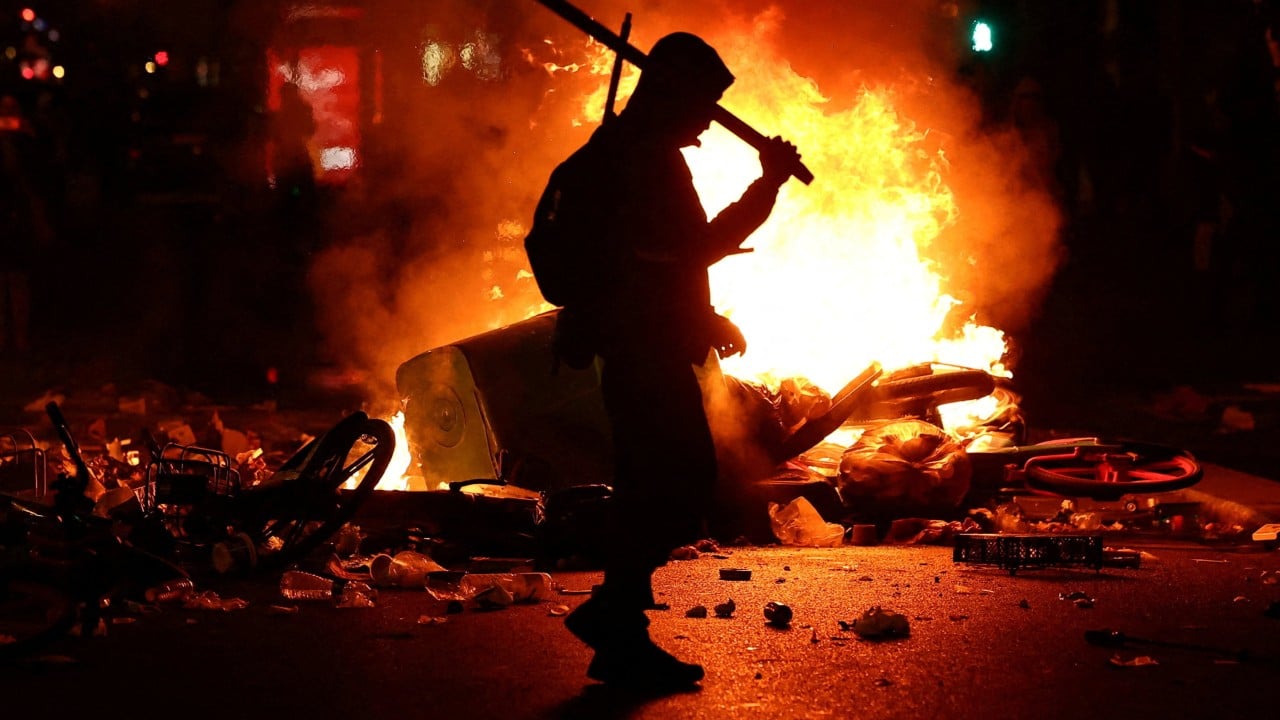
Read enough coverage of unrest from Paris to Tirana and you will walk away convinced Europe is burning down over grocery bills, fuel taxes, or a bad election. That is lazy consensus. Lazy consensus is cheap. It lets commentators point at a burning bin, blame inflation or Brussels, and file copy before lunch.
It also gets the mechanics backward.
Street anger across Europe rarely starts as a simple math problem over a loaf of bread or a liter of diesel. Prices move every month. People complain every month. Most of the time, they swallow the cost and keep working. Riots erupt when citizens decide the bargain between effort, security, and voice has been broken beyond repair.
I have spent years watching political risk teams, policy shops, and corporate strategy desks misread street mobilization across Europe. They treat protests like weather—sudden storms caused by high pressure in one spot. I have seen boardrooms burn serious money repositioning supply chains or hedging currencies based on headlines that mistook a constitutional or institutional rupture for a temporary consumer tantrum.
Here is the sharper truth: what looks like a single continental wave of chaos is actually a series of local pressure cookers blowing off steam over different versions of the same failure. Comparing a pension clash in France, a cost-of-living or anti-corruption flare-up in the Western Balkans, a farming standoff in Germany or Poland, and a housing revolt in a tourist-heavy capital as if they share one tidy cause is analytical malpractice.
The Lazy Consensus Around Street Unrest
Conventional commentary loves a clean villain and a single trigger. One week it is energy prices. The next week it is migration policy, austerity, or a polarizing prime minister.
Look closer at what happens when two cities face similar inflation numbers and only one erupts. Inflation creates friction, not automatic insurrection. If rising prices alone caused riots, every high-inflation economy would be in permanent street combat, and low-inflation economies would stay serene. Neither is true.
Sociologist Charles Tilly mapped out long ago how collective contention works: ordinary grievances sit in the background for years until shifts in opportunity, threat, and perceived legitimacy turn grumbling into organized action. Political scientist Sidney Tarrow made a related point about protest cycles—when institutions look brittle, unresponsive, or captured by insiders, grievances that used to stay inside union halls or ballot boxes spill onto the pavement.
When commentators reduce street clashes in Paris, Tirana, Madrid, Berlin, or Warsaw to "people are mad about money," they flatten distinct political economies into one cartoon. A French public-sector walkout operates inside a high-tax, high-transfer welfare state where citizens expect the state to absorb shocks and negotiate fiercely over who pays. A protest in Tirana operates inside a younger democracy wrestling with institutional trust, emigration drain, EU accession friction, and patronage fatigue. Calling both "the same European riot wave" tells you more about the writer's habits than the streets.
Why Asking "Why Are They Rioting?" Misses the Real Question
People searching for answers to street unrest usually ask two questions: Why are people rioting across Europe? and Is this going to spread?
Both questions start from a flawed premise.
First, "rioting" blurs peaceful mass demonstrations, targeted blockades, labor strikes, and destructive clashes by small fringe groups into one scary bucket. A crowd of eighty thousand marchers is not a riot, even if two hundred people throw fireworks at the end of the route. Conflating the two inflates panic and blinds decision-makers to what the majority actually wants.
Second, asking whether unrest will "spread" treats political contagion like a virus. Ideas and tactics do travel—farmers watch farmers, students watch students, young people watch clips on social feeds—but street action only catches fire where local grievances meet a local bottleneck. A spark in one capital does not ignite another unless the dry tinder is already there.
Imagine a scenario where a government announces a modest utility surcharge during a boom year when wages are rising fast, housing is affordable, and citizens trust courts and regulators to keep prices fair. People grumble. Maybe a few hundred show up at city hall. Now run the same surcharge in a city where real wages have stagnated for a decade, rents eat half a paycheck, public transit is unreliable, and people believe insiders got sweet exemptions. Same surcharge. Completely different explosion.
The better question is not Why are they mad? It is Which part of the social contract stopped delivering, and who lost trust in the fix?
Four Fault Lines Driving Europe's Street Friction
When you strip away the cable-news drama, four structural fault lines keep showing up across European capitals and mid-sized cities alike.
1. The Affordability Squeeze Meets Rigidity
Housing, childcare, healthcare wait times, and daily transport hurt more when markets and regulations make relief slow. In many European metros, supply moves at a crawl while demand concentrates in hubs with jobs and universities. When basic fixed costs eat the cushion families used to rely on, even small shocks feel existential.
2. The Green and Fiscal Transition Bills
Decarbonizing grids, shifting away from cheap Russian pipeline gas, tightening emissions rules, and repairing post-pandemic public balance sheets all cost real money. Nobody sane opposes clean air or fiscal stability in the abstract. People push back hard when the bill lands hardest on commuters with long drives, small growers, or lower-income households while exemptions look tilted toward heavier players.
3. The Representation Gap
Traditional party alignments across Europe have fractured for years. Many voters feel caught between technocratic rules set far away and populist pitches that promise simple revenge without hard trade-offs. When people believe elections change the faces on television without changing their daily squeeze, protests become a blunt instrument to force attention.
4. Institutional Credibility and Rule of Law
In countries like Albania and elsewhere in Southeast Europe, frustrations over corruption, judicial slowness, brain drain, and political capture carry a weight that western European commentary often misreads. Citizens are not just arguing over budget lines; they are testing whether public institutions belong to the public or to entrenched networks.
How Analysts and Leaders Misread the Signal
Most institutions make one of two mistakes when the streets fill up.
Some overreact. They treat every protest as an existential threat to regime survival or market order, freeze hiring or investment, and harden rhetoric until moderate voices get drowned out.
Others underreact. They dismiss demonstrations as "a vocal minority," wait for rain or school holidays to thin the crowd, and change nothing until the next flare-up is larger and angrier.
Both mistakes come from reading volume instead of structure. A small protest tied to a sharp, shared grievance—like a specific tax rule hitting a tight-knit sector or a blatant abuse of public funds—can force policy shifts faster than a huge, diffuse march with ten contradictory demands.
Actionable Moves When the Streets Heat Up
If you run a business, manage capital, advise policymakers, or simply want to read European politics without getting played by headlines, stop chasing the loudest clip and run a tighter playbook:
- Separate the crowd from the clash. Track turnout, organizer demands, and duration separately from property damage or clashes with police. Confusing the two ruins risk assessment.
- Follow the distribution, not just the average. A country's headline inflation or GDP growth number hides sharp pain by age, region, and income tier. Watch housing stress, youth opportunity, and regional wage gaps.
- Audit institutional trust. Before assuming a policy tweak will calm things down, ask whether citizens trust the referee. Where trust in courts, tax agencies, or regulators is thin, even well-meant reforms trigger suspicion.
- Watch the chokepoints, not just the capitals. Logistics corridors, ports, agricultural hubs, and municipal services often reveal economic stress earlier and more concretely than downtown rallies.
Where This Contrarian View Can Go Wrong
Push a contrarian thesis too far and you can miss real danger. I should be blunt about the blind spots in my own argument.
Sometimes the money is the whole story. A sudden spike in food or energy prices can push households past a hard survival line regardless of how much they trust their mayor. Ignoring raw material shocks in the name of "structural nuance" is just another way to be wrong.
Contagion also matters more than neat structural models admit. A dramatic clash streamed live across borders can give frustrated groups a script, a sense of urgency, and a shared symbol overnight. Underestimating political momentum because "the fundamentals look different" has caught plenty of seasoned observers off guard.
Street unrest in Europe is rarely a single story with a single cure. It is a recurring stress test of fairness, competence, and consent.
Stop looking at the fire and start reading the receipt.