European foreign policy circles are obsessed with a profoundly stupid question.
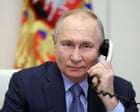
Should Western leaders pick up the phone and call Vladimir Putin, or should they maintain absolute diplomatic silence?
On one side, you have the self-styled "pragmatists" in Paris, Berlin, and Budapest arguing that you cannot end a war without talking to the man who started it. On the other, you have the "moralists" in Warsaw, Tallinn, and Vilnius insisting that dialing the Kremlin legitimizes war crimes, fractures European unity, and hands Moscow a cheap propaganda victory.
Both camps are dead wrong. They are arguing over the medium while completely ignoring the mechanics of coercion.
Whether Olaf Scholz, Emmanuel Macron, or any other European head of state picks up a secure line to Moscow is entirely irrelevant. In international relations, communication is not a concession, and silence is not a strategy. The fixation on "to call or not to call" is a symptom of European strategic paralysis—a comfortable parlor debate that allows Brussels to feel active while avoiding the brutal, expensive realities of hard power.
The Lazy Consensus of Diplomatic Theater
Mainstream commentary frames this European rift as a clash between hard-nosed realism and principled deterrence. That framing is pure fiction. Neither side is practicing realpolitik, and neither side is deterring anything.
Consider the track record of the "callers." In the months immediately preceding and following the February 2022 full-scale invasion of Ukraine, Emmanuel Macron logged dozens of hours on the phone with Putin. The French diplomatic corps genuinely believed that personal rapport and relentless engagement could act as an off-ramp. What did those marathon phone calls actually buy Europe? Zero troop withdrawals. Zero humanitarian corridors that Russia didn't immediately shell. Zero shifts in Moscow’s maximalist war aims. Instead, the Kremlin leaked transcripts and manipulated photos of ridiculously long tables to project dominance to its domestic audience.
Now look at the "boycotters." For over two years, the prevailing orthodoxy across much of Northern and Eastern Europe has been total diplomatic quarantine. The theory goes that isolating Putin at the leader-to-leader level weakens his grip on power and signals unwavering Western resolve. Yet Putin remains firmly entrenched in the Kremlin, the Russian economy has reoriented toward a war footing, and Moscow has spent those same years building deeper transactional ties with Beijing, Tehran, and Pyongyang.
Silence did not topple the regime. Phone calls did not soften it.
Having spent years watching crisis management teams operate during high-stakes geopolitical standoffs, I have seen leaders burn immense political capital debating optics while neglecting incentives. When you lack the credible threat of escalation or the willingness to impose unbearable costs, your phone call is just background noise. And when you refuse to speak while simultaneously hesitating to supply decisive weaponry, your silence isn't strength—it’s just an empty room.
Why Deterrence Theory Exposes the "Phone Call" Fallacy
To understand why this entire debate is broken, we need to strip away the journalistic fluff and look at basic strategic theory.
In the study of coercive diplomacy—pioneered by thinkers like Thomas Schelling in Arms and Influence—communication is simply a transmission belt for threats and assurances. Schelling drew a sharp distinction between compellence (forcing an adversary to undo an action they have already taken) and deterrence (preventing an adversary from taking an action in the first place).
Compelling an entrenched adversary to surrender territory they currently occupy is the hardest task in statecraft. It requires two non-negotiable ingredients:
- Capability: The physical, military, and economic means to make continued occupation agonizingly expensive.
- Credibility: The adversary’s absolute certainty that you have the political will to use that capability until they comply.
Notice what is missing from that equation? Telephone etiquette.
When Washington and Moscow established the hotline after the 1962 Cuban Missile Crisis, nobody in the Kennedy administration thought the phone line itself prevented nuclear war. The hotline worked because it sat on top of thousands of thermonuclear warheads, a naval quarantine, and an unmistakable willingness to risk catastrophic escalation. The words spoken over the wire carried weight solely because of the hardware backing them up.
Compare that to Europe today. European leaders debate calling Putin while their own defense industrial bases are still struggling to meet basic artillery shell quotas. They argue over diplomatic protocol while placing arbitrary geographical restrictions on how Ukraine can use Western-supplied long-range missiles.
Putin does not evaluate European resolve by checking his caller ID. He evaluates it by tracking European ammunition production, energy imports, and parliamentary budget debates. Calling Moscow without credible escalation dominance is like walking into a high-stakes poker game with a pair of twos and trying to bluff by speaking in a deep voice. The other player doesn't care about your tone; they are looking at your chips.
Dismantling the Core Myths of the European Rift
If you look closely at the questions dominating European policy forums and public searches, the flaws in the prevailing logic become glaringly obvious.
Does calling Putin actually legitimize his regime?
No. Legitimacy for an authoritarian leader comes from internal security apparatus control, elite co-optation, and battlefield outcomes—not from a thirty-minute phone call with a Western prime minister. The idea that Vladimir Putin is sitting in Novo-Ogaryovo desperate for social validation from Brussels is pure Western narcissism. Furthermore, diplomacy is not a reward you hand out to well-behaved democracies. You do not need diplomatic channels with your friends; you need them with your enemies precisely because your interests collide. Treating a phone call as a moral endorsement confuses statecraft with high school cafeteria politics.
Does diplomatic isolation weaken Russia’s war effort?
Not on its own. Diplomatic isolation is only effective when it is paired with total economic and military containment. Right now, Europe’s "isolation" of Russia is porous at best. European companies still export billions in goods to Central Asian intermediaries that flow straight into Russia. Shadow fleets of uninsured tankers move Russian crude through European waters every single day. Refusing to speak to the Russian president while continuing to buy Russian liquefied natural gas is not a principled stand. It is performative hypocrisy.
Would direct talks force Ukraine into a bad peace deal?
Only if European leaders are weak enough to negotiate over Kyiv’s head. Talking to an adversary does not mean surrendering your ally's sovereignty. Throughout the Vietnam War, Washington maintained direct, secret backchannels with Hanoi even while bombing North Vietnam and funding Saigon. Talking is simply information gathering. It allows you to test whether the adversary’s private red lines match their public propaganda. Refusing to talk out of fear that you might accidentally give away someone else's territory is an admission that you don't trust your own negotiators.
The Real Reason Europe Is Divided
If the phone call itself doesn't matter, why are European capitals tearing each other apart over it?
Because the debate is a proxy war for Europe’s deeper structural failure: the continent still does not have a unified theory of victory.
Ask ten European foreign ministers what the end state of the war in Ukraine should look like, and you will get ten different answers wrapped in identical bureaucratic platitudes.
- For the Baltic states and Poland, the objective is the strategic defeat of Russia—pushing Russian forces out of all occupied territories and permanently degrading Moscow's ability to threaten its neighbors.
- For several Western and Southern European capitals, the primary objective is escalation management—preventing the war from spilling over NATO borders, avoiding nuclear brinkmanship, and eventually stabilizing the front lines so economic normalcy can return.
You cannot agree on whether to call the Kremlin when you cannot even agree on what you would say if Putin picked up.
If your goal is the total expulsion of Russian forces, a phone call right now is useless unless you are calling to issue an ultimatum backed by overwhelming military force. If your goal is a frozen conflict, a phone call is premature because Russia currently believes it holds the battlefield initiative and has zero incentive to freeze anything on Western terms.
Imagine a scenario where the French President and the German Chancellor jointly call Putin tomorrow morning. What is their opening bid? They cannot offer sanctions relief without fracturing the EU. They cannot offer Ukrainian territory because it isn't theirs to give. They cannot threaten direct NATO intervention because their voters won't support it. So what happens on the call? Putin delivers a forty-minute historical lecture on the ninth-century Rus', demands the demilitarization of Ukraine, and hangs up.
The problem isn't the phone call. The problem is that Europe is trying to conduct diplomacy with an empty hand.
The Uncomfortable Truth About Talking to Autocrats
There is a massive downside to my argument, and any honest strategist has to confront it: badly executed diplomacy does do real damage.
When Western leaders call Moscow unilaterally—without coordinating with Washington, Kyiv, or Brussels—they hand Putin his single greatest strategic asset: division.
When Hungarian Prime Minister Viktor Orbán flies to Moscow on a self-appointed "peace mission," or when a major Western European leader initiates a surprise bilateral call after months of silence, the message received in the Kremlin is crystal clear. Moscow sees a coalition losing its nerve. It sees domestic political pressure in Europe—rising inflation, populist surges, voter fatigue—beginning to crack the Western front.
In an attritional war, the side that believes it can outlast the other's political will never compromises. Every uncoordinated outreach from a European capital convinces Putin that if he just keeps feeding troops into the meat grinder for another six months, the West will fold.
Therefore, the rule for talking to Moscow isn't "never call" and it isn't "always keep the line open." The rule is ruthless discipline.
What Europe Should Actually Do Instead
If European leaders want to stop embarrassing themselves over telephone diplomacy, they need to invert their entire approach. Stop treating communication as a strategy and start treating it as a tactical tool subordinate to raw leverage.
1. Re-establish strict message discipline
Never allow a single European head of state to conduct freelance diplomacy with Moscow. If a message needs to be delivered to the Kremlin, it should be delivered through a single, unified channel—or better yet, quietly through intelligence directors rather than camera-hungry politicians. CIA Director William Burns’s private meetings with Russian intelligence chief Sergey Naryshkin achieved infinitely more in terms of clear nuclear signaling than every publicized presidential phone call combined. No press releases. No photo ops. Just cold, unambiguous communication.
2. Build the leverage before dialing the number
Before any European leader thinks about picking up the phone, Brussels needs to fix the material balance on the ground. That means shifting European defense procurement from peacetime bureaucracy to wartime urgency. It means seizing the roughly $300 billion in immobilized Russian central bank assets—most of which sit in European clearinghouses like Euroclear—and using the principal, not just the windfall profits, to fund Ukrainian air defense and deep-strike capabilities. When Moscow sees that its own financial reserves are paying for the missiles hitting its logistics hubs, Putin will be the one looking for a phone number.
3. Define the ultimatum, not the "off-ramp"
Western diplomats love talking about giving Putin an "off-ramp." Autocrats do not take off-ramps out of politeness; they take them when the highway ahead turns into a cliff. Any future communication with Moscow must center on clear, verifiable thresholds. If Russia escalates horizontally—through sabotage campaigns on European soil, GPS jamming in the Baltic, or hybrid attacks on undersea cables—Europe must impose immediate, automatic, and disproportionate costs without calling first to ask why.
4. Separate intelligence backchannels from political theater
History shows that even at the absolute nadir of the Cold War, Washington and Moscow maintained quiet, professional channels to prevent accidental escalation. Keep the military-to-military deconfliction lines open. Keep the intelligence backchannels functional for prisoner swaps and nuclear red-line clarity. Shut down the political vanity calls entirely. Heads of state should only speak when the terms of a settlement have already been hammered out in secret and backed by irreversible facts on the ground.
Stop Watching the Phone
Europe’s obsession with whether to call Vladimir Putin is a masterclass in missing the forest for the trees.
The war in Eastern Europe will not be decided by the persuasive charm of a European president or the moral purity of a diplomatic boycott. It will be decided by industrial output, artillery shells, air defense interceptors, economic endurance, and the willingness of Western democracies to absorb short-term discomfort to prevent long-term catastrophe.
Until Europe builds the hard power required to make Vladimir Putin fear the consequences of ignoring a phone call, it does not matter whether Brussels dials the number or smashes the receiver.