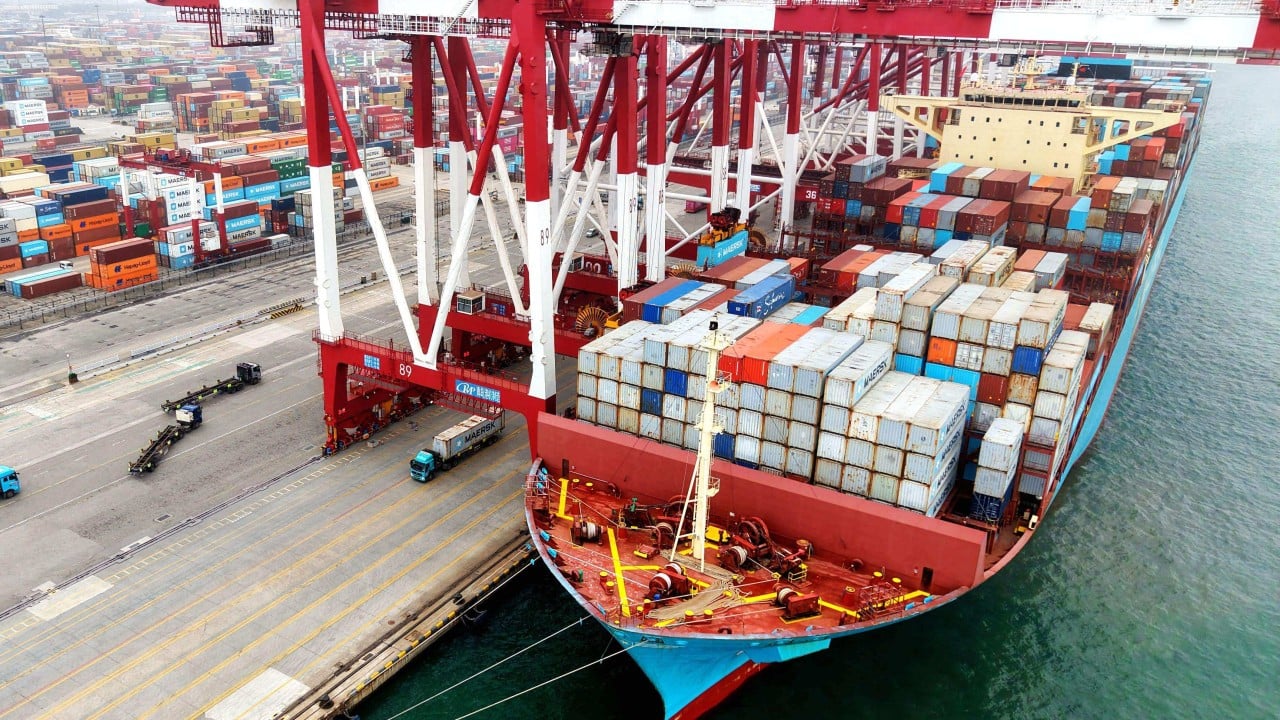
European leaders think they can pressure Beijing into submission. They're wrong. For months, Brussels has been shouting about "China Shock 2.0" and threatening severe economic consequences if the flood of cheap Chinese electric vehicles, steel, and solar panels doesn't stop. Eurostat data dropped a massive bombshell recently, revealing that Chinese exports outpaced imports from Europe by a staggering €1 billion every single day. That translates to a gaping €360 billion annual deficit.
But if you think Europe holds the cards here, you're misreading the entire global chessboard.
While the EU attempts to mount an aggressive economic defense, Chinese leader Xi Jinping is executing a brilliant counter-strategy right under their noses. Instead of panicking over European tariffs, Beijing is rolling out the red carpet for a steady stream of global leaders. They're actively courting "middle powers" like Canada, Bangladesh, and various European nations trying to carve out an independent path away from Washington. Beijing's message is loud and clear. If the West wants an economic war, China has plenty of other partners ready to do business.
The Illusion of European Leverage
Let's look at the actual reality of the recent trade talks in Brussels. EU Trade Commissioner Maroš Šefčovič met with Chinese Commerce Minister Wang Wentao to set up a brand-new Trade and Investment Consultation mechanism. Europe wants you to believe this three-month window of intense negotiations will force China to rebalance the scales before an October deadline.
It won't.
China's willingness to sit down and discuss increasing its purchases of European goods isn't a sign of weakness. It's a calculated delaying tactic. Beijing knows the European industrial base is deeply reliant on Chinese components. If the EU goes ahead with aggressive quotas on hybrids, chemicals, or raw materials, they risk cannibalizing their own factories before they can build independent supply chains.
European policymakers are walking a dangerous tightrope. On one hand, they need to protect domestic jobs from being wiped out by hyper-subsidized Chinese manufacturing. On the other hand, cutting off Chinese imports means driving up costs for everyday consumers who are already struggling with stubborn inflation. China understands this vulnerability perfectly.
Xi Jinping's Middle Power Playbook
While Brussels panics over deficits, Xi Jinping is playing a completely different game. He has hosted over a dozen world leaders in Beijing this year alone. Everyone from America's Donald Trump and the UK's Keir Starmer to Canadian Prime Minister Mark Carney and Russian President Vladimir Putin has made the trip.
This isn't just standard diplomacy. It is a deliberate effort to shift the global balance of power away from traditional Western alliances.
By positioning China as a stable economic anchor, Xi is appealing directly to countries that are tired of a volatile US foreign policy and a sluggish European economy. When Mark Carney traveled to Beijing, the underlying theme was clear: middle-power countries want to chart an independent relationship with China rather than blindly following a confrontational Western line.
Beijing uses these high-profile visits to prove its global influence. Xi is effectively telling Europe that their market, while important, isn't the only game in town. If Europe shuts its doors, China will simply deepen ties with the Global South and pragmatic Western nations that prioritize trade over geopolitical posturing.
The Upcoming NATO Summit and the Rhetoric Gap
The economic tension is colliding directly with security fears as the upcoming NATO summit approaches. Western defense officials are increasingly loud about China's role in global security, accusing Beijing of backing Russia's defense industrial base and trying to split Western allies.
China's response has been sharp and unyielding. The Chinese Foreign Ministry recently slammed NATO, telling the alliance to do some serious soul-searching regarding its role in global peace and to stop passing the buck.
This rhetorical battle shows the deep disconnect between the US-led security apparatus and the economic realities on the ground in Europe. European leaders are caught in a vise. They are being pressured by Washington to take a hard line on Beijing during the NATO summit, yet their local businesses are begging for access to Chinese markets and affordable components.
You can't decouple your economy while trying to maintain a stable manufacturing sector. The math simply doesn't work.
How to Navigate the New Economic Reality
If you are a business owner or an investor relying on international supply chains, stop waiting for things to go back to normal. They won't. The old system of friction-free global trade is officially dead. To protect your operations through this transition, you need to execute a few practical shifts immediately.
Map your tier-two and tier-three suppliers. Most companies think they are safe because they buy from a European or domestic distributor. Look deeper. You will likely find that those distributors rely heavily on Chinese raw materials or sub-components.
Build buffer inventory for critical components before the October trade deadline. If negotiations break down and the EU slaps fresh restrictions on chemicals or hybrid vehicle parts, prices will spike overnight. Secure your supply now.
Look into alternative sourcing hubs outside of the immediate China-EU crossfire. Countries in Southeast Asia or Latin America are rapidly expanding their capacities to act as intermediaries, allowing you to diversify your risk without completely losing access to competitive manufacturing pricing.


