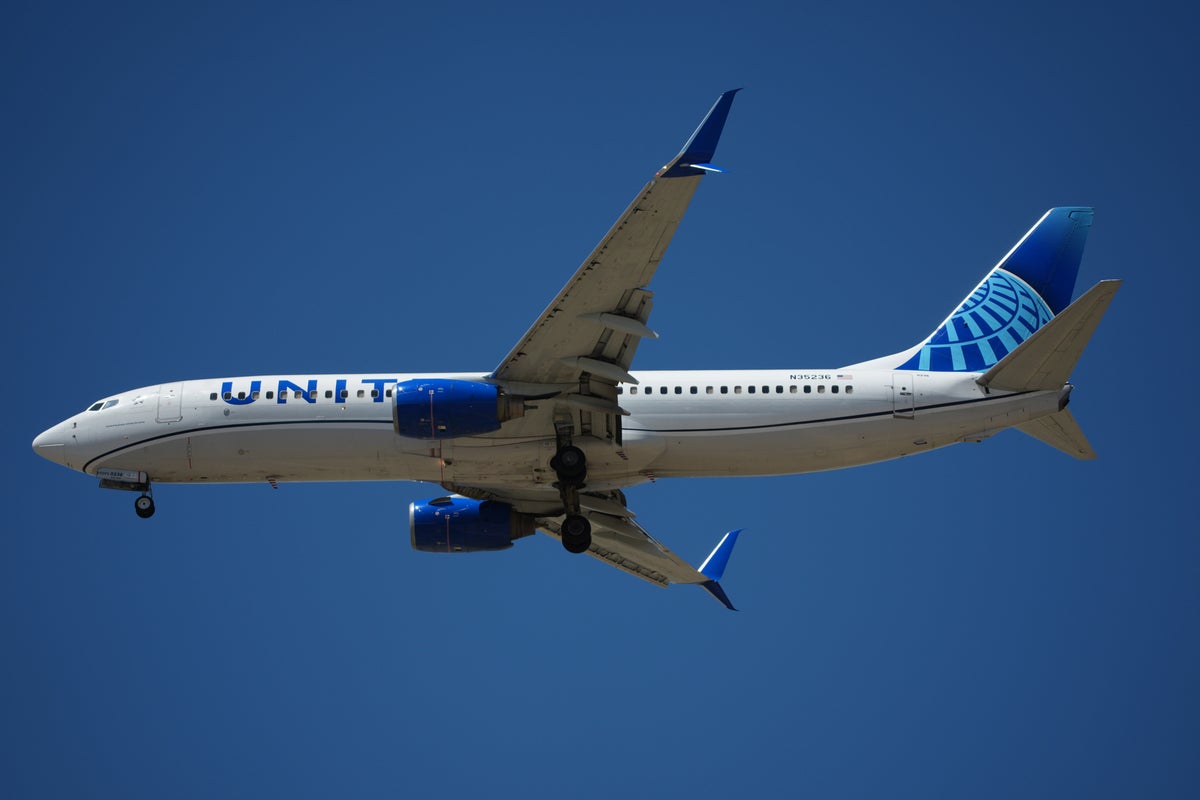
The media loves a good aviation scare. When a United Airlines flight bound for Spain abruptly vectors backward over the Atlantic Ocean and heads straight back to its origin point after a perceived security anomaly, the headlines write themselves. Clickbait factories churn out breathless reports about panicked passengers, ruined vacations, and the implied incompetence of an airline failing to launch.
They are looking at the entire equation upside down. In related developments, we also covered: The Unexpected Pink Stain on the Venetian Mirror.
A midair turnaround is not a systemic failure. It is the ultimate proof that the hyper-conservative, redundant safety architecture of modern commercial aviation is working exactly as designed. The public treats a return to the gate as a crisis. In reality, it is a triumph of risk mitigation that other high-stakes industries should copy.
The Mirage of the Flawless Departure
The core misunderstanding driving the outrage cycle is the belief that a commercial flight should only push back from the gate if 100% of variables are entirely predictable. This is a mathematical impossibility when operating a 200-ton aluminum tube through the upper atmosphere at 500 miles per hour. Lonely Planet has analyzed this critical topic in extensive detail.
When an airline captain or a corporate security desk triggers a turnaround due to a potential security threat, the casual observer asks: Why did they let the plane take off in the first place? They ask this because they do not understand the concept of dynamic risk assessment.
In aviation, information is fluid. A data point that looks benign at the gate can morph when cross-referenced with new intelligence while the aircraft is climbing through 30,000 feet. I have watched risk management teams analyze shifting threat matrices in real time. The easiest thing for a pilot or a dispatcher to do is succumb to confirmation bias—to assume the anomaly is just a glitch, push forward, and hope for the best to protect the airline's on-time performance metrics.
Choosing to turn around is an expensive, logistically agonizing choice. It costs tens of thousands of dollars in wasted fuel, triggers crew duty-time expirations, and creates a cascading nightmare for scheduling desks across multiple continents. When an airline pulls the trigger on a turnaround, they are actively choosing immense financial pain over even a fraction of a percent of unmitigated risk. That is not a failure of security. That is an absolute devotion to it.
Dismantling the Overreaction Myth
Whenever these incidents hit the news cycle, the standard "People Also Ask" queries mirror a collective anxiety:
- Why do flights turn back instead of landing at the nearest airport?
- Are airline security screenings failing if threats are found midair?
Let us dissect the flawed premises of these questions.
First, the urge to land at the absolute nearest runway is a civilian instinct, not an aviation one. If a flight departing Newark or JFK for Spain encounters an ambiguous security issue over the water, dumping fuel and forcing a landing at an unfamiliar international waypoint presents far higher operational risks than returning to a fortress hub. At a hub, the airline has dedicated security infrastructure, vetted ground handling, replacement aircraft, and known law enforcement channels. Diverting to a random third-party airport creates a secondary logistical vulnerability.
Second, the idea that a midair security scare proves TSA or ground security failed is structurally incorrect. Security is not a single wall you walk through at the terminal; it is a continuous, layered net.
Consider the Swiss Cheese model of accident prevention popularized by aviation safety theorists. Every layer of security—passenger screening, baggage scanning, manifest cross-checking, real-time intelligence monitoring—has holes. A crisis only occurs when the holes in every single layer line up perfectly. A midair turnaround is simply a layer further down the line catching what a previous layer could not definitively verify. The net caught the fish. Complaining that it caught the fish late misses the point that the fish was caught at all.
The Brutal Math of Aviation Risk
Let us look at the actual numbers that govern these decisions. Aviation safety is dictated by an acceptable target level of safety, frequently measured as a probability of a catastrophic event per flight hour. The industry standard target is incredibly stringent: less than one fatal accident per ten million flights.
To maintain that statistic, the threshold for reversing course must remain incredibly low.
+-----------------------------+-----------------------------+
| Action: Push Forward        | Action: Turn Around         |
+-----------------------------+-----------------------------+
| Cost: $0 (Initial)          | Cost: $50,000 - $150,000    |
| Risk: Non-zero catastrophic | Risk: Statistical zero      |
| Outcome: Potential disaster | Outcome: Guaranteed safety  |
+-----------------------------+-----------------------------+
When a captain evaluates a threat, they do not weigh the cost of hotel vouchers for 250 angry passengers against the price of a hull loss. They operate on a binary toggle: if the risk cannot be quantified and neutralized in flight, the flight ceases to proceed forward.
The downside to this contrarian view is obvious: it inconveniently disrupts human lives. It causes missed weddings, botched business deals, and immense frustration. But the alternative is an industry that prioritizes convenience over absolute certainty—a slippery slope that aviation spent the last fifty years aggressively engineering its way out of.
Stop Demanding Perfect Certainty
If you are tracking a flight on a radar app and see it pull a U-turn over the ocean, stop tweeting your outrage at the carrier. The system is operating exactly as it should. The operators looked at an ambiguous data point, refused to gamble with human lives, and accepted a massive financial hit to reset the board.
The real danger to aviation safety is not the flight that turns back. It is the hypothetical flight where a pressured crew decides to ignore an anomaly just to avoid making the evening news.
When a flight turns around, thank the system for having the courage to be inconvenient.
Next time you see a flight path bend backward on a map, remember that you are witnessing a calculated, cold-blooded decision to prioritize human survival over operational metrics. It is messy. It is loud. It is frustrating. And it is precisely why commercial flight remains the safest mode of transportation ever devised by human intelligence.
Stop asking why the threat occurred. Start appreciating that the system had the guts to stop the plane and fix it.