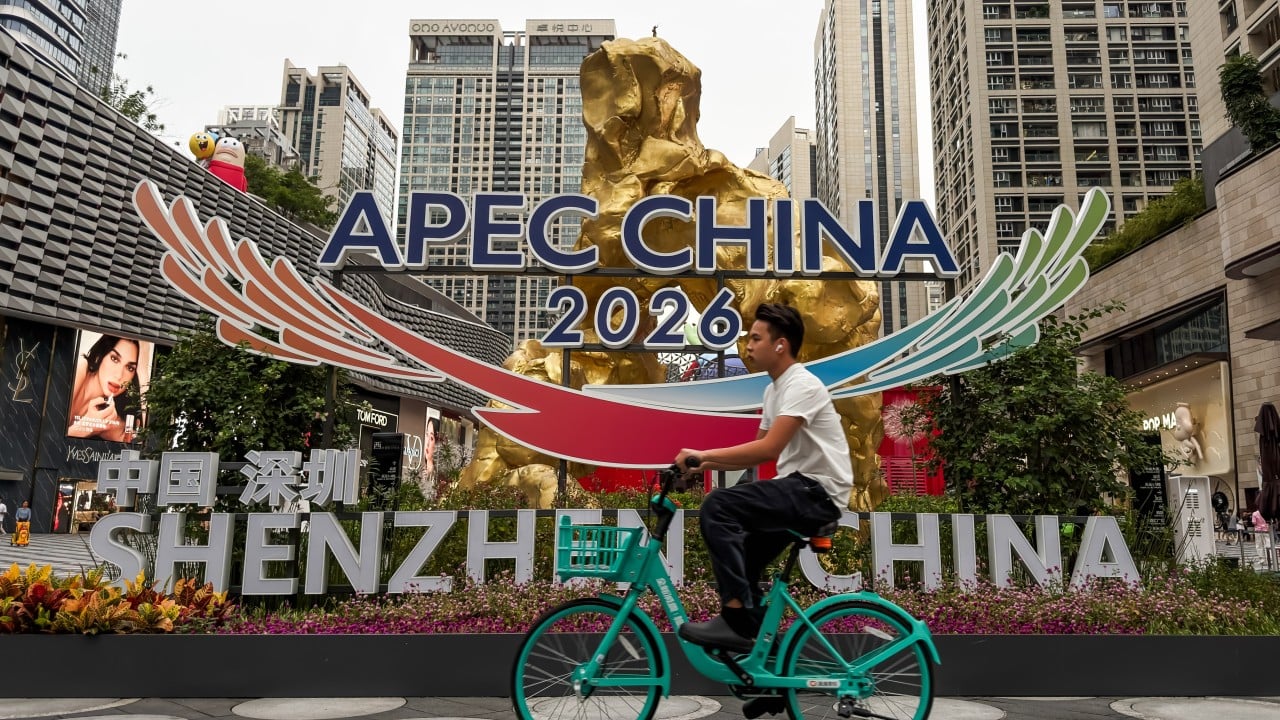
The race is fake. The deadlines are theater. And the "concrete deals" everyone expects to see inked around the APEC summit in Shenzhen are mostly high-gloss packaging for things that were already decided in quiet rooms months ago—or things neither side intends to honor past the next earnings call or election cycle.
Watch how the standard trade coverage frames every diplomatic gathering. Negotiators burn midnight oil. Sherpas sprint down hotel corridors. Briefcase-clutching officials scramble to beat the leader-level gavel so presidents or premiers can step onto a stage and announce a breakthrough. That story sells ad impressions because it feels urgent, human, and consequential. You might also find this related coverage useful: Inside the B.C. Ballot Collision That Upended Provincial Politics.
It is also lazy consensus.
APEC is not a binding treaty body. It operates on non-binding consensus, voluntary commitments, and leader-level declarations. Treating an APEC summit in Shenzhen like a high-stakes WTO dispute settlement or a binding bilateral trade pact confuses spectacle with enforcement. When Washington and Beijing trade concessions ahead of or alongside APEC, they rarely do it because a calendar date forced enlightenment upon them. They do it to manage domestic pressure, stabilize market jitters, or buy time while industrial policy grinds forward behind the scenes. As reported in latest articles by The New York Times, the effects are widespread.
If you are running a supply chain, pricing currency risk, or allocating capital based on the assumption that a Shenzhen APEC headline will suddenly reset US-China commercial reality, you are trading on fumes.
The Myth of the Summit Deadline
Diplomatic calendars create an illusion of momentum. Journalists need a hook; markets need a catalyst; politicians need a photo op. Put those three incentives in the same room and you get breathless reporting about negotiators "racing" against the clock.
Real structural friction between the United States and China does not resolve itself over espresso in Shenzhen because a summit agenda says "trade and investment." The core disputes—export controls on advanced semiconductors and manufacturing equipment, industrial subsidies, overcapacity in clean-tech and steel, data governance, and national security screening—are baked into domestic statutes and strategic doctrine. A trade deputy cannot casually sign away a statutory restriction at a side meeting without triggering congressional pushback in Washington or institutional pushback in Beijing.
I have watched executives blow millions over the last decade misreading diplomatic "truces" and "frameworks." A company I advised years ago poured capital back into a single-source component line in southern China the week after a high-profile bilateral thaw was announced, convinced the tariff and compliance storm had passed. Six months later, a fresh round of regulatory scrutiny and shipping friction wiped out their margin cushion before their new tooling even finished amortizing. They mistook a temporary pressure valve for a permanent peace treaty.
Real trade policy moves on two tracks. One is loud, symbolic, and tied to summits. The other is quiet, technical, and relentless—buried in customs classifications, licensing rules, procurement standards, and financial clearing mechanics. The summit gets the cameras. The technical annexes do the damage or offer the relief.
Defining Terms Before We Lose the Plot
Half the confusion around US-China negotiations comes from sloppy vocabulary. Analysts toss around "deals," "truces," "decoupling," and "derisking" as if they mean the same thing. They do not.
- A binding trade agreement creates enforceable legal obligations, clear dispute mechanisms, and predictable tariff or market-access schedules. APEC does not produce these.
- A tactical de-escalation or understanding pauses a specific escalation—such as holding off on a new tariff hike, easing a narrow visa or aviation bottleneck, or resuming a working group—until conditions change.
- Decoupling implies severing economic interdependence across broad sectors. Economists from Dani Rodrik to Nicholas Lardy have long pointed out how deeply supply chains, intermediate goods, and global price signals remain intertwined even when headline bilateral shares shift.
- Derisking means reducing single-point vulnerabilities—diversifying suppliers, holding buffer inventories, ring-fencing sensitive tech—without pretending you can wish away comparative advantage or scale overnight.
When commentators call a narrow administrative pledge a "historic deal," they set readers up for whiplash two quarters later when friction flares up somewhere else. Precision saves money. Sloppy labels cost it.
Why Shenzhen Matters for Reasons Trade Reporters Miss
Picking Shenzhen as the host city for APEC is not random, and it points to something far more interesting than last-minute dealmaking. Shenzhen is not Beijing's bureaucratic heart or Shanghai's old-money financial hub. It is China's hardware, electronics, and rapid-iteration engine—a city that went from a border fishing town to a dense manufacturing and tech powerhouse in a single generation.
Hosting a regional economic forum there puts the spotlight on supply chain density, industrial ecosystems, and technological capability. You can argue about tariffs in Washington or regulations in Brussels, yet walking through Shenzhen reminds any observer why physical supply chains are sticky. Supplier clusters, tooling depth, engineering talent, and logistics speed do not teleport to another zip code simply because two governments issue stern statements.
At the same time, that hardware dominance is exactly what makes US policymakers nervous. When Washington tightens controls around advanced compute, precision machinery, or supply chain chokepoints, it is trying to slow Beijing's climb up high-value industrial rungs. When Beijing pushes domestic localization, standards leadership, and alternative trade routes across Asia and the Global South, it is trying to make itself immune to American chokepoints.
Neither side is negotiating to end that rivalry at Shenzhen APEC. Both sides are negotiating the rules of engagement inside a rivalry that neither plans to abandon.
Dismantling the Questions Everyone Keeps Asking
Search feeds light up around every major summit with predictable questions. Most of them start from a shaky premise.
Will a Shenzhen APEC deal end tariffs and trade friction?
No. That question assumes tariffs are a misunderstanding that smart negotiators can clear up over two days of talks. Tariffs and non-tariff barriers in US-China commerce serve domestic political constituencies, protect strategic industries, and act as leverage in broader geopolitical bargaining. Even when negotiators strike narrow compromises—say, extending an exemption, adjusting agricultural purchases, or smoothing a specific regulatory snag—the underlying structural tension stays intact. Expect management of friction, not eradication of it.
Are US and Chinese negotiators actually close to a grand bargain?
A "grand bargain" requires both capitals to agree on what winning looks like and accept limits they currently view as existential. Washington worries that ceding tech or industrial ground erodes long-term security and economic primacy. Beijing worries that conceding on industrial policy, state support, or core sovereignty invites permanent containment. Without a shared definition of acceptable risk, negotiators do not build grand bargains; they build guardrails and tactical pauses.
Should businesses wait for summit headlines before changing supply chains?
Waiting for diplomatic white smoke is a terrible operating strategy. If a business model only works when US-China relations are warm and friction-free, the model is fragile. Smart operators build optionality before the headline hits—dual-sourcing critical inputs, qualifying backup assembly locations, stress-testing customs compliance, and keeping cash buffers strong enough to absorb sudden policy shifts. If a summit produces relief, great; you pocket the upside without betting the company on goodwill.
Thought Experiment: The Two-Track Trap
Imagine a scenario where negotiators in Shenzhen announce an upbeat package: a pledge to keep communication channels open on AI safety and trade, a temporary pause on a planned retaliatory measure, and a joint statement praising regional growth. Stock indices bump higher for forty-eight hours.
Meanwhile, in the background, export-control agencies update end-use rules, customs inspectors tighten origin audits on transshipped goods, and industrial planners quietly redirect subsidies toward domestic alternatives. Nothing in the joint statement stops those slow-moving gears. Six months later, a CFO looks at landed costs and asks why things feel harder despite the "progress" reported during APEC.
The trap is mistaking diplomatic tone for operational reality. Tone shifts in hours. Supply chains and regulatory regimes shift in years.
The Downside of Being Contrarian
Take a hard-nosed, skeptical view of summit hype and you can still get burned if you swing too far the other way. Total cynicism has its own blind spots.
First, tactical thaws still matter on the ground. A pause on new tariffs, smoother business travel, clearer licensing timelines, or calmer currency markets can save real money over a six- to twelve-month window. Ignoring short-term relief just because it is not a permanent peace treaty leaves cash on the table.
Second, misreading a genuine inflection point can leave you flat-footed. While grand bargains are rare, moments do occasionally arrive when domestic incentives align on both sides—around market stability, specific commodity flows, or crisis management. A good contrarian tests assumptions with evidence rather than turning skepticism into a rigid dogma.
Admitting that limitation is essential. The goal is not to sound clever by predicting doom every time diplomats meet. The goal is to price probabilities accurately without falling for theater.
What Smart Operators Actually Do Instead
Forget trying to out-guess the next press release out of Shenzhen. Focus on what you control and what actually moves costs and risk.
- Audit true origin and chokepoint exposure. Do not rely on first-tier supplier assurances. Map where critical subcomponents, specialty chemicals, magnets, boards, and software dependencies actually originate.
- Price policy volatility into unit economics. Stress-test margins against tariff bumps, compliance delays, freight rerouting, and currency swings rather than budgeting for best-case diplomacy.
- Separate narrative from enforcement. Track actual rule changes, licensing approvals, port congestion, and customs enforcement rather than relying on optimistic spin from either capital.
- Build modular capacity, not knee-jerk panic moves. Knee-jerk relocations into immature supply ecosystems often trade one headache for worse quality, higher costs, or longer lead times. Move deliberately where economics and resilience meet.
Negotiators around Shenzhen APEC will do what negotiators always do: posture, probe, trade small chips, and package modest movement as historic momentum. Let them have their press conferences. Run your numbers like an adult.