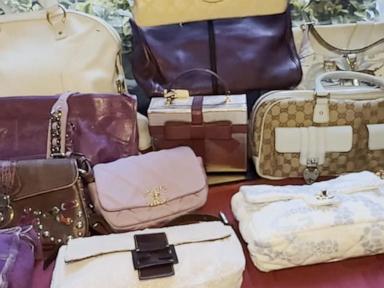
You’ve probably seen the tiktok videos of people unboxing dusty Chanel flaps from the nineties. Maybe you’ve noticed that your friend's worn-in Louis Vuitton looks cooler than the stiff, plasticky one in the boutique window. It isn’t just a trend. The market for vintage and secondhand luxury bags has exploded because the fashion industry is currently eating itself.
Buying "pre-loved" used to be about saving money. That’s gone. Now, it’s about quality, scarcity, and the simple fact that modern luxury brands aren’t making things like they used to. You’re paying more for a new bag today, but you’re often getting less. I’ve seen stitch counts drop and leather quality thin out while price tags soar past $10,000. People aren't stupid. They’re looking backward to find real value.
The Quality Gap Is Real
If you pick up a Chanel bag from the 1980s or 90s, you’ll feel something different. Back then, the brand used 24k gold plating on its hardware. It has a heavy, rich glow that modern gold-toned metal just can’t replicate. Around 2008, they stopped doing that. Now, you get a lighter, flashier finish that wears off much faster.
This isn't just a Chanel problem. Hermès, Celine, and Prada have all faced scrutiny over "efficiency" measures. Luxury houses are owned by massive conglomerates like LVMH and Kering. These companies have shareholders to answer to. Shareholders want growth. Growth often means cutting costs in the supply chain. When you buy a vintage bag, you’re buying a piece from an era when "luxury" meant the best materials possible, not just the best marketing budget.
Modern bags are often mass-produced compared to their ancestors. Hand-stitching is being replaced by machine-stitching in places where customers won't immediately notice. But you notice after three years of daily use when the strap starts to fray. A vintage Kelly bag that has survived forty years is proof of its own construction. It’s a tank.
The Investment Myth vs Reality
People love to say that Birkin bags beat the S&P 500. While that makes for a great headline, it’s a bit more nuanced than that. Not every luxury bag is an investment. Most lose value the second you walk out of the store. However, the secondhand market has created a floor for prices.
Why Prices Stay High
- Artificial Scarcity: Brands like Hermès and Rolex keep supply low on purpose. If you can’t buy it at the store, you go to Sotheby’s or Fashionphile.
- Annual Price Hikes: Chanel raises prices twice a year. When the retail price of a Classic Flap goes up by 15%, the resale value of every existing one goes up too.
- Heritage Appeal: A bag that has been popular for fifty years isn't going out of style tomorrow.
You should treat a bag as a "store of value" rather than a quick way to double your money. If you buy a vintage Speedy for $900 today, you can probably sell it for $900 in three years. You basically got to wear a luxury item for free. That’s the real math that drives the secondhand market.
Sustainability Is More Than a Buzzword
We’re tired of being told to buy "eco-friendly" polyester made from recycled bottles. It feels fake because it is. The most sustainable item is the one that already exists. The fashion industry is one of the biggest polluters on the planet, and Gen Z has realized that buying something old is the only way to shop without guilt.
There’s a certain soul in a bag that has a history. A little scratch on the leather or a soft patina on the handles tells a story. It’s "Wabi-sabi"—the beauty of imperfection. Modern "quiet luxury" focuses on looking rich without trying, and nothing looks more effortlessly wealthy than a bag that isn't brand new. It says you didn't just buy your way into a trend this morning. It says you’ve had taste for a long time.
Avoiding the Pitfalls of the Resale Market
It isn't all glossy photos and easy wins. The market is flooded with "superfakes." These are replicas made so well that even some professional authenticators struggle to spot them. If you’re buying vintage, you have to be smart.
Don't trust "Certificate of Authenticity" cards. Scammers print those by the thousands. Instead, look at the hardware. Real luxury zippers (like Lampo or Riri) have a specific weight and sound. Check the date codes. Brands changed their numbering systems over the decades, and a fake often uses a code that doesn't match the production year of the style.
I always tell people to buy the seller, not the bag. If a deal on a Japanese eBay storefront looks too good to be true, it probably is. Japan actually has very strict laws against selling counterfeits, which is why many collectors source from there, but you still need to do your homework.
What To Look For Right Now
If you’re starting a collection, skip the trendiest "it-bags" of the moment. They’ll be dated in eighteen months. Focus on the icons.
The Fendi Baguette from the late 90s is a great entry point. They’re plentiful and come in hundreds of textures. Look for the Zucca print versions; they hold their value better than the sequined ones. Gucci’s Jackie bag is another winner. The vintage versions often have better leather than the "re-editions" you see in boutiques today for three times the price.
Check the interior lining. Old Louis Vuitton bags are notorious for "peeling and sticking" in the pockets because of the humidity-sensitive materials they used back then. It’s a fixable issue, but it’s a great bargaining chip to lower the price.
Finding Your Piece
Stop looking at the big-name resale sites exclusively. The margins there are huge because they have to pay for massive marketing teams. Local auction houses and smaller estate sellers often have gems that haven't been marked up by 40% yet.
Get comfortable with the idea of restoration. A professional "bag spa" can take a dry, faded Hermes and make it look incredible for a few hundred dollars. Buying a "B-grade" vintage bag and restoring it is the secret way to get into high-end luxury without the five-figure price tag.
Go look for things made in the mid-90s. That was the sweet spot where manufacturing was still high-quality but the designs were starting to get interesting. Avoid the early 2000s "logo mania" stuff unless you really love the aesthetic, as those materials were often more prone to cracking and wear.
Start by searching for specific model names on Japanese resale sites or reputable European boutiques. Ask for photos of the corners and the interior heat stamp. If the seller won't send them, walk away. There is always another bag.