The mainstream media is collectively shrugging its shoulders at the latest confidential International Atomic Energy Agency (IAEA) report on Iran, and the lazy consensus is downright dangerous. Reuters, the Associated Press, and their echo chambers are running headlines claiming there is "little change" in Iran’s nuclear programme despite three months of relentless U.S. and Israeli airstrikes.
They look at a spreadsheet, see the static number of 440.9 kilograms of 60% enriched uranium, and conclude nothing has happened. You might also find this connected story interesting: The Southern Poverty Law Center Crisis Nobody is Talking About.
This is a catastrophic misreading of data. The headline shouldn’t be "little change." The headline should be that the West’s multi-billion-dollar military campaign just suffered a definitive intelligence defeat. When an international watchdog admits it has "no information on the current size, composition, or whereabouts" of a weapons-grade stockpile for nearly a year, that isn’t stability. That is a total blackouts.
The Illusion of the Static Stockpile
I have spent years tracking non-proliferation metrics and analyzing intelligence on hardened infrastructure. If there is one thing the defense establishment loves, it is a clean metric. The media has latched onto the 440.9-kilogram figure like a security blanket. They assume that because the IAEA keeps printing that same number, the material is just sitting there in busted concrete warehouses at Natanz or Fordow, waiting for a diplomat to come look at it. As highlighted in latest coverage by Al Jazeera, the effects are significant.
Let's break down the mechanics of how the IAEA actually operates. The agency relies on standard safeguards practices under the Non-Proliferation Treaty (NPT). This requires physical inventory verifications (PIVs), containment seals, and 24/7 remote monitoring cameras.
When the U.S. launched Operation Midnight Hammer and subsequent airstrikes in February, those monitoring systems were vaporized or cut off. The IAEA explicitly states it has lost "continuity of knowledge."
To claim the program hasn't changed because the official tally hasn't moved is like an accountant saying a bankrupt business is doing fine because they haven't updated the ledger since last quarter. Iran has not allowed inspectors into the struck facilities since June of last year. The material is gone from the visible surface.
The Underground Shift the Experts Missed
The current conflict didn't destroy Iran's nuclear ambitions; it simply drove them deeper into the earth. While Donald Trump and Benjamin Netanyahu tout the destruction of surface facilities, the actual industrial capacity has shifted to deep-buried, hard-rock complexes that are fundamentally immune to standard kinetic strikes.
Consider the reality of subterranean engineering:
- The Granite Shield: Iran’s newer centrifuges are being moved to depths of 80 to 100 meters under solid granite.
- The GBU-57 Limit: Even the American GBU-57 Massive Ordnance Penetrator (MOP) struggles to guarantee total destruction at those depths when factoring in reinforced concrete chicanes and shock-absorbing air pockets.
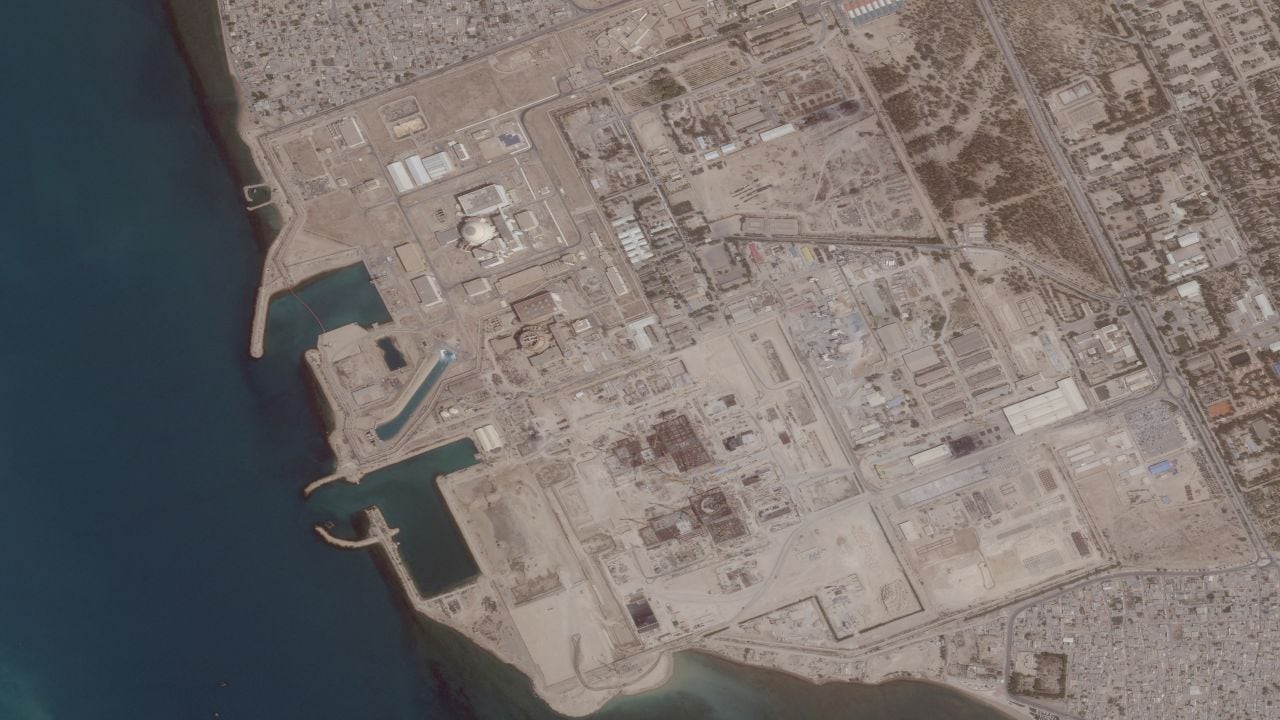
- The Rebuild Velocity: Satellite imagery shows that at surface sites like Isfahan, the regime built new structural roofs over steel skeletons within weeks of being hit to mask internal production from orbital cameras.
When the IAEA notes it has no idea what is happening inside the new Iranian Fuel Enrichment Plant (IFEP) near Isfahan, they are admitting that a fourth, completely unmonitored enrichment hub may already be active. While western media reports on the success of airstrikes, Iran is utilizing the chaos to disconnect its supply chain entirely from international visibility.
Dismantling the Premier Nuclear Fallacies
The public debate surrounding this conflict is poisoned by flawed premises. Let's tackle the most common questions circulating in foreign policy circles with some brutal honesty.
Doesn't the lack of access prove Iran is actively building a bomb right now?
Not necessarily, and this is where the nuance matters. The hawkish assumption that a total blackout equals an imminent detonation is just as lazy as the dovish assumption that no news is good news.
Weaponization requires more than just holding 60% or 90% High-Enriched Uranium (HEU). It requires explosive bridge wire detonators, hydrodynamic testing, and casting uranium metal into a sphere. By keeping the 440.9 kilograms unaccounted for, Tehran isn’t necessarily rushing a bomb to completion today; they are establishing a permanent state of "virtual deterrence." They want the West to know that they could possess ten functional warheads within weeks of a political decision, without ever having to cross the geopolitical red line of a physical test.
Can diplomacy resolve this if the airstrikes stop?
The premise of this question is broken. It assumes Iran wants to return to the framework of the old 2015 nuclear deal. That ship has sailed. Why would any state apparatus surrender its only leverage while under active bombardment?
The draft memoranda of understanding currently circulating in Washington focus on a preliminary ceasefire that kicks the nuclear can down the road. This is a quiet admission of defeat by Western negotiators. They realize they cannot bomb the knowledge out of Iranian scientists' heads, and they cannot locate the physical material without total compliance.
The Supply Chain Reality Check
The true failure of Western strategy lies not in the air, but in the global supply chain. The U.S. and its allies have focused heavily on dropping bombs on physical enrichment halls while completely failing to seal Iran's clandestine trade networks.
The Institute for Science and International Security has repeatedly pointed out that the domestic production of advanced IR-6 carbon-fiber rotors relies on specialized dual-use components that cannot be entirely manufactured within Iran. Yet, the material keeps flowing.
Iran has successfully adapted its procurement strategies by shifting its reliance to the "CRINK" bloc (China, Russia, Iran, North Korea). Raw materials, specialized carbon fiber, and CNC machine parts enter through Caspian Sea routes or direct transport links that Western sanctions cannot touch. Rosatom technicians were operating the Bushehr nuclear power plant right up until recent safety evacuations, demonstrating that the program is tightly integrated into a broader, adversarial axis.
The Cost of the Counter-Intuitive Truth
Admitting that the airstrikes have failed to halt Iran's nuclear progression carries major political downsides. It forces Western leaders to confront two unpalatable options: accept a permanently nuclear-capable Iran or commit to a full-scale ground invasion to occupy physical territory.
Because neither option is palatable, politicians and media outlets prefer the fiction of the "unchanged" IAEA report. It allows them to claim the status quo is holding while the bombs are falling.
Stop looking at the static numbers on the IAEA balance sheet. The lack of change in the data isn't a sign of stability—it is proof that the West has lost its eyes inside the target.


