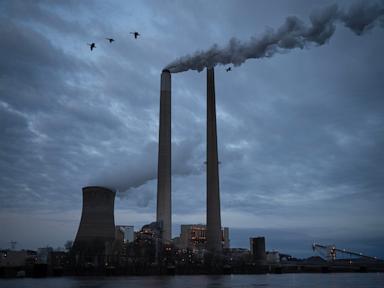
Read the headline again. "UN projections say world is losing ground in fight to curb climate change."
Lazy. Predictable. Comforting in its doom.
Every few months, a report drops warning that global emissions are still rising, pledges are falling short, and planetary doom is practically baked in. Newsrooms copy-paste the gloom. Activists scream into the void. Executives draft another glossy sustainability memo while quietly hedging their bets.
Here is the problem with that framing. It confuses policy compliance with physical reality.
We are not "losing ground" in any simple, linear way. In fact, on several core physical metrics—solar deployment costs, lithium-ion battery scaling, electric vehicle adoption curves—the world is moving faster than almost any international agency projected a decade ago. Where we are genuinely failing is grid bottlenecks, permitting delays, industrial heat, and treating diplomatic promises like engineering plans.
Calling the whole enterprise a losing battle is a lazy consensus. Worse, it makes people ask the wrong questions.
The Myth of the Single Scoreboard
When UN climate reports say the world is off track, they are usually measuring actual or projected greenhouse gas trajectories against specific temperature targets, such as limiting warming to 1.5 degrees Celsius or well below 2 degrees Celsius above pre-industrial levels. If emissions do not fall fast enough on the spreadsheet, the headline declares defeat.
That is a narrow way to read a massive industrial transition.
Let us define terms precisely so we stop talking past one another. Mitigation means reducing emissions or removing carbon from the atmosphere. Adaptation means adjusting physical infrastructure, agriculture, supply chains, and cities to survive changing weather patterns. Decarbonization is the specific engineering work of stripping carbon out of electricity, transport, steel, cement, chemicals, and heating.
Conflating all three into one giant moral pass-fail grade ruins clear thinking. A region can fall behind on a national emissions pledge while still cutting power-sector carbon intensity dramatically. Another region can hit paper targets by shipping dirty manufacturing offshore—a classic case of outsourced emissions that makes local books look clean while global air gets heavier.
I have watched corporate sustainability teams celebrate "net-zero" targets built on questionable carbon offsets while their core supply chains still burned coal and diesel. I have seen companies blow millions on flashy PR pledges and performative tree-planting campaigns while ignoring basic thermal efficiency inside their own factories. Real energy transitions do not run on press releases. They run on steel, copper, silicon, interest rates, and megawatt-hours.
What People Actually Ask When They Read the Gloom
When readers encounter doom-laden UN projections, their searches usually follow a predictable pattern. Let us take those common questions head-on and strip away the polite hedging.
"Are we actually going to miss the 1.5 degree target?"
Almost certainly on a temporary overshoot basis, if not permanently. Pretending otherwise insults basic math and current emission curves.
Yet treating 1.5 degrees Celsius as a cliff where civilization falls off—and anything above it means game over—is analytically sloppy. Climate risk scales with warming; it does not flip on like a light switch at 1.49 versus 1.51 degrees. Every tenth of a degree of avoided warming still matters for heat extremes, sea-level rise, and agricultural stress. Treating a missed threshold as total defeat is a recipe for fatalism, and fatalism is useless.
"Why aren't renewable energy and electric vehicles fixing this fast enough?"
Because electrons are only part of the story.
Solar photovoltaics and wind turbines have achieved staggering cost declines over the past fifteen years, and electric vehicle sales have surged in major markets like China and Europe. Anyone who claims clean energy technology has stalled is ignoring hard deployment data.
The real bottleneck sits downstream:
- Transmission lines: Building high-voltage lines across regions takes years of right-of-way fights, permitting battles, and transformer supply queues. Stranded clean power is wasted clean power.
- Firm capacity and storage: Sun does not shine at night; wind does not always blow at peak demand. Balancing a grid takes dispatchable generation, storage, demand response, and resilient interconnections—not just nameplate gigawatts.
- Hard-to-abate sectors: Making primary steel, cement, ammonia, and long-haul freight low-carbon requires high temperatures, dense fuels, or chemical reactions where slapping a solar panel on a roof does nothing.
"Should individuals just give up and focus on personal habits?"
Personal habits matter far less than systemic rules, though your daily choices still shape markets and household costs. Recycling a yogurt tub or feeling guilty about a flight will not rewrite utility rate structures or fix zoning laws that block dense housing and transit.
If you care about practical impact, look at electrification at the household level—heat pumps, induction cooking, efficient insulation, and EVs where charging makes sense—and look at civic and workplace leverage everywhere else. Vote for grid upgrades and clean permitting reform. Push your employer on actual energy procurement rather than vanity offsets.
The Heavy Hitters and the Blind Spots
Serious energy analysts—from institutions like the International Energy Agency and the Intergovernmental Panel on Climate Change to researchers at Rocky Mountain Institute and BloombergNEF—have spent years documenting a sharp split in global progress. On one side sits power and light transport, where learning curves and manufacturing scale have shocked skeptics. On the other sits heavy industry, buildings retrofits, and grid buildout, where capital costs, physics, and politics grind much slower.
Imagine a scenario where a booming industrial economy builds enough solar and wind capacity on paper to power half its grid, yet half of that generation gets curtailed during midday peaks because transmission lines were never built and industrial load cannot shift flexibly. On a slide deck, installed capacity looks heroic. On the wire, coal still runs at night because storage and grid links lagged behind. That is not a failure of solar physics. That is a failure of system integration.
Too many climate commentators also ignore adaptation out of fear that talking about living with warming sounds like surrendering. That squeamishness is dangerous. Even aggressive mitigation takes time to slow atmospheric accumulation. Ports, water utilities, power grids, and farming regions are already dealing with hotter extremes and heavier downpours. Ignoring adaptation does not stop storms; it just leaves people underprepared when they hit.
Where My Contrarian Stance Can Bite You
Let us be honest about the downside of taking a contrarian, system-focused view.
First, optimism about technology can breed complacency. Pointing out that solar and batteries are scaling fast can tempt people into thinking market forces will magically solve every remaining problem on schedule. They will not. Without deliberate grid planning, industrial policy, and realistic financing, deployment hits walls.
Second, downplaying headline climate warnings can understate acute risk. If a reader hears "we aren't losing ground everywhere" and concludes "nothing is urgent," they miss how costly delayed action becomes for infrastructure and vulnerable communities. Contrarian clarity is not an excuse to shrug. It is a demand for sharper triage.
What Actually Works Instead of Hand-Wringing
Stop measuring progress by how loudly people pledge and start measuring it by physical throughput and cost per ton of carbon abated.
- Fix the grid first: Prioritize interconnection queues, high-voltage transmission, and grid-scale storage. A gigawatt connected to load beats three gigawatts stuck waiting on a permit or curtailed on a congested line.
- Price and target industrial reality: Focus engineering effort on industrial heat, low-carbon cement and steel processes, and grid reliability rather than chasing silver-bullet gimmicks.
- Pair mitigation with hard-nosed adaptation: Upgrade flood defenses, heat resilience, and water management alongside emissions cuts. Treat resilience as core infrastructure, not an afterthought.
- Audit every green claim: Demand verified physical reductions and credible engineering timelines. Walk away from vague net-zero slogans backed by junk credits.
The world does not need another gloomy headline telling everyone to panic while doing the exact same things. It needs builders who know the difference between a press release and a megawatt.