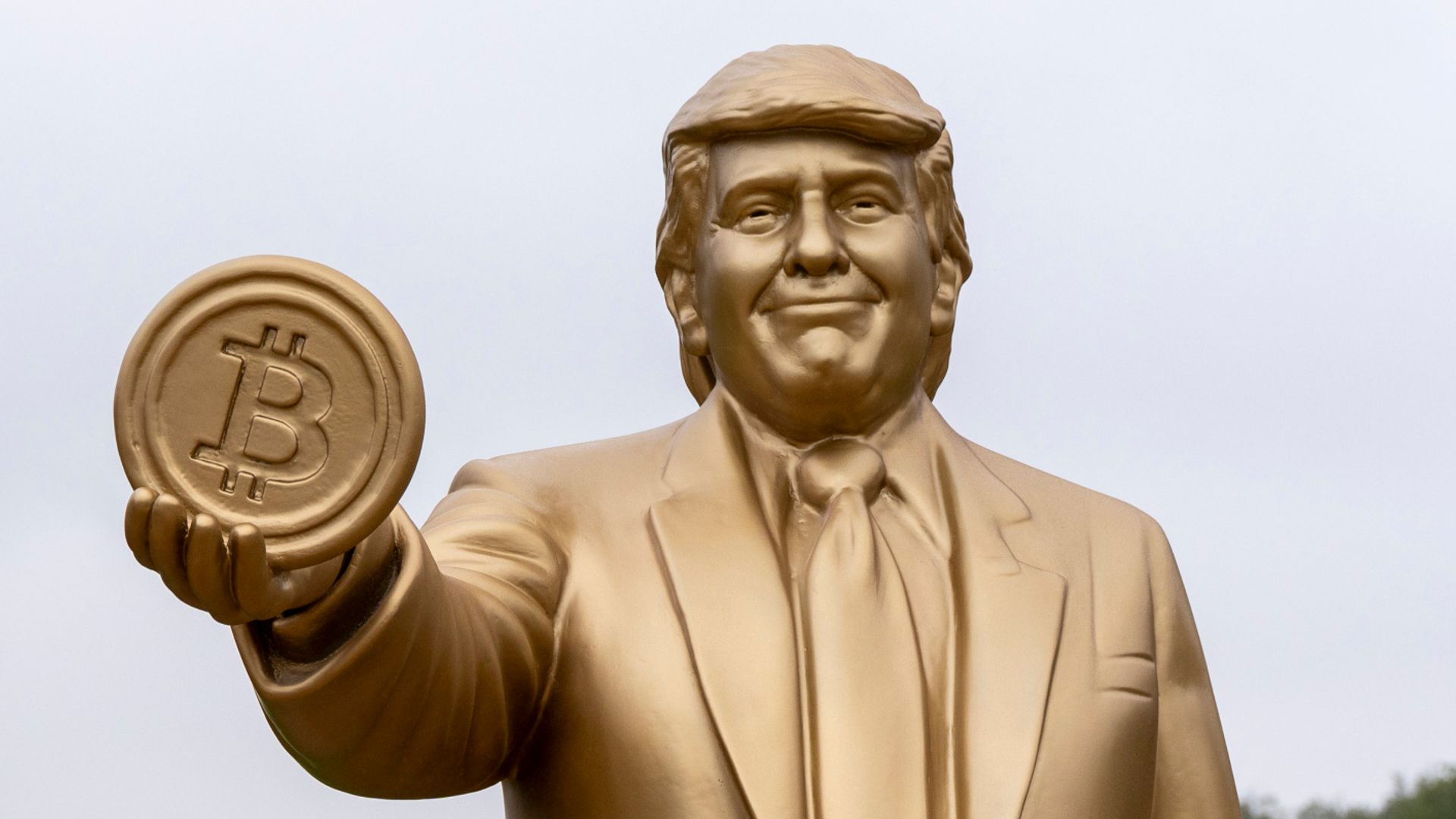
The mainstream financial press is weeping over a 927-page financial disclosure form, and they are missing the entire point.
When the Office of Government Ethics dropped the numbers showing Donald Trump hauled in over $1.4 billion from crypto ventures in 2025, the reactions were painfully predictable. The legacy media immediately leaned into its favorite tired scripts: tracking retail investor losses, gasping at the blatant conflicts of interest, and debating whether a sitting president should run digital asset projects while shaping federal stablecoin rules.
They think they are exposing a massive pump-and-dump scheme. They are wrong.
Focusing on the collapse of the WLFI token from 46 cents down to 6 cents is the ultimate rookie mistake. It assumes that the goal of the Trump crypto ecosystem was to build a sustainable, long-term decentralized finance protocol. It never was.
What we witnessed last year was not a series of speculative bets or a lucky break in the bull market. It was the blueprint for a completely new infrastructure of political monetization. I have watched legacy media institutions try to dissect political wealth for twenty years, and they still treat it like a 1980s real estate play. They look at golf resort revenues, which crawled to $77 million at Mar-a-Lago, and miss the fact that a single paper entity like CIC Digital LLC cleared $636 million in meme coin royalties through a licensing agreement with Celebration Coins without owning a single piece of physical property.
This is not a conflict of interest. It is a masterclass in licensing political sentiment as an intellectual property asset.
The Illusion of Secondary Market Performance
The lazy consensus insists that because the tokens plummeted, the project failed or the revenue is unsustainable. This completely misunderstands how corporate crypto issuance operates.
When World Liberty Financial issued its governance tokens, the Trump family did not rely on the asset appreciating on a secondary exchange to make their money. The structure of these entities ensures that the issuer captures the value on the primary issuance and through upfront licensing fees. The disclosure proves it: over $520 million came directly from the primary sales of crypto tokens, and another $250 million originated from the sale of equity interests in the World Liberty business itself.
Imagine a scenario where a company manufactures high-end sneakers. The company sells out its entire inventory directly to distributors and collectors on day one for a massive profit. If those buyers later trade the sneakers in a secondary marketplace and crash the price due to oversupply, the original manufacturer does not return the cash. The manufacturer already cleared the margin.
In the case of the $TRUMP meme coin, which generated $635 million in royalties, the revenue mechanism was entirely divorced from long-term utility. It operated through CIC Digital LLC via a licensing model. The project converted political loyalty into a recurring top-line royalty stream. The underlying token could drop to near zero, yet the licensed royalties from the initial distribution velocity remain safely booked in the trust.
The Absolute Failure of the Traditional Conflict Narrative
Critics are wasting breath demanding blind trusts and yelling about the rollback of SEC enforcement or the passage of the GENIUS Act. They are looking at the problem through the lens of traditional corruption, where a politician changes a policy to help a specific company they own stock in.
This is much bigger than a simple policy favor. By transforming the presidency into a decentralized brand license, the administration has created an asset class that reacts to regulatory sentiment in real-time.
When the administration signals a hands-off approach to stablecoins, it does not just help the broader market; it directly validates the valuation of entities like Stablecoin Holdco, which netted Trump nearly $197 million from an equity sale. The value being captured is not a bribe; it is the monetization of regulatory clarity.
The downside to this contrarian reality is stark, and we must admit it: it completely hollows out the concept of consumer protection in retail finance. The traditional regulatory framework is built to police disclosures, insider trading, and market manipulation. But how do you police an asset whose sole fundamental driver is the public prominence of a single individual? You cannot. The asset is explicitly designed to bypass traditional valuation metrics like cash flow, price-to-earnings ratios, or total value locked.
Dismantling the Premise of Public Disclosures
The financial media loves to treat federal disclosure forms as the absolute truth of net worth. They look at the headline figure of $1.4 billion and think they have mapped out the entire operation.
They are missing the structural opacity built into the system. The federal form tops out asset value reporting at "over $50 million." When an asset like DT Marks DeFi holds an additional 22.5 billion WLFI tokens, evaluating its actual worth based on standard government ranges is functionally useless.
The public is asking the wrong question. They keep asking, "Is this legal?" or "How much did he make?"
The real question we should be asking is: "How does any traditional financial market compete with an asset class that prints hundreds of millions of dollars entirely on the basis of political brand equity?"
The legacy path to political wealth required writing a memoir, doing six-figure speech circuits, or licensing a name to an overseas condo developer in the Middle East—the latter of which still brought Trump $52 million last year. But those require physical construction, contract negotiations, and actual hours spent on a stage or in a boardroom. Crypto infrastructure allows that entire process to be compressed into a smart contract deployment that takes hours and yields ten times the capital.
Stop waiting for a market correction or a regulatory crackdown to reverse this trend. The infrastructure for the financialization of executive influence has been codified. The numbers from last year are not an anomaly; they are the new baseline for how global figures will extract value from their public footprint. The old corporate playbook of building physical assets and managing steady dividend yields is dead. It has been replaced by the monetization of pure attention, captured at the protocol level, and completely immune to the performance of the secondary market.