The lazy consensus in international media loves a simple narrative. When Washington targets Ivy League endowments or scrutinizes cross-border capital, the predictable armchair analysts shriek about a new Cold War freezing out Asian scholarship. They frame Cambridge and Hong Kong as opposing chess pieces on a geopolitical board, missing the cynical transactional reality entirely.
Stop mourning the fictitious bridge of academic purity. That bridge was torched decades ago by institutional greed and foreign cash injections.
The Endowment Myth
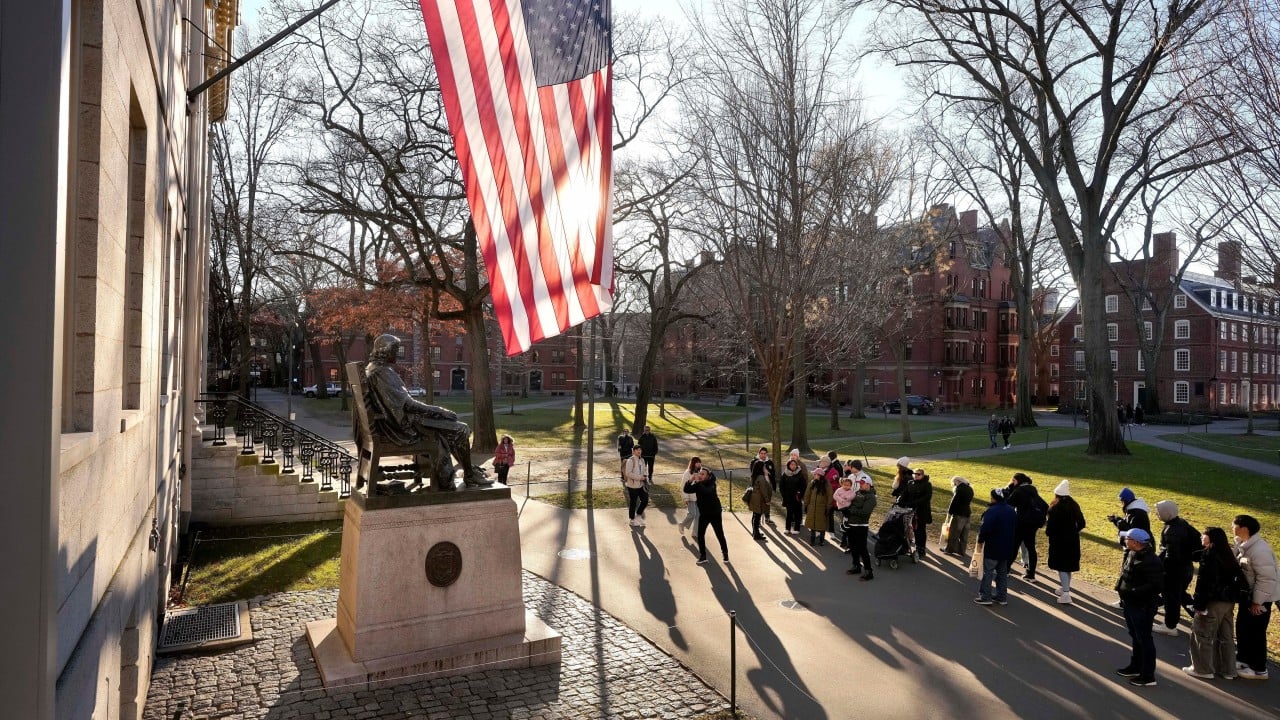
Let us look at the actual mechanics. When federal officials launch probes into Harvard's restricted foreign gifts—specifically the hundreds of millions tied to mainland and regional donors—the pearl-clutchers act like academic freedom is under siege. They assume elite universities operate as neutral temples of truth.
I have watched corporate boards and university development offices operate behind closed doors. They do not care about geopolitical ideology when a multimillion-dollar check lands on the desk. They care about yield.
Harvard’s financial disclosures reveal over $630 million originating from Chinese sources over the years. Much of this capital arrived with explicit strings attached: localized scholarship preferences, targeted research chairs, and admissions pipelines. To call this an attack on higher education is naive. It is a regulatory collision between Washington’s sovereignty push and an elite university that treated federal compliance as optional while pocketing billions in taxpayer-backed research grants.
The Hong Kong Pivot Fallacy
When regional institutions in Hong Kong wave open doors to students caught in visa crossfire, local commentators frame it as a massive brain-drain victory for the Special Administrative Region.
Let’s dismantle that fantasy.
Hong Kong universities do not want displaced Ivy League undergraduates out of pure charitable goodwill. They want prestige arbitrage. Importing students who missed out on a Cambridge, Massachusetts dorm room elevates local metrics, pads international faculty rankings, and satisfies regional performance indicators.
Imagine a scenario where a student swaps a Harvard yard for a Victoria Harbour campus. Do they get the same global networking moat? No. The entire value proposition of an Ivy League credential has never been the quality of the lecture halls—which are often overcrowded and taught by disinterested adjuncts—it is the exclusionary club membership. Hong Kong can replicate the curriculum, but it cannot replicate the Washington lobbying apparatus or the Wall Street hiring pipeline tied to old-boy networks in the Northeast.
The Real Question You Should Be Asking
Instead of asking how Washington's friction with Harvard impacts Hong Kong's academic standing, ask why American taxpayers were subsidizing a multi-billion-dollar hedge fund disguised as a school that simultaneously outsourced its financial aid targeting to foreign donors.
The Department of Justice under the Civil Rights Division is not operating out of sudden literary malice; they are enforcing Title VI compliance on institutions trying to play by two sets of rules. You cannot feed at the public federal trough while administering private scholarship pools that intentionally bypass domestic citizens based on national origin guidelines dictated by overseas benefactors.
The elite higher education bubble is deflating. Hong Kong's institutions should stop positioning themselves as life rafts for a sinking Western model and instead build independent, hyper-competitive regional hubs that do not rely on American administrative scraps.
Until university presidents treat transparency as a baseline rather than an inconvenience, expect more subpoenas, more frozen funds, and a lot less patience from regulators who are finally looking at the ledger.
Harvard's China-Linked Financial Aid Under Probe Over Alleged Bias
This video provides a direct look at the Department of Justice's investigation into Harvard's foreign-funded scholarship programs and the regulatory friction driving these policy clashes.