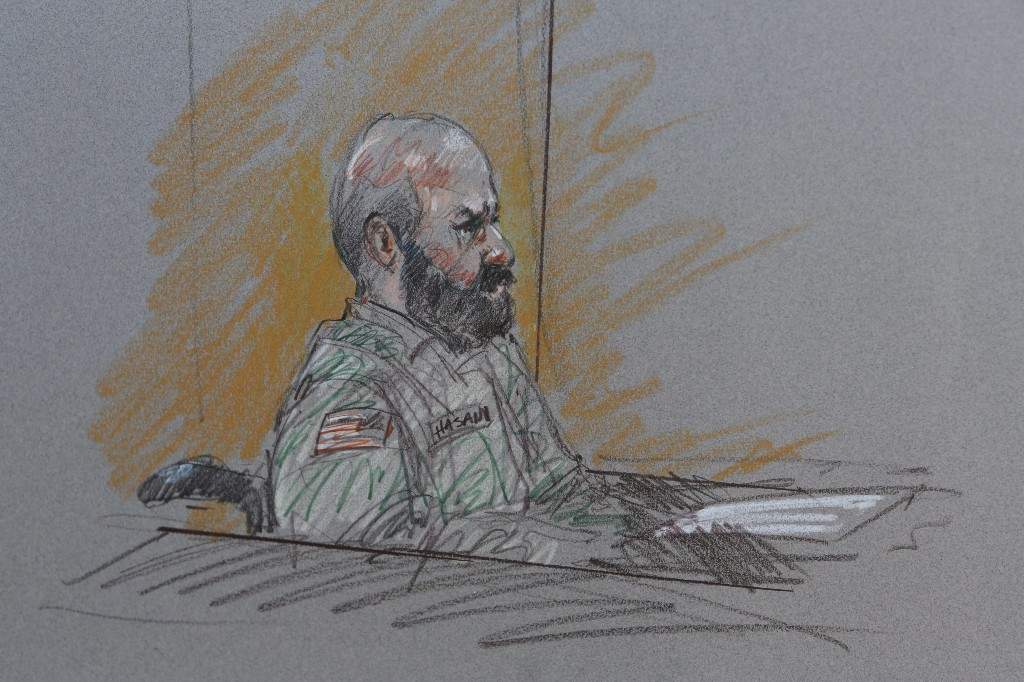
The lazy consensus surrounding the approved firing squad execution of Fort Hood shooter Nidal Hasan treats capital punishment as a straightforward ledger of retributive justice. Thirteen dead soldiers, thirty-two wounded, a military jury verdict, exhaustion of appeals, and a final signature from the White House. The narrative writes itself: swift, medieval-style justice meted out by an Army firing squad on the very base where the blood was spilled.
It feels good. It reads like a Hollywood script. And it is entirely wrong for anyone interested in long-term strategic statecraft.
We have confused emotional satisfaction with institutional hygiene. By turning a mass murderer into a historical spectacle—complete with initial proposals for public livestreams and the rare theater of a firing squad—the state is walking straight into a psychological trap that violent extremists spend decades trying to construct.
The Fallacy of the State-Sanctioned Martyr
Let us discard the emotional talking points and look at the mechanics of radicalized violence. Nidal Hasan did not open fire at Fort Hood’s Soldier Readiness Processing Center in November 2009 as a common criminal seeking cash or fleeing a botched robbery. He acted with explicit ideological intent, viewing himself as a soldier waging asymmetric war against an army he believed was crusading against his religion.
In the calculus of violent extremism, dying by the state's hand—especially in a dramatic, historic fashion not seen in the U.S. military since 1961—is not a deterrent. It is an upgrade. It transforms a disgraced, paralyzed inmate rotting in obscurity at Fort Leavenworth into an archival martyr.
Imagine a scenario where Hasan’s name is permanently scrubbed of contemporary relevance, where he is forced to live out his natural days in a concrete cell, aging, forgotten, and stripped of all agency. That is not leniency; it is absolute erasure. Permanent administrative confinement denies the extremist the theatrical exit he craves. Execution, conversely, provides a climax. It caps a narrative arc with state-sponsored drama.
The Cost of Performative Vengeance
The administrative push to expedite this execution through high-visibility methods reveals a deeper institutional insecurity. When a state feels compelled to resurrect mid-century execution methods to prove its own toughness, it signals that quiet, institutional competence is no longer enough.
We have seen this impulse before. Bureaucracies love visible outputs because they mask systemic failures. The 2009 attack happened in part because military leadership ignored glaring red flags in Hasan’s behavioral file out of bureaucratic timidity and political correctness. Executing him by firing squad does nothing to fix the structural vulnerabilities that allowed a radicalized psychiatrist to slip through the cracks of the Army Medical Corps. It is a loud punctuation mark placed at the end of a sentence that should have never been written.
Furthermore, consider the secondary operational risks. The friction generated by high-profile executions spills over into local infrastructure—such as school district closures and heightened security postures—while simultaneously handing foreign propaganda machines a turnkey recruiting asset. Martyrdom narratives thrive on state opposition. When you kill a radical the way he secretly hoped to be categorized, you validate his premise that the conflict is cosmic rather than judicial.
True Incapacitation vs. State Spectacle
The alternative to execution is not forgiveness. It is total, unyielding, bureaucratic neutralization.
Life imprisonment without the possibility of parole or release achieves the exact same security outcome as a firing squad: the offender cannot harm another human being, cannot return to society, and cannot command followers. The marginal security benefit of a firing squad is zero. The strategic downside, however, is a concentrated mobilizing event that focuses global extremist media attention on a single patch of Texas soil.
Justice for thirteen murdered service members and thirty-two wounded survivors is not served by giving an enemy combatant a stage. It is served by treating him with the cold, administrative indifference he fundamentally fears most.
Stop confusing the discharge of a rifle with the defeat of an ideology.


