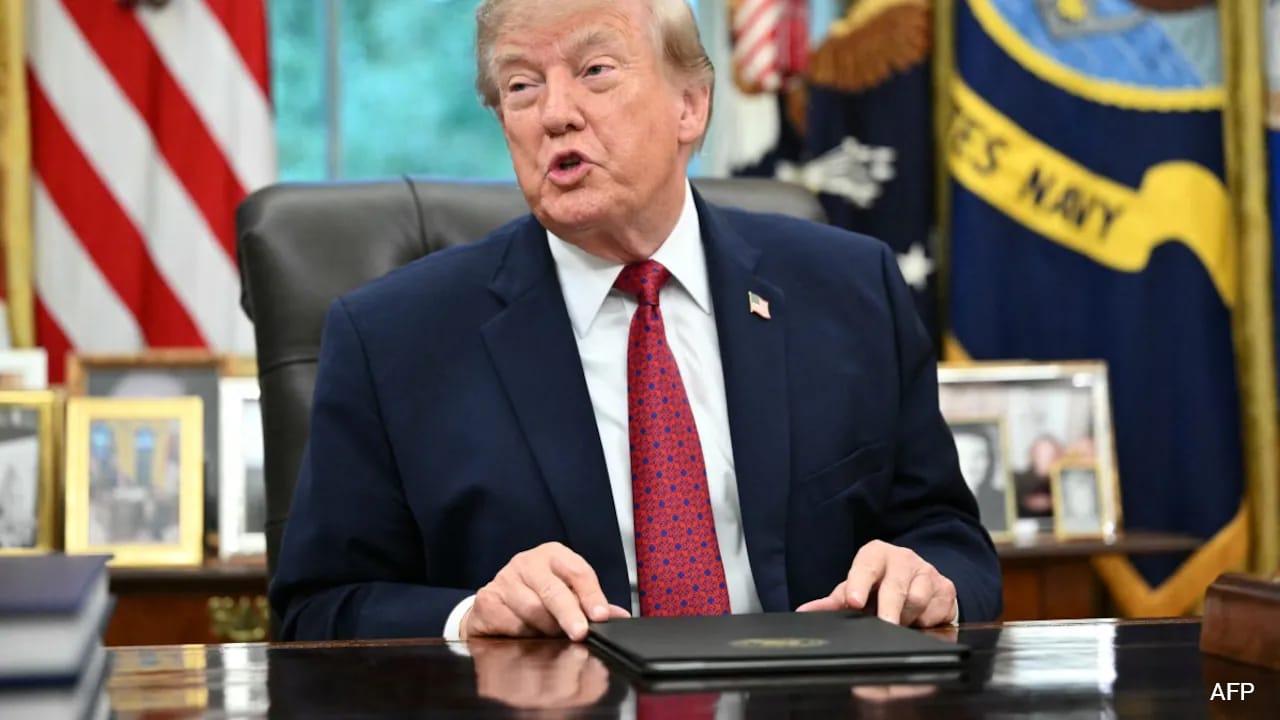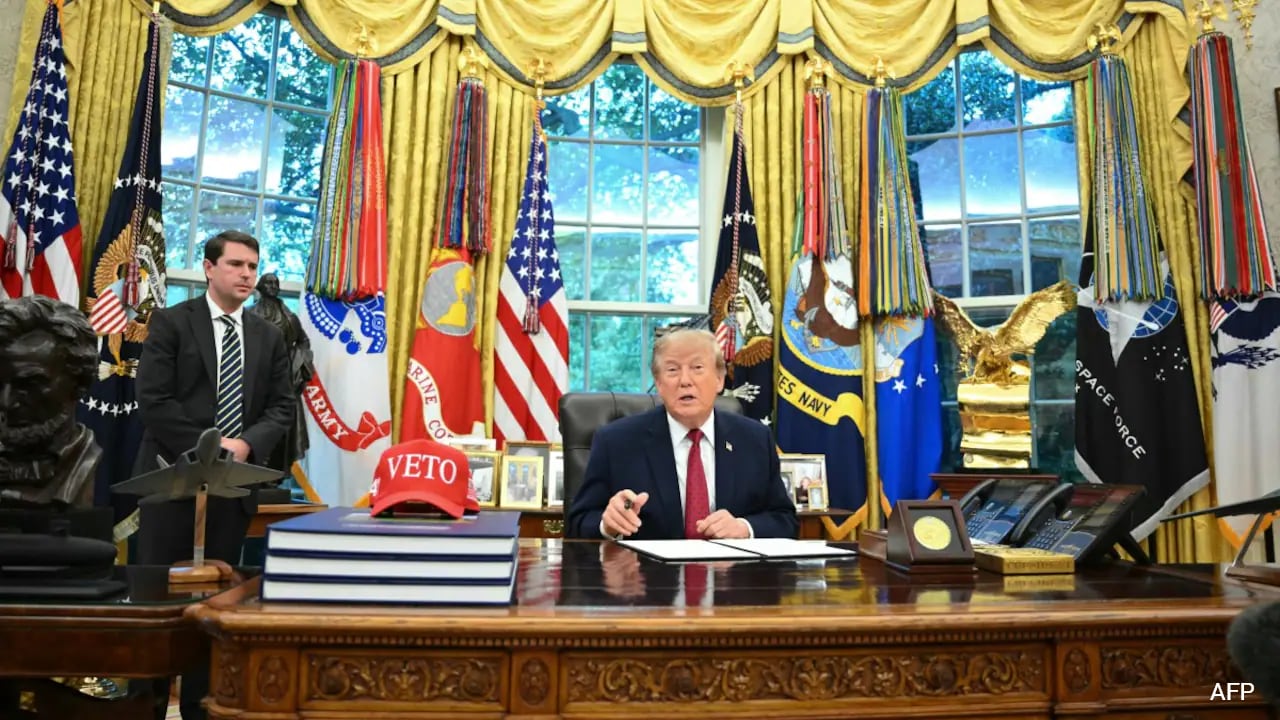
An executive order attempting to permanently freeze the interior design or architectural configuration of the Oval Office collides immediately with the structural mechanics of Article II of the United States Constitution. Because executive orders derive their authority entirely from the sitting president’s unilateral power to manage the executive branch, no chief executive can issue a directive that legally binds a future president from revoking or modifying it on day one of a new administration.
To understand the operational reality behind a directive titled "Trump Signs Order To Prevent Future Changes To Oval Office," one must separate political signaling from administrative law. While a sitting president exercises broad discretion over the immediate workspace of the West Wing, long-term physical alterations to the White House complex are governed by statutory frameworks, historic preservation mandates, and institutional oversight bodies that operate independently of unilateral presidential decrees.
The Constitutional Mechanics of Executive Directives
The core limitation of any executive order designed to lock in aesthetic or structural choices lies in the doctrine of anti-entrenchment. Under American constitutional law, a current officeholder cannot diminish the inherent executive authority of a future officeholder through unilateral administrative action.
- Revocability at Will: An executive order is not a statute passed by Congress and signed into law; it is an internal management directive issued to federal officers and agencies. Any subsequent president possesses the exact same Article II authority and can rescind, amend, or replace a predecessor’s order with a single signature.
- Absence of Statutory Lock-In: For a restriction on White House renovations to survive a transition of power, Congress would have to pass legislation codifying specific architectural parameters into the United States Code. Even then, statutory restrictions on how a sitting president arranges furniture, selects drapery, or hangs portraits within their primary working office would invite immediate constitutional challenges under the separation of powers doctrine.
- Jurisdictional Boundaries: Executive orders govern the conduct of executive branch employees—such as the Chief Usher, the Office of the Curator, and the General Services Administration (GSA). They do not create enforceable legal obligations against a future principal who sits at the top of that exact chain of command.
When a president signs an order purporting to prevent future changes to the Oval Office, the immediate legal effect is limited to instructing current staff not to alter existing installations during the remainder of the current term, or establishing internal procedural hurdles that remain in force only until a successor dissolves them.
Institutional Governance of the White House Complex
Media narratives surrounding Oval Office aesthetics frequently treat the room as a blank canvas subject entirely to presidential whim. In practice, physical stewardship of the Executive Residence and the West Wing is divided between transient political preferences and permanent institutional preservation.
The governance structure operates across three distinct layers:
- The Committee for the Preservation of the White House: Established by Executive Order 11145 in 1964 during the Lyndon B. Johnson administration, this body advises the president and the First Family on the museum-grade furnishings, fine art, and historic integrity of the public rooms. Notably, because this committee was itself created by executive order, its mandate relies on institutional norm compliance rather than immutable statutory armor.
- The White House Office of the Curator: Permanent civil servants manage the cataloged collection of historic objects, paintings, and furniture. While a president can request specific portraits from the National Portrait Gallery or the White House collection—such as swapping out a bust of Winston Churchill or hanging a portrait of Andrew Jackson—the physical conservation, climate control, and installation protocols remain strictly controlled by career curators.
- Public Law 87-286 (1961): Enacted during the Kennedy administration, this statute declares that objects of historic or artistic interest acquired for the White House become the inalienable property of the institution rather than the personal property of the departing president. It prevents an outgoing administration from stripping the building of historic assets, though it does not mandate where those assets must be displayed.
The Architecture of Decorative Versus Structural Modification
Analyzing the feasibility of freezing the Oval Office requires distinguishing between surface-level decoration and permanent structural alteration. The operational rules governing these two categories differ significantly.
Surface-Level Decoration
Items such as rugs, curtains, wallpaper, upholstery, seating arrangements, and wall art fall under the discretionary operational budget allocated to each incoming administration. Congress routinely appropriates a transition refurbishment fund—historically around $100,000, though presidents frequently supplement this with private funds or existing White House inventory—specifically to allow a new chief executive to tailor the workspace to their functional and aesthetic preferences. An executive order banning changes to these elements has zero binding force once the transition fund is released to a successor.
Structural and Historic Fabric Alterations
Modifying the physical architecture of the Oval Office—such as altering the plasterwork on the ceiling, moving doorways, changing the marble mantel, or modifying the structural footprint of the West Wing—triggers an entirely different regulatory regime.
- National Historic Preservation Act (NHPA) Compliance: Although the White House, Capitol, and Supreme Court are technically exempt from standard Section 106 review processes under the NHPA to preserve separation of powers, the National Park Service (NPS)—which officially administers the White House grounds as President’s Park—maintains strict engineering and preservation standards.
- GSA and Secret Service Mandates: Structural changes must pass through the General Services Administration and the United States Secret Service. Security upgrades, ballistic glass installations, communications wiring, and HVAC retrofits routinely require tearing into the walls and floors of the Oval Office. A blanket executive order prohibiting "changes" to the room cannot override statutory security mandates or essential infrastructure maintenance without endangering the life of the president and compromising national security communications.
Precedent Analysis: How Administrations Reshape the Workspace
Every modern presidency has utilized the Oval Office as a visual communication tool, demonstrating that aesthetic continuity is the exception rather than the rule.
- The Kennedy-era Realignment: Jacqueline Kennedy’s restoration project transformed the White House from a loosely decorated executive residence into an accredited museum space, establishing the curatorial baseline that persists today.
- The Reagan and Bush Transitions: Ronald Reagan retained the basic structural layout while introducing warmer color palettes and Western art. George H.W. Bush replaced the carpet and shifted toward muted blues, whereas Bill Clinton introduced vibrant jewel tones and a custom-designed rug featuring a brighter presidential seal.
- The Obama and Trump Contrasts: Barack Obama replaced the sunburst rug with a neutral beige version woven with quotations from past presidents and Martin Luther King Jr., and substituted striped wallpaper for the previous paneling aesthetic. Upon taking office in 2017, Donald Trump reverted to gold drapery, brought back the sunburst rug design from the George W. Bush era, and added military service flags behind the Resolute Desk.
- The Biden Reconfiguration: Joe Biden removed the military flags, brought back the deep blue rug from the Clinton era, and rearranged the portrait gallery to emphasize Franklin D. Roosevelt, George Washington, Abraham Lincoln, Thomas Jefferson, and Alexander Hamilton.
This historical sequence illustrates a consistent operational pattern: incoming presidents use the physical environment of the Oval Office to establish immediate visual differentiation from their predecessor. Attempting to halt this cycle via executive fiat ignores the political utility that every new administration derives from resetting the stage.
Strategic Friction and Operational Bottlenecks
If an administration attempts to enforce an anti-modification directive through bureaucratic mechanisms, it creates specific operational bottlenecks rather than permanent preservation.
First, procurement and maintenance paralysis occurs when broad language prohibits alterations. Facility managers at the National Park Service and GSA require unambiguous authority to replace worn carpeting, repair water-damaged plaster, or upgrade aging electrical conduits. Overly rigid preservation orders force facilities teams to seek formal legal waivers for routine upkeep, increasing maintenance latency and operational costs.
Second, curatorial inventory conflicts arise when specific artworks or historical artifacts are locked into permanent display. Many high-value paintings in the Oval Office are on temporary loan from external institutions such as the Smithsonian Institution, the National Gallery of Art, or private collections. Loan agreements carry strict expiration dates, conservation rest periods, and insurance stipulations. An executive order cannot compel an external museum to extend a loan indefinitely if conservation protocols require the piece to be returned to storage.
Third, security modernization delays represent the highest-risk failure mode. The Oval Office functions as a Sensitive Compartmented Information Facility (SCIF)-adjacent workspace requiring continuous cryptographic, acoustic, and ballistic hardening. Any directive that restricts physical modifications to the room’s perimeter or interior surfaces must be subordinate to Secret Service and White House Military Office (WHMO) technical requirements, rendering an absolute freeze operationally impossible.
Evaluating the True Mechanism of the Directive
When stripped of sensationalist framing, an executive order aimed at preventing future changes to the Oval Office operates not as a legal lock, but as a political tripwire.
By codifying the current aesthetic configuration into a formal presidential directive, the signing president forces their successor to execute an explicit, public act of revocation to redecorate. Instead of quietly swapping out rugs and curtains during the standard Inauguration Day transition window—while the outgoing president is departing via Marine One and the incoming president is attending the inaugural parade—the new administration must formally rescind a specific executive order. This elevates routine interior design into a deliberate policy reversal, generating immediate media coverage and signaling a break with the prior administration's symbolic legacy.
To achieve actual, multi-administration durability for any architectural or design standard within the White House, an administration cannot rely on unilateral Article II directives. The only viable mechanism is to bypass the executive order framework entirely and secure bilateral, statutory authorization through Congress—amending Public Law 87-286 to establish binding, legislated preservation criteria for the West Wing’s primary executive suite. Absent statutory enactment, any executive order freezing the Oval Office remains strictly temporary, surviving only until the next president picks up a pen on January 20.