The Washington Echo Chamber Meets Hardline Exile Realities
Foreign policy in Washington runs on sanitized abstractions. Officials in pressed suits talk about maximum pressure, diplomatic off-ramps, and calibrated deterrence while sitting miles away from the consequences. But on the ground, the math looks entirely different. When an Iranian refugee looks at the current political landscape in the United States and urges a incoming or returning administration to go all-in on toppling Tehran, that plea carries a weight born of survival. It bypasses diplomatic euphemism. It rejects the decades-long cycle of half-measures that has defined Western engagement with the clerical regime since 1979.
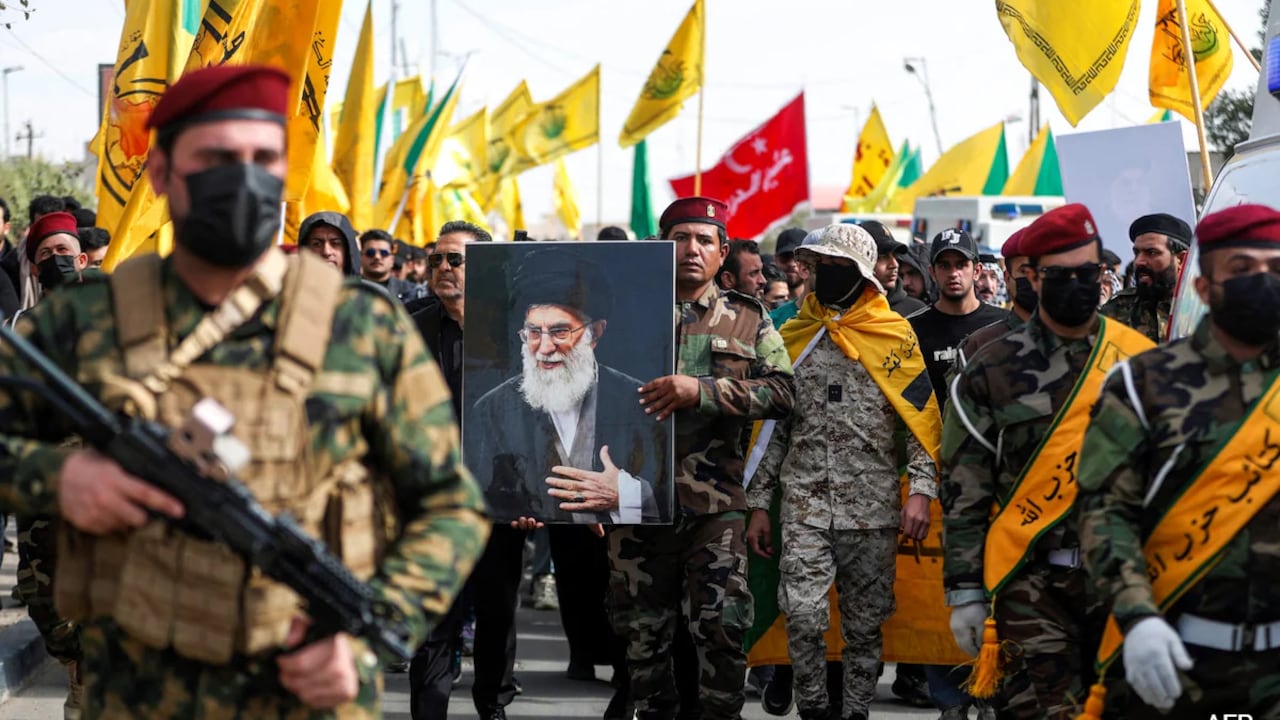
The core premise of this hardline exile perspective is brutally simple. You cannot negotiate with an ideological apparatus whose foundational identity relies on anti-Western hostility. Every dollar of sanctions relief or diplomatic engagement is funneled directly into the Islamic Revolutionary Guard Corps. Every delay in decisive action grants the security apparatus more time to crush domestic dissent.
Yet, adopting a strategy of total confrontation is not a simple toggle switch. It requires examining the mechanics of regime collapse, the historical failures of external intervention, and the acute dangers facing ordinary citizens inside Iran who bear the immediate brunt of escalation.
Anatomy of a Stalemate
Decades of diplomatic maneuvering have produced a predictable routine. A crisis erupts over uranium enrichment or proxy attacks across the Middle East. Western capitals respond with targeted financial sanctions. Tehran retaliates through regional proxies or maritime harassment. Eventually, back-channel talks begin, leading to a temporary freeze that satisfies neither side.
This cycle persists because policymakers refuse to confront the structural architecture of the Iranian state. The regime is not a traditional nation-state governed primarily by pragmatic national interests. It is a revolutionary enterprise anchored by a sprawling military-industrial conglomerate. When exiled dissidents argue that negotiation is impossible, they are pointing to this structural reality. Compromise threatens the ideological legitimacy of the ruling clerics. Surrender is out of the question. Therefore, engagement is interpreted not as an invitation to peace, but as a sign of weakness to be exploited.
Consider the economic dimension. Sanctions bite hard, but they rarely trigger democratic transitions on their own. Instead, they often produce a siege mentality. The state tightens its grip on black-market trade, enriching the very commanders tasked with internal suppression. Ordinary merchants, teachers, and workers face hyperinflation while the political elite insulates itself from scarcity.
"Diplomacy assumes both parties share a basic desire for institutional survival within the international order. When one party views its survival as contingent on continuous external conflict, standard negotiation models fail completely."
The Mechanics of Maximum Pressure
Going all-in against Tehran demands more than fiery rhetoric or symbolic executive orders. It requires a fundamental shift from containment to active dislodgement. Historically, proponents of regime disruption point to several critical vectors that could crack the clerical monopoly on power.
- Financial Suffocation: Completely cutting off illicit oil sales to shadow markets, targeting third-party intermediaries in East Asia and the Middle East, and freezing hidden assets held by regime insiders abroad.
- Information Warfare: Bypassing state-controlled internet firewalls by flooding the country with decentralized communication hardware, satellite links, and uncensored digital infrastructure to coordinate domestic resistance.
- Labor Strikes: Supporting coordinated walkouts in vital energy and transport sectors. A regime can shoot protesters in the streets, but it cannot easily pump oil or move goods at gunpoint if the entire workforce grinds to a halt.
However, each of these vectors carries severe second-order effects. Financial blockades routinely devastate the middle class before they weaken the security apparatus. Information networks can be infiltrated, leading to the identification and execution of dissidents. Most importantly, external actors rarely control the trajectory once a nation begins to fracture.
The Day After Vacuum
The loudest critique of the go-all-in strategy comes from the ghost of recent history. Iraq, Libya, and Syria cast long shadows over any discussion of toppling Middle Eastern governments. Removing a dictator without a coherent, battle-tested alternative administration invites violent fragmentation.
Exiled opposition figures often insist that a unified coalition is ready to step into the vacuum. They point to charismatic leaders, democratic charters, and broad-based worker coalitions. Skeptics within Western intelligence agencies remain deeply doubtful. Iran is a multi-ethnic mosaic comprising Persians, Kurds, Azerbaijanis, Balochs, and Arabs. Without a strong central authority holding the state together during a transition, the risk of civil war or partition rises exponentially.
This creates a paralyzing dilemma for foreign capitals. Maintain the status quo, and watch a hostile nuclear-threshold state crush its own population while fueling regional chaos. Push for total collapse, and risk unleashing a humanitarian catastrophe that dwarfs the current Syrian refugee crisis.
The Reality Check
The plea from the Iranian diaspora is ultimately an appeal for moral and strategic clarity. It strips away the comforting fiction that time is on the side of reform. The regime has proven adept at outlasting American presidential cycles, shifting alliances, and weathering economic storms.
Yet, wishing for a quick collapse does not make it operationally feasible. A serious approach requires acknowledging that a transition policy must be built on years of careful, underground cultivation of internal labor movements, secure communication pipelines, and meticulous planning for post-regime governance. Anything less is just another cycle of empty political posturing, leaving those on the front lines to face the firing squad alone while foreign leaders debate strategy from afar