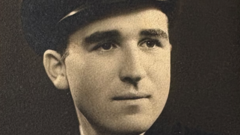
Lawrence Brooks didn't just survive the greatest conflict in human history. He outlived almost everyone who watched it happen. When news broke that the oldest WWII veteran passed away at the age of 109, the world didn't just lose a centenarian. We lost a living library of American resilience. People often obsess over the strategy of the Pacific Theater or the logistics of D-Day, but Brooks represented the quiet, often overlooked backbone of the war effort. He lived through Jim Crow, a global war, and a century of radical change, yet he kept a smile that seemed to defy the weight of his experiences.
He wasn't a general. He wasn't a decorated ace with fifty kills. He was a soulful, witty man who understood that history isn't just about the dates in a textbook. It's about the people who did the dirty work while the world was on fire. If you want to understand what the "Greatest Generation" actually looked like when the cameras weren't rolling, you have to look at the life of Lawrence Brooks. For a deeper dive into this area, we recommend: this related article.
A Legacy Built in the 91st Engineer Battalion
Lawrence Brooks served in the predominantly African American 91st Engineer Battalion. Stationed primarily in New Guinea and the Philippines, his unit was the engine room of the Pacific war. They built the infrastructure that allowed the front lines to move. Brooks himself served as a physical therapist and orderly to three white officers. In a segregated military, his role was complex. He navigated the internal politics of a prejudiced system while simultaneously facing the external threat of Japanese air raids.
It wasn't all drills and labor. He famously shared stories about the sheer terror of being in a C-47 transport plane when an engine failed. They had to dump cargo to stay airborne. Since there were only two parachutes on board—reserved for the pilots—Brooks joked that he was ready to grab onto one of them if they had to jump. That kind of humor isn't just a coping mechanism. It's a testament to the mental toughness required to survive that era. He wasn't interested in being a martyr. He just wanted to get the job done and get back to New Orleans. For additional information on this topic, comprehensive analysis can also be found at NPR.
The Reality of the Segregated Service
We have to talk about the elephant in the room. Brooks served a country that didn't fully recognize his humanity at the time. The U.S. military in the 1940s was a mirror of the systemic racism back home. While he was helping win a war for "freedom," he was restricted by the color of his skin. This is the part of the veteran story that often gets sanitized.
He didn't harbor the bitterness you might expect. When asked about his service later in life, he focused on the camaraderie and the work. He saw his contribution as essential, even if the brass didn't always treat it that way. That level of grace is rare. It’s why his passing at 109 feels like such a heavy blow to our collective memory. We are losing the people who can tell us exactly how it felt to fight for a democracy that was still a work in progress for them.
The Secret to Living Past 100
Everyone always asks the same question when someone hits triple digits. What's the secret? For Brooks, it wasn't some trendy biohacking routine or a specific supplement. He was famously fond of saying, "Serve God and be nice to people." It sounds simple. Almost too simple. But in a world that's increasingly polarized and loud, there's something profound about that philosophy.
He loved his community in New Orleans. Even after losing his wife, Leona, and his home during Hurricane Katrina, he didn't quit. He rebuilt. He stayed active. He enjoyed his cigars and his juice. He was a fixture at the National WWII Museum, which basically became his second home. They threw him massive birthday parties every year, complete with flyovers and Victory Belles singing tunes from the forties.
Why His Longevity Matters for History
When a veteran reaches 109, they become a bridge. Brooks could talk about the transition from horse-drawn carriages to the moon landing because he saw it all. His longevity allowed him to witness the Civil Rights Movement, the Cold War, and the digital revolution. He provided a perspective that we can't get from a YouTube documentary.
The National WWII Museum's President, Peter Crean, often spoke about Brooks's infectious spirit. He wasn't just a relic. He was a participant. He reminded us that the war wasn't that long ago. When we see a man who was there, sitting in front of us in 2022 or 2023, the distance between then and now shrinks. It makes the sacrifices feel more real. More immediate.
Honoring the Memory Without the Fluff
Don't just post a flag emoji and move on. To truly honor the oldest WWII veteran, we need to look at the gaps in our own understanding of history. Brooks represented the millions of Black service members who were often denied the benefits of the GI Bill upon their return. They built the world we live in today, often without the recognition their white counterparts received.
The best way to respect his 109 years is to engage with the actual history of his unit, the 91st Engineer Battalion. Look into the records. Understand the logistical nightmares of the New Guinea campaign. See the war through the eyes of the men who were building bridges while dodging snipers.
If you're in New Orleans, visit the National WWII Museum. Don't just look at the planes. Look for the stories of the individuals. Brooks's spirit is baked into the walls of that place. Read about the contributions of minority units who fought two wars at once—one against the Axis powers and one against inequality at home. That's the real tribute.
Stop waiting for the "perfect time" to talk to the elders in your own life. We think these legends will be around forever because they've already survived so much. They won't. Lawrence Brooks is gone, and with him, a specific, irreplaceable window into our past has closed. Take the time to document your own family's history now. Write it down. Record the audio. Don't let those stories vanish when the heart stops beating.