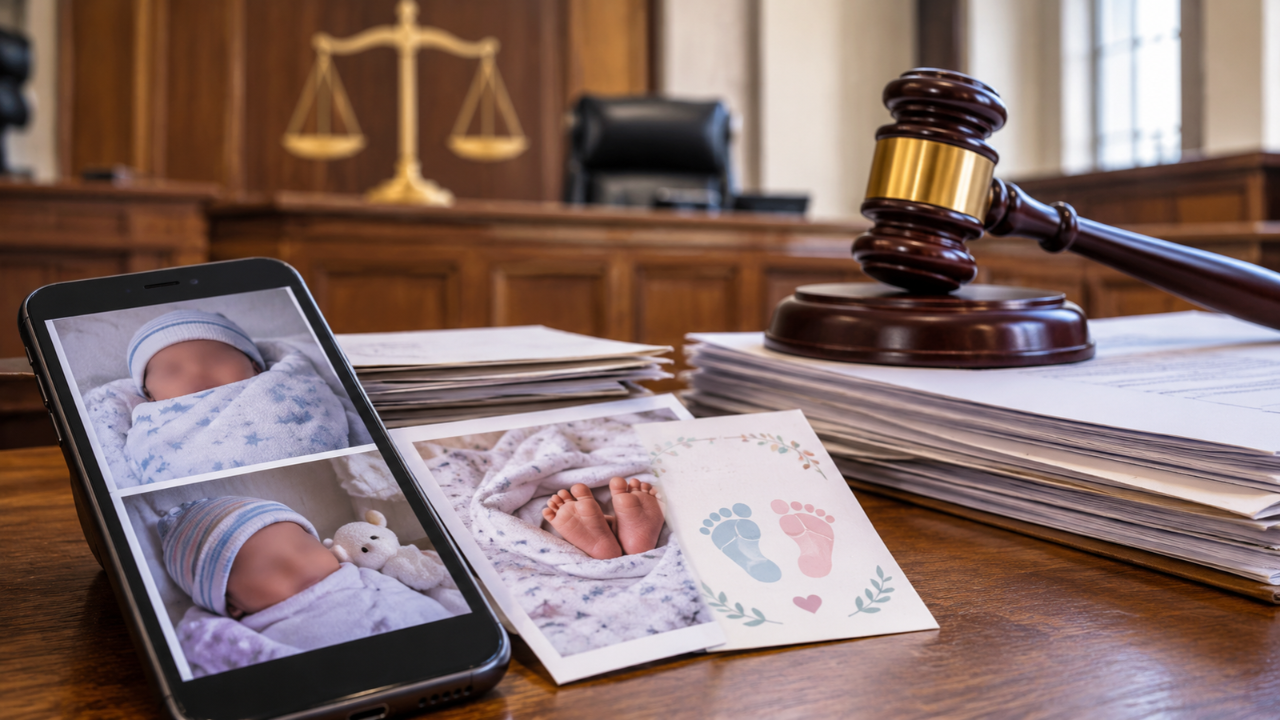
Imagine spending years believing you have two children, sending money for their care, and mourning their supposed deaths—only to have a judge tell you they never existed. Sounds like a bad soap opera plot, right? Yet a court recently ruled on a case where a woman convinced her ex-partner she had given birth to two babies who were completely fabricated.
This isn't just a bizarre tabloid headline. It highlights a very real, deeply unsettling intersection of psychological manipulation, financial fraud, and family law. Most people assume the legal system has simple, automated ways to catch fake births or non-existent dependents immediately. They don't. When someone weaponizes emotional attachment alongside forged documents or medical lies, the fallout can stretch across years before a courtroom ever sees the truth. Meanwhile, you can find related stories here: The Real Cost of Saving Great Yarmouth Winter Gardens Behind That £10 Million Headline.
Why These Cases Happen and How They Last So Long
You might wonder how anyone falls for a fake pregnancy—let alone two of them. The answer usually comes down to timing, distance, and weaponized guilt.
In cases involving fake pregnancies and fabricated children, the deception rarely happens when two people live under the same roof every day. Instead, it thrives during breakups, long-distance stretches, or high-conflict separations. Once a relationship ends, direct access disappears. You aren't going to doctor's appointments together anymore. You're relying on texts, ultrasound photos sent over messaging apps, and verbal updates. To see the bigger picture, check out the recent analysis by The Guardian.
And here's the trap. Questioning a pregnant ex-partner or demanding proof of a newborn feels monstrous to most decent people. Manipulators count on that hesitation. If you ask for a birth certificate or try to visit the hospital, you're suddenly painted as cruel, unsupportive, or controlling. So people back off. They send the money. They accept the excuses about why a visit isn't possible right now—maybe the baby is in the NICU, maybe there's a sudden medical emergency, or maybe the mother claims she needs space to recover.
Honestly, modern technology makes the initial lie painfully easy to pull off. Fake ultrasound generators, edited hospital wristbands, and stolen baby photos from public social media accounts are readily available online. Without in-person verification, an ex-partner is essentially trying to prove a negative while fighting their own hope that the story is true.
What the Courts Actually Look At
When a case like this finally lands in front of a judge, the legal system strips away the melodrama and looks strictly at verifiable facts. Family and civil courts deal with evidence, not emotional narratives.
In the ruling where a woman convinced her ex-partner she had two non-existent babies, the court's primary job was establishing legal and biological reality. You can't order child support, custody, or visitation for children who don't exist on paper or in the physical world.
To reach that kind of ruling, courts rely on concrete mechanisms:
- Official Vital Statistics: Judges or legal counsel subpoena state or national birth registries. Every legitimate birth generates an official record. No record means no legal existence.
- Medical Subpoenas: If a party claims they gave birth at a specific hospital or received prenatal care from a named clinic, the court can compel those institutions to confirm whether the patient was ever admitted or treated there.
- Financial Trails: Courts examine bank transfers, payment apps, and receipts to see how much money changed hands under the pretense of child-rearing, medical bills, or emergency expenses.
- Digital Forensics: Text messages, emails, and metadata from supposed baby photos often expose the timeline of the lie. Image metadata frequently shows that a "newborn" photo was actually downloaded from the internet years earlier.
Once a court confirms the children don't exist, the legal focus shifts abruptly. It stops being a family law dispute about parenting and becomes a civil—or sometimes criminal—matter about fraud and emotional distress.
The Financial and Legal Consequences of Faking a Child
A lot of people assume that lying about having a baby is just a terrible personal betrayal, not a crime. That's a massive misconception. The moment money, legal filings, or official documents enter the picture, the legal jeopardy becomes severe.
If someone solicits money for prenatal vitamins, hospital bills, diapers, or child support for a fictional child, that's textbook financial fraud. Depending on the jurisdiction and the dollar amount involved, prosecutors can pursue charges ranging from theft by deception to wire fraud (if the requests happened via text, email, or electronic bank transfers).
Forging medical records or birth certificates elevates the problem even further. Creating or presenting fake government documents or hospital records in a legal proceeding is a serious offense. Even if the fake documents were only sent privately to an ex-partner to extract money, they serve as hard evidence of intentional fraud in civil court.
In civil court, the targeted partner can sue to recover every cent paid out under false pretenses. Courts regularly order restitution in these scenarios. Getting a judgment is one thing, of course, and actually collecting that money from someone who may have already spent it is another headache entirely. Still, having an official court ruling on the record clears the victim of any phantom parental obligations and establishes legal accountability.
Emotional Harm vs. Legal Remedies
The psychological toll of discovering your children never existed is brutal. Victims go through a genuine grieving process—mourning kids who were never born while simultaneously realizing the person they trusted orchestrated the entire illusion.
Unfortunately, the legal system is clunky when it comes to compensating pure emotional trauma. While some jurisdictions allow claims for intentional infliction of emotional distress (IIED), the legal bar for proving it is notoriously high. Judges are much faster and more consistent when calculating direct financial losses than they are at putting a dollar figure on heartbreak.
Red Flags That Signal a Fabricated Pregnancy
If you're ever in a situation where an ex-partner claims to be pregnant or says they've secretly given birth, protecting yourself doesn't make you a bad person. It makes you smart. Trusting blindly when major legal and financial responsibilities are on the line is a mistake.
Watch closely for these patterns:
- Constant barriers to medical verification. There is always a convenient reason why you can't attend an ultrasound, speak to the OB-GYN, or see paperwork with the clinic's actual letterhead and contact details.
- Urgent, recurring financial crises. The requests for money are always tied to sudden emergencies—an unexpected complication, a specialized formula, an immediate hospital fee—and they always require cash or untraceable transfers rather than paying a provider directly.
- Inconsistent timelines. The due date shifts by weeks without a clear medical explanation, or the supposed birth happens far earlier or later than biologically plausible without the corresponding medical documentation.
- Isolation from mutual contacts. Nobody else in their immediate circle seems to know about the pregnancy or the babies, or you're strictly warned not to mention the children to their family members for convoluted reasons.
- Convenient tragedies. In extreme cases of pregnancy deception, when the lie becomes too hard to maintain, the manipulator claims a sudden miscarriage, stillbirth, or infant death—again, without any verifiable medical records or funeral arrangements.
Practical Steps to Protect Yourself Immediately
If you suspect you're being misled about a pregnancy or a child, stop operating on guilt and start operating on documentation. You don't need to launch an aggressive confrontation right away. Just shift how you handle communication and money.
Stop sending direct cash. If an ex-partner asks for money for prenatal care, hospital bills, or baby supplies, offer to pay the medical clinic directly or purchase the physical items yourself. Someone telling the truth will usually welcome the practical help. Someone running a scam will push back hard because they need the cash, not the diapers.
Save every single message. Export your text threads, save screenshots of photos (along with their original files so metadata stays intact), and keep records of every bank transfer or payment app transaction. Do not delete anything, even if you feel embarrassed or angry.
Insist on formal legal channels. If a child genuinely exists, establishing paternity through a court-ordered DNA test is standard procedure. It protects everyone—the father, the mother, and the child. Never sign a voluntary acknowledgment of paternity or agree to informal child support payments without verified proof of birth and biological parentage.
Consult a family law attorney early. You don't need to wait until you're tens of thousands of dollars deep into a lie to get legal advice. A single consultation with a family lawyer can clarify your rights, help you draft a formal request for verification, and stop a manipulative situation before it spirals into years of wasted time and money.