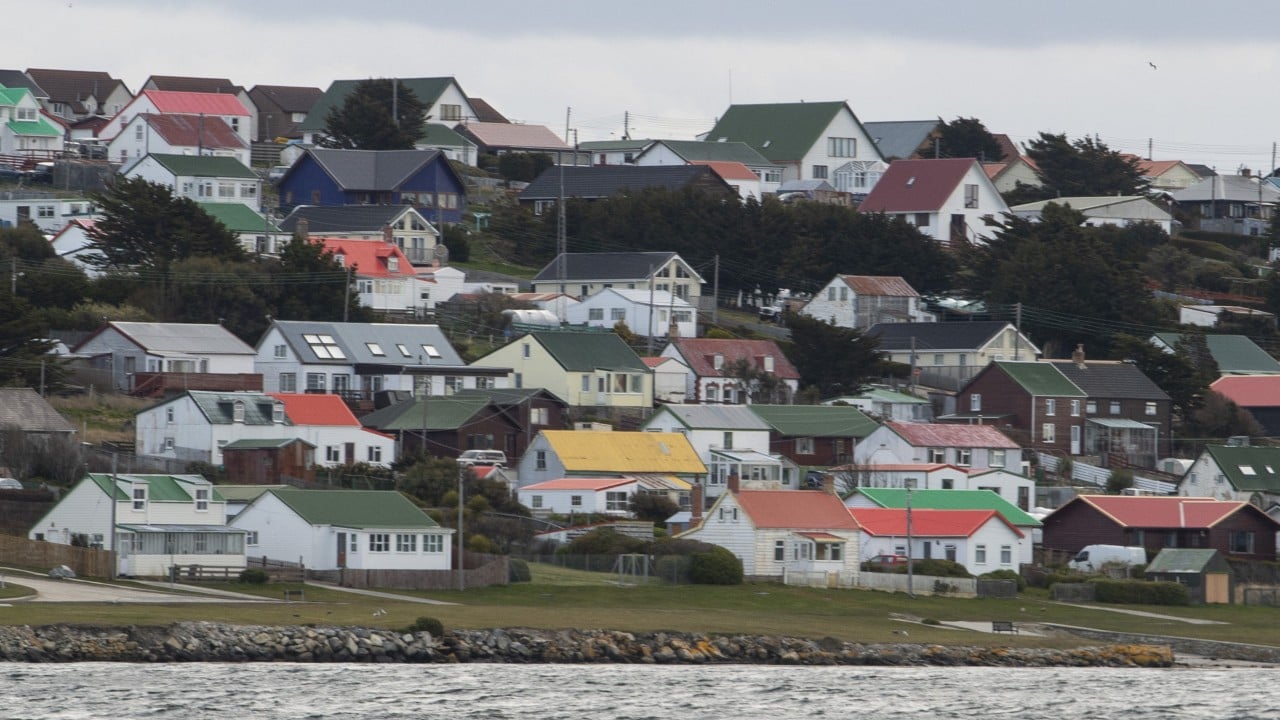
The comparison sounds neat in an opinion column. Propose a leaseback arrangement for the Falkland Islands modeled on the 1984 Sino-British Joint Declaration, transfer sovereignty to Argentina, let the islanders keep their way of life for fifty years, and watch a stubborn territorial dispute vanish into diplomatic history. It is a seductive blueprint for armchair strategists who measure international relations in neat architectural lines. Reality is far more brutal.
Applying a Hong Kong template to the Falklands ignores legal foundations, local autonomy, and the fundamental mechanics of self-determination. The proposal falls apart the moment it confronts the legal status of the inhabitants, the absence of an expiring lease, and the starkly different geopolitical realities of the South Atlantic.
The False Premise of the Lease
The primary flaw in the handover argument lies in a basic misunderstanding of why Britain relinquished Hong Kong. The New Territories, which comprised roughly ninety-two percent of Hong Kong's total land area, were held under a ninety-nine-year lease signed in 1898. That lease had an absolute expiration date of midnight on June 30, 1997. Britain had no legal title to the New Territories past that date, and the urban areas of Hong Kong Island and Kowloon were economically and operationally indefensible without the hinterland.
The Falkland Islands share no such administrative ancestry. Britain does not hold the islands on a ticking clock. British sovereignty over the archipelago is rooted in continuous administration, permanent settlement, and, most crucially, the active consent of the people who live there. There is no expiration date stamped onto the territory. Comparing a sovereign British Overseas Territory settled by generations of islanders to a nineteenth-century imperial leasehold is a category error.
Self-Determination Versus Imperial Bargaining
In 1984, the fate of five million Hong Kong residents was decided in negotiations between London and Beijing without direct representation for the people whose lives would be upended. The Joint Declaration was an agreement between two states regarding a colonial possession where the local population lacked the ultimate right of self-determination under international law as applied by the retreating power.
The Falklands operate under an entirely different legal and moral framework. In a 2013 referendum, 99.8 percent of participating Falkland Islanders voted to remain a British Overseas Territory. Modern international law, specifically Chapter XI of the United Nations Charter, emphasizes the principle of self-determination for non-self-governing territories.
Handing over a population that explicitly rejects foreign rule would violate contemporary norms against the transfer of sovereign populations without their consent. The Hong Kong model depended on the absence of a democratic mandate for the local population to choose otherwise. In the Falklands, that mandate is absolute, vocal, and legally binding under British constitutional practice.
The Cost of Strategic Miscalculation
Advocates of a handover often frame the idea as a pragmatic compromise to normalize relations with Buenos Aires and reduce Britain's military expenditure in the South Atlantic. This argument misreads Argentine domestic politics and the strategic value of the islands.
Successive governments in Buenos Aires have used the claim to the Islas Malvinas as a constitutional article of faith. No Argentine administration can compromise on total sovereignty without facing immediate political destruction. A leaseback period of fifty years would simply delay an inevitable collision, creating a prolonged period of profound anxiety for the islanders while incentivizing the incoming sovereign power to wait out the clock.
For Britain, abandoning the islands would signal a catastrophic retreat from treaty obligations and sovereign commitments. The global security architecture depends heavily on the credibility of deterrence and defense promises. Walking away from a community that wishes to remain British would undermine that credibility from the North Atlantic to the Indo-Pacific.
Economic Realities and Resource Governance
Beyond sovereignty and security lies the question of economic viability. The waters surrounding the Falklands support a heavily regulated, sustainable fishery and significant offshore hydrocarbon reserves. The local government funds its own public services entirely through taxation and resource management, receiving no financial subsidy from London outside of defense.
Under an Argentine administration, the economic engine of the islands would be subsumed into a national economy historically plagued by severe fiscal instability, high inflation, and unpredictable regulatory shifts. The islanders understand this risk intimately. Their economic self-sufficiency is tied directly to their political stability under the British crown. A forced administrative transfer would dismantle a thriving, self-funded community and replace it with centralized control from a distant capital that has historically viewed the archipelago through an ideological lens rather than an administrative one.
The Hong Kong analogy belongs in the archive of diplomatic thought experiments. It offers a superficial neatness that evaporates upon contact with the actual laws, rights, and desires of the people who call the Falklands home. Realism in foreign policy requires acknowledging that some disputes cannot be solved by retrofitting historical templates to places where they do not fit.