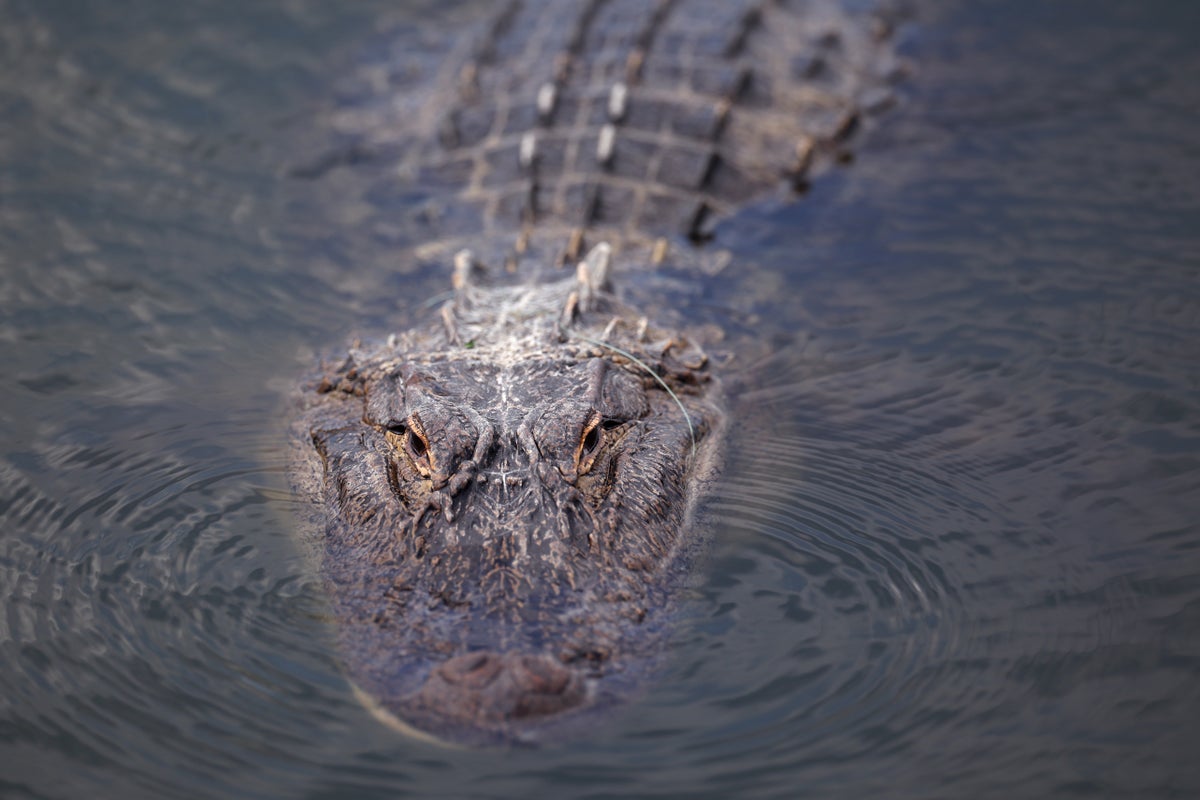
A horrific 911 call detailing a fatal alligator attack on a Florida woman highlights a escalating crisis that local officials routinely downplay. The audio captured the sheer terror of witnesses discovering a victim missing an arm in the jaws of a predator. While headlines focus on the gruesome shock value of the incident, the true crisis lies in the unchecked suburban sprawl pushing human developments directly into ancient apex predator habitats. This is not an issue of rogue animals, but a predictable consequence of aggressive real estate expansion meeting a resilient, federally protected species.
Every year, millions of new residents and tourists pour into the Sunshine State, unaware that the retention ponds behind their master-planned communities are functioning biological corridors. The tragedy captured in recent emergency dispatches is the inevitable friction point of this demographic shift.
The Illusion of the Safe Suburban Oasis
Florida development relies on a specific aesthetic. Developers dig artificial lakes to create waterfront properties, using the excavated dirt to elevate the foundations of tightly packed single-family homes. To a homebuyer, these ponds look like a tranquil slice of nature. To an American alligator, they look like a newly minted territory ripe for colonization.
Alligators are highly mobile creatures. During the spring mating season and the scorching summer months, large males travel significant distances overland and through drainage systems to find new territory and mates. A manicured backyard pond with a direct pipeline to a local river system becomes an attractive nuisance.
State agencies manage these interactions through the Statewide Nuisance Alligator Program (SNAP). The framework allows contracted trappers to remove and euthanize any alligator over four feet long deemed a threat to human safety. It is a reactive, band-aid protocol that does nothing to address the structural reality of the situation.
- Over 10,000 nuisance alligators are harvested annually in Florida.
- The removal of one dominant alligator frequently opens up a vacuum for younger, often more aggressive males to occupy.
- Artificial water bodies lack the natural barriers and varied food sources of pristine wetlands, forcing predators closer to human activity.
The public policy approach has long been centered on teaching humans to co-exist with these reptiles. Signs are posted warning residents not to feed alligators or walk pets near the water's edge at dusk. Yet, the sheer density of human population overlapping with alligator habitats makes compliance a statistical game of roulette.
The Failure of Biological Risk Assessments
When local planning boards approve massive residential developments, they heavily scrutinize traffic patterns, sewage capacity, and stormwater runoff. They rarely, if ever, account for the carrying capacity of the local wildlife ecosystem.
A natural swamp provides a complex web of prey, from fish and wading birds to small mammals. A suburban retention pond provides a sterile environment where the primary food sources quickly become local ducks, stray cats, and small dogs. When an alligator associates a backyard with an easy meal, the boundary between wild predator and domestic threat vanishes.
[Natural Wetland] -> High Biodiversity -> Varied Prey Base -> Low Human Contact
[Retention Pond]  -> Low Biodiversity  -> Scarce Prey Base -> High Human Contact
The data compiled by wildlife authorities reveals a steady upward trend in major alligator encounters over the last three decades. This rise mirrors the state's population growth curve almost perfectly. It is a mathematical certainty that as you place more people next to a fixed population of apex predators, catastrophic incidents will occur.
The Economic Drivers of Wildlife Conflict
The inertia behind Florida's real estate market makes meaningful policy shifts incredibly difficult. Waterfront property commands a premium. Local governments rely on the soaring property tax revenues generated by these high-density developments to fund public services. There is a deep-seated financial disincentive to label certain areas as inherently too dangerous for standard residential zoning.
Insurance companies are beginning to take note of environmental risks, but their focus remains largely fixed on hurricanes and rising sea levels. The liability of a wildlife attack typically falls squarely on the individual homeowner or the homeowners association (HOA) responsible for maintaining the common areas.
HOAs find themselves caught in a difficult legal position. If they aggressively report every alligator sighting, they risk lowering property values by branding their community as unsafe. If they ignore the presence of a large reptile to protect the neighborhood's image, they face devastating negligence lawsuits when an incident occurs.
Rethinking Infrastructure Design
Resolving this crisis requires moving beyond the simplistic advice of telling people to stay away from the water. The infrastructure itself must change.
Engineering solutions exist that can physically isolate residential spaces from aquatic wildlife. Installing physical barriers like heavy-duty vinyl vinyl sheet piling or specialized wildlife fencing along the perimeter of retention ponds can prevent alligators from easily hauling out onto backyard lawns. Creating steeper bank slopes makes it difficult for reptiles to exit the water, keeping them contained within the aquatic zone.
Furthermore, communities must reconsider the use of open drainage culverts. These concrete tunnels act as underground highways for alligators, allowing them to bypass roads and fences to emerge unexpectedly in the middle of suburban neighborhoods. Grating these culverts is a simple mechanical fix that local governments frequently reject due to concerns over debris buildup and subsequent flooding during heavy storms.
Current Suburban Design:
Open Pond Banks ---> Flat Lawns ---> Unhindered Alligator Access to Patios

Mitigated Suburban Design:
Steep, Shored Banks ---> Physical Fencing ---> Alligator Contained to Water Body
The financial burden of these retrofits is substantial. Cash-strapped municipalities and cost-conscious developers are loath to adopt them voluntarily. Without strict state mandates overriding local building codes, the standard, dangerous layout of Florida suburbia will remain the default.
The Reality of Predator Management
The narrative surrounding alligator attacks often swings wildly between two extremes. One camp views the animals as mindless monsters that need to be systematically eradicated from populated areas. The other treats them as completely passive elements of the landscape that will never strike unless provoked. Both perspectives are fundamentally flawed.
Alligators are opportunistic feeders. They operate on primal instincts shaped by millions of years of evolution. They do not hunt humans out of malice, but an elderly person bending over near the water line or a child playing on a shoreline matches the exact profile of their natural prey.
The current system of exterminating individual "nuisance" animals creates a false sense of security. It gives residents the impression that the danger has been permanently removed. In reality, an empty territory in a rich ecosystem is filled almost immediately by another alligator moving up the drainage canal.
Relying on public education campaigns has clear limits. A steady stream of new residents arrives in Florida daily from regions with no large predators. Expecting a family from the Midwest to instinctively understand the nuances of alligator behavior during a drought or a mating cycle is an unrealistic standard for public safety.
The tragic 911 calls that occasionally shock the public consciousness are not freak accidents or unpredictable acts of God. They are the direct, quantifiable output of a system that prioritizes rapid land development over basic ecological realities. Until state planning laws treat apex predator habitats with the same regulatory caution applied to floodplains and fault lines, the boundaries of Florida's suburbs will remain a hazardous front line.