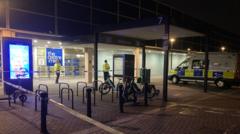
A quiet afternoon of shopping shouldn't end in a police cordon. Yet, that’s exactly what happened following a brutal incident that left a man dead and a community looking for answers. Police have made an arrest after a man died in a shopping centre attack, but the ripple effects of this violence go far beyond a single news headline. When these tragedies hit public spaces, they shatter the basic sense of security we all take for granted.
You've probably felt it yourself. That slight hesitation when walking through a crowded mall or the way you subconsciously scan for the nearest exit. It's not paranoia; it's a natural reaction to a growing trend of public violence that feels increasingly unpredictable. This isn't just about one arrest. It's about how we manage safety in the places where we live our lives.
The Reality of the Shopping Centre Attack
The details coming out of the investigation are grim. Following the fatal confrontation, emergency services rushed to the scene, but they couldn't save the victim. Witnesses described a chaotic scene—shouting, a sudden scuffle, and then the realization that something irreversible had happened. Officers moved quickly to secure the perimeter, eventually leading to the arrest of a suspect.
Police are currently treating this as a targeted incident rather than a random spree, which offers a small, cold comfort to the public. Even so, the fact that such a violent act occurred in broad daylight in a high-footprint area is a massive red flag. We’ve seen a shift in how these crimes are handled. In the past, a mall scuffle might have been broken up by a couple of security guards. Now, we’re seeing full-scale tactical responses and forensic teams sweeping through food courts.
The investigation is in its early stages. Detectives are pouring through CCTV footage and interviewing dozens of shoppers who were caught in the crossfire. If you’ve ever been near a crime scene like this, you know the atmosphere. It’s heavy. It’s quiet in a way that feels wrong. The arrest is a starting point, but the legal process is long, and for the family of the deceased, the closure is years away.
Why Private Security is Struggling to Keep Up
Let’s be honest about mall security. For years, the "Paul Blart" stereotype has dominated the public consciousness. We think of guards as retirees or kids in oversized vests circling on Segways. That era is dead. Today’s shopping centre security teams are expected to act like first responders without having the legal powers of the police.
Malls are private property but act as public squares. This creates a massive gray area in safety. Security guards often have "observe and report" mandates. They aren't always allowed to physically intervene until a situation has already turned violent. By the time they step in, it's often too late. This attack highlights the gap between what we expect from mall security and what they’re actually equipped to handle.
The pressure on these facilities is immense. They’re dealing with rising retail crime, mental health crises, and personal vendettas that spill over from social media into the real world. We’re seeing more centres invest in high-tech surveillance and even canine units, but technology can’t always predict a sudden burst of human rage.
The Problem with High Footfall Areas
High-traffic environments are a nightmare for law enforcement. You have thousands of people, multiple entry and exit points, and a high level of background noise. Detecting a threat before it happens is nearly impossible without invasive measures that most shoppers wouldn't tolerate.
- Crowd Dynamics: In a panic, the crowd itself becomes a danger.
- Response Times: Even with an on-site presence, navigating a crowded mall to get to a specific store can take precious minutes.
- Witness Reliability: In the chaos of an attack, five witnesses often give five different descriptions of the suspect.
Dealing with the Aftermath of Public Violence
When a fatal attack happens in a space designed for leisure, the economic and psychological impact is huge. The shopping centre doesn't just reopen the next day like nothing happened. There’s a "trauma footprint" left behind.
I’ve seen how this plays out in other cities. Foot traffic drops. Local businesses, already struggling with the shift to online shopping, take another hit because people don't feel "safe" grabbing a coffee there anymore. Management often responds with a "show of force"—more visible guards, more cameras—but that can sometimes make people feel more on edge, reminding them of why the guards are there in the first place.
For those who witnessed the attack, the impact is visceral. We don't talk enough about the secondary trauma of bystanders. Seeing a life taken in front of you while you’re out buying groceries is something that sticks. It changes how you interact with the world.
How to Stay Aware Without Living in Fear
You don't need to stay home, but you should change how you move through public spaces. It's about "situational awareness," a term people love to throw around but rarely explain well. It’s not about looking for a shooter behind every corner. It’s about being tuned in to your environment.
Don't walk through a mall with both earbuds in and your head buried in your phone. That’s the most basic mistake people make. Your ears are your early warning system. If you hear a sudden silence or a sudden scream, you need to know which way to run before the crowd starts moving.
Look for the exits. Not just the main one you came in through. Most stores have back exits for deliveries. If things go south, the main entrance is where everyone will clog up. Knowing the "back way" out can save your life.
What to Do If You Witness a Violent Incident
If you’re ever in a situation like the one that unfolded at the shopping centre, your priority is distance.
- Run: Don't try to film it for TikTok. Don't try to be a hero unless you have the training and the means. Put as much distance between you and the threat as possible.
- Hide: If you can't get out, get behind something solid. Store shutters are your friend. Most shop managers are trained to "lock down" during an incident. Follow their lead.
- Tell: Once you’re safe, call emergency services. Give them specific locations—"near the fountain on level 2" is better than "in the mall."
The Legal Road Ahead for the Suspect
An arrest is just the beginning of a very long, very public road. In cases of fatal attacks in shopping centres, the prosecution has a mountain of evidence to work with. Between the CCTV, the mobile phone footage from bystanders, and the sheer number of witnesses, these cases are often some of the most documented crimes in the legal system.
The charges will depend on the "intent" and the "premeditation." Was this a planned hit, or a flash of "sudden heat" during an argument? The distinction matters for the final sentencing. But for the community, the legal technicalities matter less than the fact that it happened at all.
Expect a heavy police presence at the site for the next few days. They'll be doing "reassurance patrols," which is basically a way of saying they’re trying to convince you it’s safe to come back and spend money. It works for some, but for others, the image of the crime scene tape will linger much longer than the patrol cars.
Moving Forward After the Tragedy
We have to stop treating these incidents as isolated anomalies and start looking at them as a failure of public space management. Malls need to be more than just boxes with stores; they need to be treated as high-risk environments that require sophisticated, multi-layered security approaches.
If you're heading out to a crowded area this weekend, keep your wits about you. Pay attention to the people around you. Trust your gut—if a situation feels tense or a group looks like they're looking for trouble, just leave the area. It’s not worth the risk.
Support the local businesses that are affected by the fallout. They’re victims in this too, losing revenue and peace of mind because of the actions of a few. The best way to reclaim a public space is to keep using it, but do so with your eyes open.
Stay informed by following official police updates rather than social media rumors. Misinformation spreads faster than the truth in the hours after an arrest, and it only serves to increase the panic. Stick to the facts. The man is in custody, the investigation is moving, and the community has to find a way to heal.