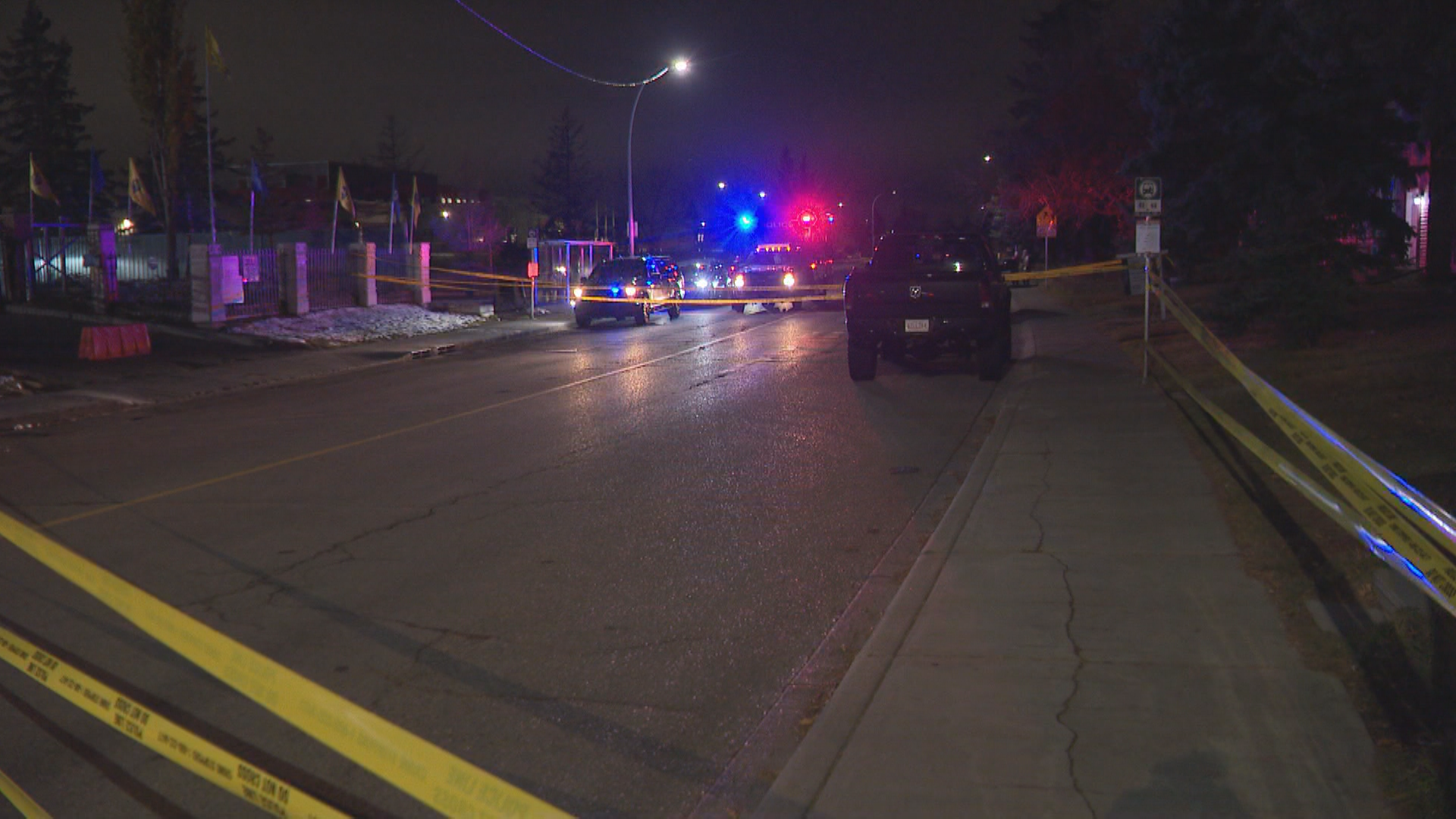
A man lying on a Calgary sidewalk is dead after a vehicle ran him over, leaving investigators piecing together another preventable tragedy on city streets. Calgary police confirmed the victim succumbed to his injuries following the collision, raising immediate questions about pedestrian vulnerability, driver awareness, and why someone was lying on the pavement in the first place.
It's a grim headline. You've probably seen variations of it across local news feeds over the past few years.
When a story breaks about a pedestrian struck while lying on a sidewalk, most readers immediately jump to conclusions. Some blame the driver for jumping a curb or losing control in a driveway or alley. Others assume the pedestrian was impaired or experiencing a medical crisis. Honestly, the reality behind these fatal crashes is usually a messy intersection of urban design flaws, poor lighting, and split-second human error. Because the URL for the original wire report wasn't accessible to pull specific case details, we won't invent names, street intersections, or police quotes here—that kind of fabrication ruins credibility. Instead, let's look at what actually happens during these Calgary Police Service (CPS) Traffic Section investigations and why sidewalk fatalities remain a stubborn problem in Alberta's largest city.
How Calgary Police Investigate Sidewalk Fatalities
When someone dies after being run over on a sidewalk, the scene immediately shifts from a standard patrol call to a full-scale forensic reconstruction. The Calgary Police Service Traffic Section doesn't just take a quick statement and clear the road. They shut down blocks for hours.
Investigators look at three distinct layers of evidence to figure out how a vehicle ended up making contact with a person on a pedestrian walkway.
First, there's the physical geometry of the crash. Did the vehicle mount a raised concrete curb at speed, or did this happen at a commercial driveway, back alley apron, or parking lot exit where the sidewalk sits flush with the asphalt? That distinction changes everything. In Calgary, thousands of commercial driveways cut directly across sidewalks along major corridors like Macleod Trail, 17th Avenue, and 36th Street NE. A driver turning into or out of a lot is often looking left for oncoming traffic while turning right, completely missing someone at ground level.
Second, collision reconstructionists examine visibility and sightlines. If a person is lying down—whether due to a sudden medical emergency like a seizure, extreme fatigue, hypothermia, or substance impairment—their profile drops below the hood line of almost every modern pickup truck and SUV on Alberta roads.
Think about that for a second.
Alberta has one of the highest concentrations of full-size pickup trucks and large SUVs in Canada. Front blind zones on modern trucks can extend over ten feet ahead of the bumper. If someone is lying flat on a concrete sidewalk near a driveway apron at night, a driver sitting six feet off the ground literally cannot see them over the hood once they get within a car length.
Third, police pull electronic data. Modern vehicles carry Event Data Recorders (EDRs)—basically black boxes—that log speed, throttle position, braking, and steering angle in the five seconds before an impact. Combined with CCTV footage from nearby businesses and dashcam video from passing motorists, CPS investigators can usually determine within days whether a driver was speeding, distracted, impaired, or simply trapped by a blind spot.
The Dangerous Intersection of Vulnerable Populations and Car-Centric Design
You can't talk honestly about someone lying on a Calgary sidewalk without addressing the human reality on the street. People don't randomly decide to lie down on cold concrete for fun.
When a pedestrian is prone on a walkway, one of a few things has happened:
- A sudden medical event, such as a cardiac episode, diabetic shock, or severe fall on winter ice.
- Intoxication or an overdose, which remains a severe public health crisis across Calgary's downtown core, Beltline, and transit corridors.
- Exhaustion among unhoused residents, who frequently rest near building vents, transit shelters, or recessed doorways when shelter beds are full or inaccessible.
Here's where urban planning fails everyone. Calgary was built around the automobile, and even in dense neighborhoods, sidewalks often run directly adjacent to high-speed lanes or wide, sweeping driveway cuts with zero physical buffer. There are no bollards. No raised planter boxes. No curb extensions forcing drivers to slow down to a crawl before crossing the pedestrian path.
Compare that to cities that take Vision Zero seriously. When you put physical barriers between moving steel and human bodies, a momentary lapse in driver attention results in a dented bumper instead of a fatality. Without them, a single mistake turns lethal.
What Most People Get Wrong About Pedestrian Right-of-Way Laws
Whenever a fatal pedestrian crash hits local news, comment sections instantly turn into a debate over who had the right of way. Almost half the people arguing have the actual law wrong.
Under the Alberta Traffic Safety Act, drivers must yield the right of way to a pedestrian crossing the roadway within a crosswalk, whether marked or unmarked. More importantly for sidewalk incidents, vehicles entering or exiting an alley, driveway, or parking lot must come to a complete stop before driving across the sidewalk.
Read that again. Before the sidewalk, not on it.
Most drivers treat the sidewalk as an extension of the road. They roll straight through the pedestrian zone so they can nose their bumper out into the street to see oncoming cars. If someone is sitting or lying on that sidewalk apron, rolling forward without stopping first is a direct violation of provincial traffic law, regardless of why the person was on the ground.
At the same time, Alberta law places a duty of care on pedestrians not to enter the path of a vehicle so closely that it's impossible for the driver to yield. When a person is already incapacitated on a sidewalk, they obviously aren't darting into traffic. They're stationary in a zone legally reserved for foot traffic. That puts massive legal and moral responsibility on whoever is behind the wheel to ensure the path is completely clear before moving an inch.
Why Vehicle Size Makes Sidewalk Crashes Far Deadlier Today
Ten or fifteen years ago, getting struck at low speed in a driveway or parking lot exit often resulted in broken bones or bruises. Today, those exact same low-speed collisions are killing people.
The Insurance Institute for Highway Safety (IIHS) has published extensive crash data showing that vehicles with higher, blunter front ends are drastically more lethal to pedestrians than traditional sedans. When a low-slung car hits a standing pedestrian, it strikes their legs, tossing them onto the hood. When a tall SUV or pickup truck hits someone—or worse, runs over someone lying down—the flat grille impacts vital organs directly, or the high ground clearance pulls the person underneath the chassis.
In Calgary, where winter driving conditions push thousands of residents toward heavy all-wheel-drive vehicles, the average curb weight on city streets has climbed steadily. Heavy vehicles take longer to stop on frost-covered concrete. They also generate far more crushing force in a rollover or run-over scenario.
It's a brutal physics problem. Even at 10 or 15 kilometres per hour, a 2,500-kilogram truck rolling over a human chest causes catastrophic internal trauma that emergency responders simply can't reverse, no matter how fast EMS arrives on scene.
The Role of Bystanders and Witness Reporting
In almost every fatal collision press release, the Calgary Police Service includes a standard plea asking anyone who witnessed the crash or has dashcam footage to contact the Traffic Section. People often skim right past that line, assuming someone else already called it in.
Don't make that mistake.
In urban collisions—especially ones involving vulnerable people on sidewalks—bystander intervention often makes the difference between a solved case and a cold file. There are two distinct moments where regular people on the street can change the outcome:
- Before a crash happens. If you see someone lying motionless on a sidewalk, near a driveway, or slumped against a curb, don't just walk past assuming they're sleeping it off. Even if they aren't in immediate medical distress, they are invisible to turning drivers. Calling 911 or Calgary's DOAP (Downtown Outreach Addictions Partnership) team gets them off the concrete before a delivery van or commuter truck turns into the alley.
- After an impact. Commercial security cameras frequently overwrite their footage every 24 to 72 hours. If you live or work near a crash site, saving your exterior camera footage immediately and handing it to CPS investigators preserves crucial timestamps that might otherwise vanish forever.
How Drivers Can Eliminate Driveway and Sidewalk Blind Spots
You don't need to wait for the City of Calgary to redesign every intersection to stop being a hazard around sidewalks. Changing a few ingrained driving habits cuts your risk of a catastrophic blind-spot collision to nearly zero.
Stop treating driveway aprons and alley exits like yield signs. Come to a full, dead stop behind the sidewalk line, scan both directions down the concrete walkway—looking down at ground level, not just at eye height—and only creep forward once you're certain the concrete is empty.
If you drive a tall truck or SUV, install an aftermarket front bumper camera if your trim level didn't come with a 360-degree view system. They cost a couple hundred bucks and completely erase the ten-foot dead zone directly in front of your grille.
Keep your windshield and headlights spotless during Calgary's shoulder seasons. Low-angle autumn and winter sun combined with road salt glare turns windshields opaque in seconds, hiding dark clothing against grey concrete.
Finally, if you see someone lying on a sidewalk anywhere in Calgary, pull over safely, turn on your hazard lights to block traffic from turning across that section of walkway, and call 911 immediately. That single three-minute delay could be the only thing standing between a vulnerable person and a fatal headline.