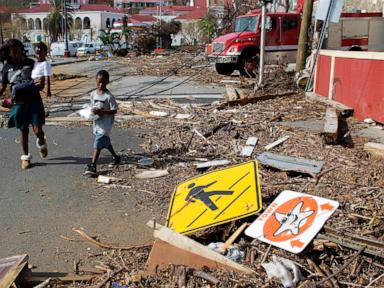
When disaster strikes, federal disaster recovery funds are supposed to rebuild roofs, stabilize power grids, and get families back on their feet. Almost nine years after Hurricanes Irma and Maria devastated the U.S. Virgin Islands in 2017, residents in St. Thomas, St. Croix, and St. John are still looking up at blue tarp roofs.
The U.S. Department of Housing and Urban Development dropped a hammer on the region by suspending federal funding to the Virgin Islands Housing Finance Authority and barring it from future federal procurement.
The decision stems from years of systemic financial mismanagement, nonexistent fraud controls, blatant conflicts of interest, and high-profile criminal convictions involving top authority officials. Roughly $1.3 billion intended for disaster relief and housing mitigation remains trapped in administrative limbo while Washington steps in.
How Years of Mismanagement Led to Federal Intervention
HUD didn't make this call on a whim. The suspension notice, delivered in a detailed 13-page letter to local housing officials, lays out a relentless timeline of red flags that federal auditors flagged for over a decade.
When Congress allocated nearly $2 billion in Community Development Block Grants for Disaster Recovery and Mitigation following the 2017 storms, local housing leaders promised rapid rebuilding. Instead, project execution ground to a halt. HUD reported that out of 329 planned housing mitigation projects under specific grant tracks, zero had been completed.
That isn't a typo. Zero completed projects.
Meanwhile, auditors pointed out a glaring gap between the millions being spent on agency administrative costs and the tiny trickle of funds actually reaching families in need.
The Contracting Scheme That Shocked Federal Investigators
Beyond administrative paralysis, criminal self-dealing inside the authority destroyed federal trust. A major turning point arrived when federal prosecutors targeted former Chief Operating Officer Darin Richardson.
Court documents revealed a multi-million-dollar scheme involving disaster-recovery contracts. Richardson participated in awarding a lucrative contract for managing and storing lumber intended for rebuilding storm-damaged homes and commercial structures. Soon after, he received $107,000 from a contractor under the guise of an investment, which he diverted into buying personal real estate at a federal marshals' auction.
He didn't stop there. While supervising procurement, Richardson bumped the value of the contractor's agreement from $3 million to over $4.5 million. When questioned by HUD Office of Inspector General special agents, he lied about recusing himself.
The physical fallout from that contract was painful. Tons of construction lumber purchased with federal taxpayer money sat unused and exposed to elements, rotting under the tropical sun while families waited for building supplies.
Richardson was sentenced in federal court to 36 months in prison for bank fraud, money laundering, making false statements, and criminal conflict of interest.
Whistleblowers and Internal Audits Ignored
Federal auditors found that the problem wasn't limited to a single corrupt actor. The entire organizational culture lacked basic safeguards.
A federal audit completed by the HUD Office of Inspector General evaluated the authority's fraud risk management framework. The results were severe. Auditors rated the agency's anti-fraud posture at or below the lowest possible level, describing operations as disorganized, reactive, and completely missing standard internal controls.
Even worse, staff within the agency knew things were wrong. During an internal questionnaire conducted years earlier, multiple employees acknowledged personal knowledge of suspected fraudulent activities and bid-rigging.
What happened to those internal red flags? Nothing.
Instead of opening internal investigations or alerting the executive director, the audit division quietly passed the warnings only to department heads who were themselves implicated or subsequently departed. The findings were buried while public funds continued to flow out the door.
When a former chief operating officer filed a whistleblower lawsuit detailing how procurement panels allowed staff to write job specifications, set prices, and then sit on bid evaluation committees to steer contracts to favored vendors, leadership brushed it off.
What Happens to Residents Waiting for Housing
The immediate freeze on funding leaves the territory facing a massive operational crisis. Without active access to federal grant dollars, ongoing infrastructure upgrades, housing construction initiatives, and power grid resiliency efforts are effectively locked down.
Federal authorities made it clear that halting the flow of cash isn't intended to punish disaster survivors. It's designed to stop public money from disappearing into a black hole of administrative incompetence.
For local leaders, regaining access to federal grant programs will require a complete overhaul of how housing money is handled in the territory.
- Independent Federal Oversight: Local officials must establish independent, third-party oversight mechanisms to monitor every single contract and disbursement.
- Enforcing Anti-Fraud Frameworks: The housing authority must build a structured enterprise risk management framework that complies with federal standards and actively protects whistleblowers.
- Procurement Reform: Bidding procedures need total transparency, removing internal staff from dual roles where they can influence pricing and award contracts to personal associates.
- Detailed Milestone Tracking: Subrecipient agreements require strict, measurable performance targets before any funds are released for administrative overhead.
Until federal regulators see verifiable proof that internal controls are fixed and bad actors are removed, billions in recovery funds will stay frozen, leaving residents to pay the price for institutional corruption.