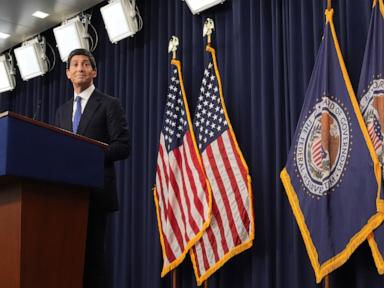
Federal Reserve officials are quietly signaling that another interest rate hike remains firmly on the table for later this year, exposing a deep fracture between official inflation targets and structural economic realities. Behind the bureaucratic language of recent central bank minutes lies an uncomfortable truth: monetary policymakers are caught in a feedback loop of their own making, unable to declare victory over rising costs without risking a violent asset repricing.
For months, Wall Street consensus has treated the peak of the tightening cycle as an accomplished fact. Markets priced in cuts, portfolios adjusted around the assumption of cheap liquidity returning, and consumer sentiment attempted to normalize around elevated borrowing expenses. Yet the internal debate within the central bank reveals a persistent anxiety. Core metrics refuse to compress to the desired two percent baseline at the velocity required by historical models. Stubborn service sector inflation, resilient labor compensation gains, and persistent government deficit spending keep injecting liquidity into an economy that refuses to slow down in the orderly fashion textbooks demand. Meanwhile, you can read related stories here: Why Fed Minutes Are Complete Noise and Rate Hikes Are Already Irrelevant.
The Structural Blind Spot of Central Bank Forecasting
Standard monetary theory relies on a mechanical transmission mechanism. Raise the benchmark rate, credit becomes expensive, corporate expansion stalls, hiring cools, and pricing power evaporates. That is the theory. The practice looks vastly different when balance sheets are insulated by locked-in low-cost debt from previous eras.
Corporations that refinanced their debt profiles during the zero-interest-rate epoch are largely immune to current borrowing costs, at least for the short to medium term. Households with fixed-rate thirty-year mortgages feel the squeeze primarily through the paralysis of the housing market rather than immediate insolvency, creating a bifurcated economy where asset owners continue to spend while prospective buyers are priced out entirely. To explore the bigger picture, check out the excellent article by The Wall Street Journal.
When central bankers review meeting transcripts and debate additional tightening, they are wrestling with a transmission mechanism that has lost its friction. Raising rates further acts as a blunt instrument against a population that has adapted to higher baselines. The cost falls disproportionately on smaller regional enterprises and new market entrants, while established conglomerates absorb the friction as a minor operational expense.
The Fiscal Dominance Problem
Monetary policy does not operate in a vacuum. The elephant in every Federal Open Market Committee room is the sheer scale of federal fiscal outlays. Trillion-dollar deficits act as an automatic economic stimulant, offsetting the restrictive posture of monetary tightening.
Every dollar the federal government injects into infrastructure, defense, and entitlement programs circulates through the private sector, creating demand that keeps employment high and prices sticky. When the central bank tries to cool demand by raising the cost of capital, the fiscal authority counters by pumping liquidity directly into the bloodstream of the economy.
This dynamic explains why minutes from recent policy meetings read with a distinct sense of unease. Officials are driving with one foot aggressively on the brake while the engine compartment is being flooded with high-octane fuel from federal spending bills. To achieve the desired deceleration through monetary policy alone, interest rates may need to reach levels that break something structural in the financial plumbing.
What Another Rate Hike Actually Means for Markets
If the Federal Reserve decides to push rates higher before the year concludes, the reaction will not be measured. Asset markets have built their entire valuation thesis on the premise of a pivot. Removing that prop forces an immediate recalculation of equity risk premiums, commercial real estate valuations, and sovereign debt yields.
Commercial real estate remains the most vulnerable pressure point. Trillions of dollars in commercial loans face refinancing walls over the next twenty-four months. Properties purchased under low-yield assumptions must now secure financing at double or triple the previous interest rates, against a backdrop of permanent shifts in office utilization and retail foot traffic. An additional hike does not merely increase borrowing costs; it pushes borderline solvency calculations directly into restructuring territory.
At the same time, banking sector liquidity dynamics remain fragile. While the acute crisis of the regional bank failures has faded from daily headlines, the underlying unrealized losses sitting in held-to-maturity portfolios have not magically vanished. Higher-for-longer rates depress the market value of those legacy bonds, keeping balance sheets constrained and limiting credit creation to Main Street.
The Cost of Credibility
At the heart of the Federal Reserve's current dilemma is institutional credibility. Having misjudged the initial inflationary surge as transitory, central bank leadership cannot afford to blink prematurely. If they abandon their restrictive stance and inflation reaccelerates, they lose whatever remaining anchor of public trust anchors market expectations.
This fear of losing credibility biases policy toward over-tightening. Officials would rather risk inducing a mild downturn through excess restraint than permit a destructive wage-price spiral to become embedded in the psychological baseline of the workforce. Yet this commitment carries its own hazards. By prioritizing historical orthodoxies over structural changes in debt dynamics and fiscal policy, policymakers risk engineering a contraction that feeds on its own momentum.
The minutes tell a story of officials staring at lagging indicators, attempting to steer a dynamic, modern economy using rearview mirrors calibrated for a different century. Another rate hike may satisfy the internal models, but it risks treating a structural fever with a blunt instrument designed for cyclical infections. The real danger is not that the medicine fails to work, but that the patient changes irrevocably under its weight.