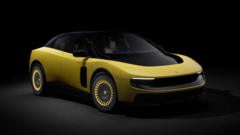
The business press loves a neat, linear narrative. A luxury brand launches an electric vehicle. Die-hard enthusiasts scream on social media. A high-ranking executive leaves a few weeks later. The journalists connect the dots with crayon: The CMO was forced out because the EV flopped.
It is a beautiful, clean story. It is also entirely wrong.
The media coverage surrounding the sudden departure of Ferrari’s marketing chief following the unveiling of their first fully electric supercar misses the fundamental mechanics of high-end automotive strategy. The mainstream analysis treats Maranello as if it were Ford or Toyota, sweating over initial public sentiment and adjusting production lines based on Twitter backlash.
Ferrari does not care about your outrage. In fact, if the traditional petrolhead isn't slightly uncomfortable, the marketing department hasn't done its job.
The Flawed Premise of the "EV Backlash"
Let’s dismantle the foundational lie of this corporate drama: the idea that negative online sentiment harms ultra-luxury product launches.
When mainstream automotive journalists track "backlash," they measure the volume of angry comments from people who will never own the car. They look at purists lamenting the loss of the naturally aspirated V12. What they fail to look at is the allocation ledger.
Luxury strategy operates on different math than mass-market retail. In the mass market, consumer blowback kills a product line. In the luxury tier, polarization is an asset.
- Mass Market: Success = $Volume \times Margin$
- Ultra-Luxury: Success = $Scarcity \times Brand Equity$
The moment a luxury brand pleases everyone, it becomes premium, not luxury. Mercedes-Benz makes premium cars; they care about broad market adoption. Ferrari makes Veblen goods. The demand for a Ferrari EV is completely decoupled from whether a purist in an online forum thinks an electric motor lacks "soul."
The initial allocation for Ferrari's EV was reportedly filled by internal VIP clients before the public even saw the design. If the order book is full for the next three years, the marketing chief didn't fail. They succeeded. The exit isn't a retreat; it’s a mission accomplished.
Why Top Executives Actually Leave After a Milestone Launch
I have spent years watching corporate structures shift right after massive product milestones. The media always attributes these departures to failure. The reality inside the boardroom is far more pragmatic.
When a brand like Ferrari shifts from internal combustion engines to a high-performance electric architecture, it requires a massive, multi-year internal overhaul. The marketing executive who builds the runway for an EV launch is rarely the same person who needs to manage the brand during its operational maturity phase.
The Lifecycle of an Executive Mission
- The Disruptor Phase: An executive is brought in to break internal tradition, align engineering with a new design language, and convince traditional collectors to accept a battery pack.
- The Execution Phase: The car is revealed. The strategy is locked in. The brand positioning is anchored.
- The Optimization Phase: The mundane work of managing sustained global campaigns, dealer networks, and regional compliance begins.
Many top-tier executives leave because the creative, high-stakes battle is over. The blueprint is drawn. Staying for the execution means transitioning from a visionary architect to a highly paid caretaker. For a high-profile CMO, that is career stagnation. They leave to find another legacy brand that needs a foundational overhaul.
The Real Crisis in Maranello Has Nothing to Do with Batteries
If we want to talk about real vulnerability at Ferrari, stop looking at the powertrain. Look at the software architecture.
The true existential threat to legacy supercar manufacturers isn't that their cars are quiet; it’s that their digital interfaces are mediocre. Silicon Valley can build a blistering 0-to-60 mph platform in its sleep. What legacy Italian engineering brings to the table is driving dynamics, chassis tuning, and tactile emotional resonance.
When you replace a complex mechanical engine with an electric skateboard platform, you commoditize performance.
Mass-Market EV Formula:
[High Output Battery] + [Off-the-shelf Software] = Linear Acceleration

Ferrari EV Formula:
[Proprietary Inverters] + [Tactile Dynamics] + [Artificial Acoustic Harmonics] = Luxury Differentiation
The real tension inside Ferrari’s marketing and product teams right now is figuring out how to charge $500,000 for a vehicle whose core propulsion technology can be matched by a Lucid or a Rimac for half the price. That is a positioning problem, not a sentiment problem. The executive who left likely spent months fighting engineers over how to synthesize the sound of a electric powertrain to satisfy EU noise regulations while keeping the driver's adrenaline pumping.
Stop Asking if Purists Will Buy It
The most common question filling the financial columns right now is: Will traditional Ferrari collectors accept an electric vehicle?
This is the wrong question. It assumes the existing customer base is static.
Every luxury brand must periodically execute a generational pivot. The collectors who bought the F40 in the late 1980s are not the primary target for a 2026 electric hypercar. A new demographic of ultra-high-net-worth individuals—younger, tech-native, and concentrated in regions with aggressive emission penalties—demands a vehicle that aligns with their lifestyle without sacrificing status.
I watched Porsche go through this exact cycle with the Taycan. The purists screamed that an electric sedan desecrated the 911 legacy. The result? The Taycan outsold the 911 in multiple quarters post-launch and brought a massive influx of first-time buyers to the brand. The old guard didn't leave; they just kept buying 911 GT3s while the new guard funded the company's R&D.
Ferrari is running the exact same playbook, but with tighter production caps to ensure the resale market remains artificially inflated.
The Cost of the Contrarian Playbook
To be clear, this strategy carries immense risk. If you alienate your foundational base too quickly before the new demographic matures, you risk a dead zone where brand equity plummets.
If Ferrari's software feels like a glitchy tablet rather than a bespoke mechanical instrument, the illusion shatters. The premium price tag relies entirely on the perception of unmatched craftsmanship. If an EV Ferrari feels like a very fast Tesla wrapped in carbon fiber, the brand loses its pricing power.
But blaming an executive departure on "weeks of backlash" is lazy journalism that ignores how the luxury machine actually functions. The marketing boss didn't run away from a fire; they stepped off the stage after completing the opening act.
The corporate exit wasn't a sign of panic. It was the closing of a chapter. The vehicle is built. The orders are logged. The disruption is permanent. Now, the mechanics take over.


