Silence.
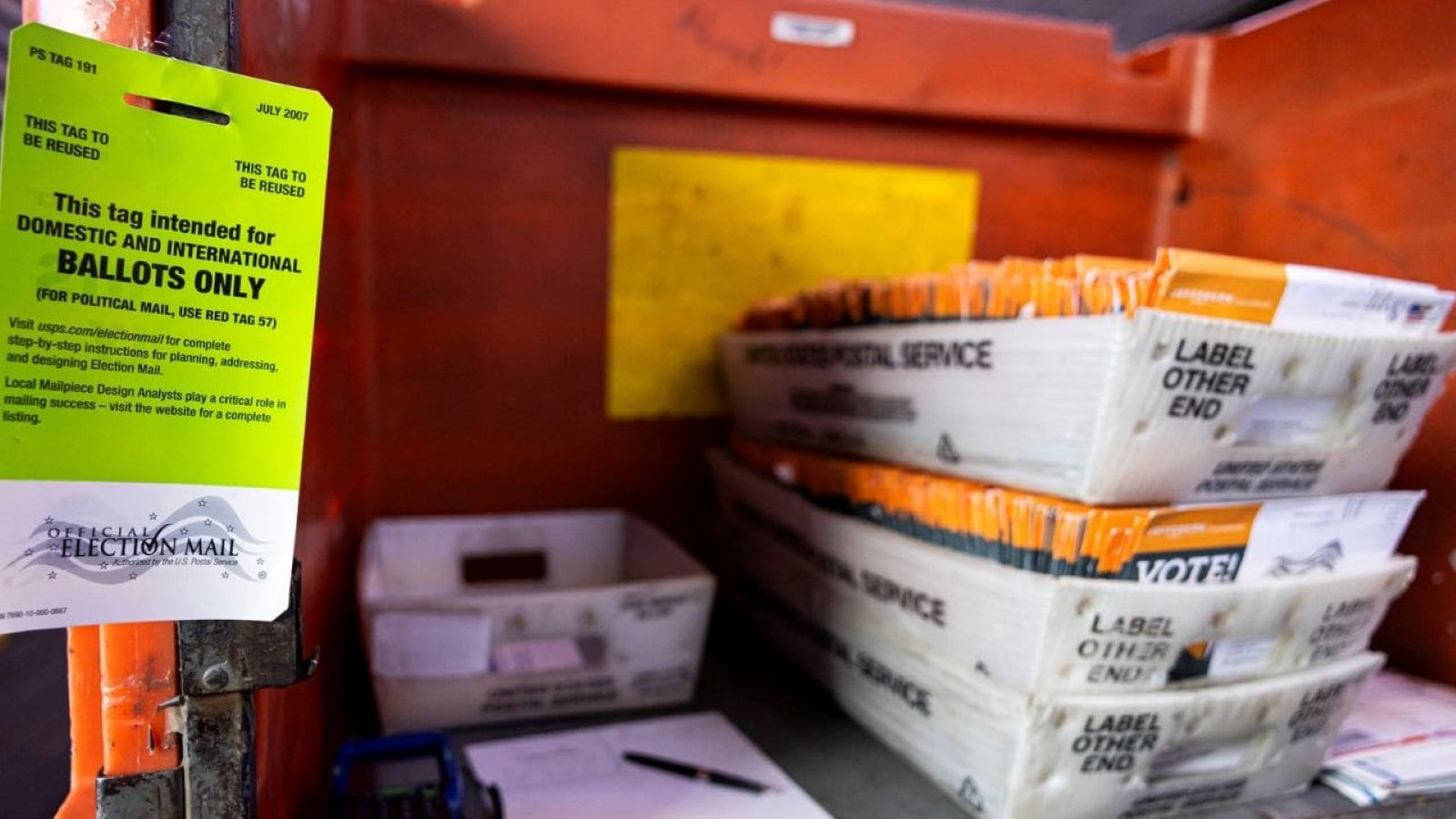
That is the first thing you notice inside a county elections warehouse at six in the morning, three weeks before Election Day, when the fluorescent lights hum with a nervous, electric buzz and the smell of fresh toner hangs heavy in the air. There are no cheering crowds here. No cable news chyrons flashing red and blue in an endless, caffeinated panic. Just rows of gray plastic bins, the rhythmic, mechanical thump-whir of high-speed optical scanners, and millions of paper envelopes stacked like bricks in a fortress.
Outside, the pundits are shouting about horse races and momentum. Inside, democracy is happening in a whisper.
More than 51 million Americans have already cast their ballots ahead of the midterm elections—a staggering, historic tide of early participation that has fundamentally altered the rhythm of American politics. For decades, the first Tuesday after the first Monday in November was treated like a sacred, singular choke point, a national funnel through which every civic hope and grievance had to pass between sunrise and sunset. Now, Election Day is no longer a day at all. It is a season.
Yet if you ask the average person standing in a grocery store checkout line how those 51 million early votes actually work—what happens to a mail-in ballot once it disappears into the blue jaws of a USPS collection box, or why some states announce results at 8:01 PM while others seem frozen in amber for days—you will mostly get a shrug, a sigh, or a conspiracy theory.
We have built a massive, decentralized machine for early polling, and then we forgot to hand the public the owner’s manual.
The Kitchen Table Calculus
To understand why 51 million people decided not to wait until November, forget the political strategists for a moment and picture a woman named Elena.
Elena is a hypothetical composite of millions of real voters—a night-shift pediatric nurse in suburban Phoenix, thirty-eight years old, balancing twelve-hour hospital rotations with a seven-year-old’s soccer schedule and an aging father’s physical therapy appointments. For Elena, showing up at a local elementary school gymnasium on a Tuesday in November isn’t a romantic civic ritual. It is a logistical ambush. A single flat tire, a sudden spike in a patient’s fever, or a ninety-minute queue at the precinct means her voice simply evaporates.
Three weeks before Election Day, Elena sits at her kitchen table at 10:30 PM, the house finally quiet, a mug of lukewarm chamomile tea beside her elbow. In front of her lies a crisp, heavy-stock ballot mailed automatically by Maricopa County. She spreads out the local voter guide, reads the fine print on two judicial retention questions and a school bond measure she would have panicked over in a cramped voting booth, fills in the ovals with a black ballpoint pen, and slides the sheet into a secrecy sleeve.
She signs the outer affidavit envelope. That signature is everything.
When Elena drops that envelope into an official county drop box on her way to the hospital the next morning, she isn't taking a shortcut. She is participating in a two-track system that now defines modern American voting: in-person early voting and mail-in absentee voting.
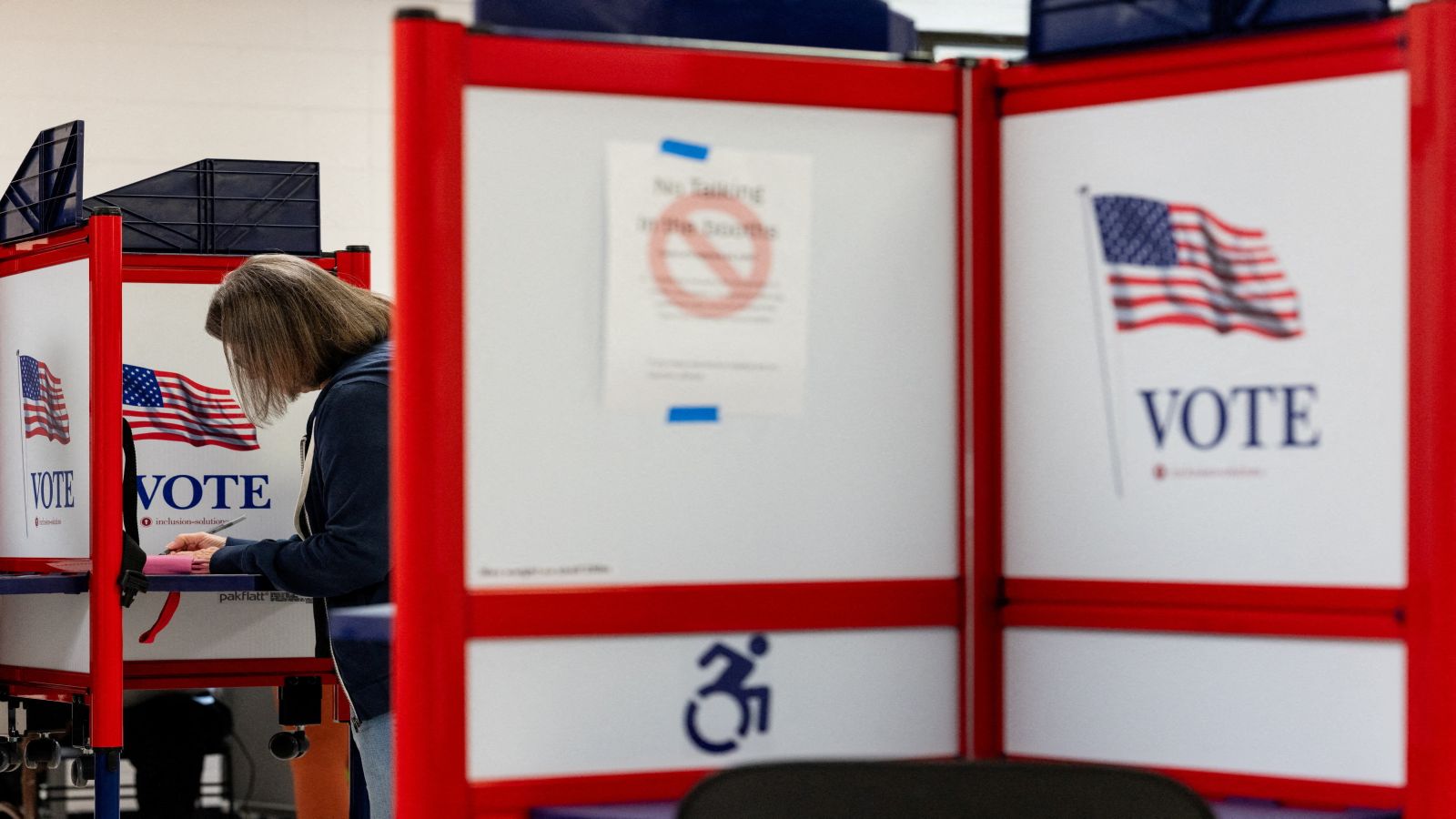
Though people casually lump them together under the umbrella of "early polling," they are entirely different animals. In-person early voting—available in 46 states and the District of Columbia—is essentially Election Day stretched across a calendar. Voters walk into a satellite center, show whatever identification their state requires, check in on an electronic poll book that instantly flags their record across the entire county so they cannot vote twice, and feed their ballot directly into a tabulator. It is immediate, familiar, and largely friction-free.
Mail-in voting, by contrast, is a relay race run in slow motion. And it is where most of the public’s anxiety lives.
Inside the Envelope Gauntlet
I have stood beside bipartisan teams of election workers—a registered Democrat and a registered Republican sitting shoulder-to-shoulder at the same folding table—watching them process mail ballots one by one. If you have ever worried that early voting is a casual, unguarded affair, spending twenty minutes in that room will cure you of the illusion forever.
Think of a mail-in ballot not as a piece of paper, but as an armored truck carrying cash. Every mile it travels, someone has to sign for the keys.
First comes the request and issuance. In a handful of states—places like Oregon, Washington, Colorado, California, and Nevada—every active registered voter is automatically mailed a ballot weeks ahead of time. In most other states, a voter must actively apply for one, proving their identity and current address before a ballot is ever printed with a unique, trackable barcode tied specifically to their voter registration file. Notice that: the barcode is linked to the outer envelope, not the ballot itself. Once the envelope is opened, the ballot becomes completely anonymous, preserving the constitutional right to a secret vote while ensuring that specific envelope can never be used twice.
Then comes the return. Whether a voter uses the postal service or a reinforced steel drop box bolted to the concrete outside a library, the envelope arrives at a central processing facility. Here, high-speed sorters photograph the outer envelope, weigh it to confirm it contains a single sheet of paper, and pull up the voter’s historical signatures on a computer monitor.
Look closely at that screen. An election judge is comparing the loops and slants of the signature Elena scribbled at 10:30 PM against the signature on her driver’s license application from four years ago and her voter registration card from six years before that. People’s handwriting changes. Hands tremble with age; wrists break; pens skip. When a signature doesn’t match, the ballot isn't tossed in the trash. It is set aside for signature curing—a formal process where the county contacts the voter by mail, phone, or text, giving them a strict window of days to verify their identity and fix the discrepancy.
Only after the signature clears does the envelope move to the opening table, where a bipartisan pair slices it open, removes the ballot, flattens the creases so it won’t jam the scanner, and places it in a batch for tabulation.
The Illusion of the Red Mirage and Blue Shift
Now, consider what happens next—and why the very mechanics of early polling create the most dangerous optical illusion in modern politics.
Imagine two hourglasses sitting side by side on a desk, both filled with sand, both tipped over at the exact same moment. One hourglass has a wide neck; the sand pours through in a sudden, dramatic rush. The other has a narrow neck; the sand trickles down steadily, grain by grain, long after the first glass is empty.
That is the difference between states that allow pre-processing of early ballots and states that forbid it.
In states like Florida and Arizona, election workers are legally permitted to verify signatures, open envelopes, and even scan mail-in ballots days or weeks before Election Day—though the actual vote totals remain encrypted and locked inside air-gapped computers until the polls close. The moment 7:00 PM hits, those states press a button, and millions of early votes flood the scoreboard instantly.
In states like Pennsylvania and Wisconsin, however, state laws historically prohibited election workers from even touching a mail-in envelope until the morning of Election Day. Think about the sheer physical arithmetic of that rule. While poll workers are simultaneously managing thousands of in-person voters at local precincts, a separate army of workers in a warehouse has to slit open, flatten, verify, and scan hundreds of thousands of mail-in ballots from scratch, starting at 7:00 AM on Tuesday.
Because in-person Election Day voters have recently skewed more Republican, while mail-in voters have skewed more Democratic, this administrative bottleneck creates a predictable theatrical distortion:
- The early surge: In-person precinct totals report first, often showing a commanding lead for one party early on election night.
- The slow crawl: Over the next twenty-four to seventy-two hours, as workers painstakingly slice open the mountain of mail-in envelopes, the totals shift steadily toward the other party.
Nothing nefarious happened in the dark. Nobody found a hidden trunk of fake ballots under a table. The narrow-necked hourglass was simply still draining. Yet because human brains are wired to read a scoreboard in real time—to treat 11:00 PM on Tuesday as the final buzzer of a basketball game—that delayed count feels suspicious to anyone who doesn't understand the plumbing behind the walls.
A History Written in Canvas and Dust
It is easy to look at 51 million early ballots and assume we are living through a radical, untested experiment. We aren't. America has been wrestling with the tension between convenience and security at the ballot box since the musket was standard military issue.
During the Civil War, hundreds of thousands of Union soldiers were stationed hundreds of miles from their home precincts, fighting to preserve a union they were legally barred from voting in because they couldn't stand in front of a local sheriff on Election Day. Northern states scrambled to pass absentee voting laws, dispatching commissioners into muddy encampments in Virginia and Tennessee to collect paper ballots from men sitting on ammunition crates, sealing them in wax, and carrying them back north on rattling trains. Critics at the time warned of catastrophic fraud and the death of local oversight. Instead, soldiers cast over 150,000 absentee ballots in 1864, helping re-elect Abraham Lincoln and proving that a republic could adapt its mechanics without losing its soul.
The pattern repeated in World War I, World War II, and again in the 1970s and 1980s, when western states like California and Oregon realized that rural ranchers and elderly retirees were being quietly disenfranchised by distance and weather. Oregon eventually went all-in, conducting its entire state election by mail starting in 2000. Two decades later, a global pandemic acted like an accelerant poured onto dry brush, turning what was once a western quirk into a coast-to-coast habit.
Once voters tasted the freedom of reading a ballot at their kitchen table—or strolling into an empty community center on a sunny Saturday afternoon instead of standing in a freezing rainstorm on a Tuesday—they refused to give it back. Habit is a stubborn force. When 51 million people vote early in a midterm cycle, we are no longer watching a temporary emergency measure. We are watching a permanent cultural shift.
The Invisible Stakes of the Early Surge
Still, if we are being completely honest—and any serious conversation about elections demands candor—this massive front-loading of the vote carries real, unsettling consequences that neither political party likes to advertise.
When tens of millions of ballots are already locked in metal boxes two or three weeks before Election Day, the campaign itself changes shape. Political campaigns used to build toward a crescendo, saving their sharpest arguments and most revealing October surprises for the final seventy-two hours. Today, by the time a late-breaking scandal drops on the Friday before the election, a massive chunk of the electorate has already spoken. You cannot un-ring a bell, and in almost every state, you cannot pull a cast ballot back out of a scanner because a candidate said something unforgivable on a Sunday morning talk show.
At the same time, early voting strips away the dark art of voter suppression by exhaustion. When lines are long on Election Day, it is rarely an accident; it is often the result of underfunded precincts in dense neighborhoods. Early polling spreads the pressure out over weeks. It turns a fragile, single-day bottleneck into a wide, resilient river. If a computer glitches on a Thursday afternoon in October, there are still twelve days left to fix it. If a snowstorm hits the Midwest on Tuesday morning, 51 million voices are already safely accounted for.
Look at what that number—51 million—actually represents. It is larger than the entire population of Spain. It is more people than live in California and New York combined. Every single one of those ballots began as a quiet, private decision made away from the cameras: a retiree walking his dog past a drop box in Michigan; a college freshman licking an envelope in a dorm room in North Carolina; a night-shift nurse in Phoenix finishing her chamomile tea before midnight.
The pundits will spend the next several days obsessing over what those 51 million ballots mean for control of the House, the Senate, and governors' mansions across the country. They will read tea leaves into party registration numbers and county-by-county turnout percentages, pretending they can see inside sealed envelopes.
Let them guess. The real story isn't who won the early vote. The real story is sitting quietly inside those gray plastic bins under the humming fluorescent lights—millions of ordinary lives, folded into thirds, waiting patiently to be heard.