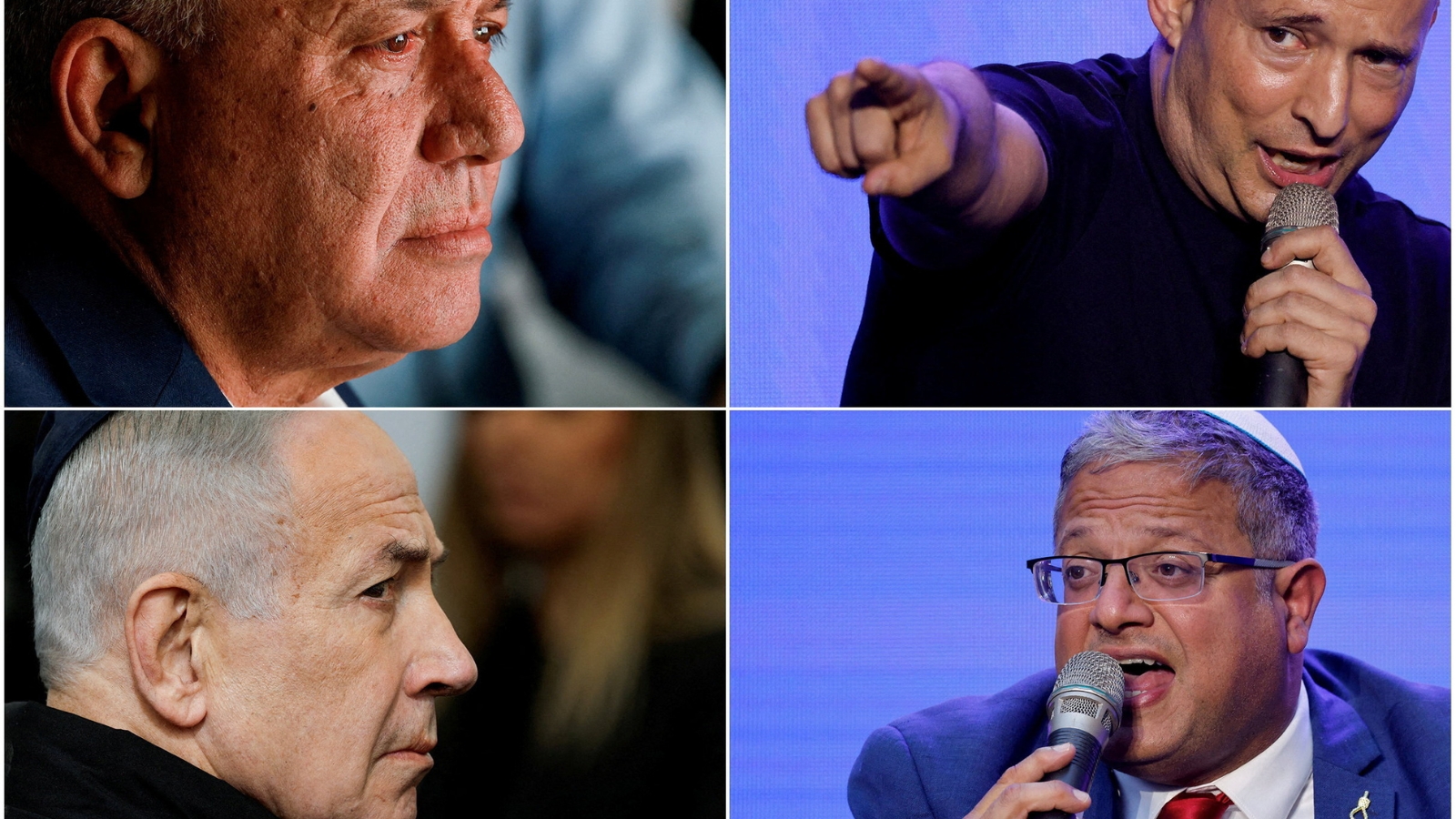
The math does not work. Benjamin Netanyahu’s right-wing bloc holds 53 seats in the 120-member Knesset following the 2026 Israel election results, leaving him eight mandates short of a governing majority while the anti-Netanyahu opposition sits even further back at 48. Neither camp can form a coalition without courting the 19 remaining seats divided among Arab-majority parties and unaligned kingmakers, ensuring that Israel remains under a paralyzed transitional government while a seventh electoral cycle in eight years looms on the horizon.
Most coverage of the 2026 Israel election results treats this outcome as a simple horse race that ended in a photo finish. That framing misses the structural reality of Israeli governance. When a parliamentary system produces a 53-to-48 split, the real story is not who won the plurality. The real story is how the state functions—or fails to function—when the executive branch loses the legislative mandate to pass a budget, appoint senior officials, or alter strategic military policy.
The Anatomy of the 61-Seat Trap
To understand why 53 seats is functionally identical to 48 in Jerusalem, you have to look at Israel’s Basic Law: The Government. A prime minister does not merely need a plurality to govern; they need the affirmative confidence of at least 61 Members of Knesset. Without those 61 votes, the government cannot pass its initial confidence vote, which triggers a statutory countdown toward another national ballot.
This threshold creates an absolute binary. Either you reach 61, or you remain a caretaker administration operating under severe legal and fiscal constraints.
In previous cycles between 2019 and 2022, similar deadlocks forced desperate ideological compromises, including the short-lived rotation government led by Naftali Bennett and Yair Lapid. The 2026 numbers are even more unforgiving. With Netanyahu’s Likud and its ultra-Orthodox and religious-Zionist partners capped at 53, every single defection or abstention becomes fatal. Meanwhile, the opposition’s 48 seats represent a fragmented collection of center-left, secular-right, and centrist factions whose only unifying principle is removing the incumbent prime minister.
The arithmetic leaves no room for standard coalition horse-trading. Even if Netanyahu managed to peel off four or five defectors from the opposition—a maneuver that failed repeatedly during the 2021–2022 crisis—he would still fall short of the 61-seat line. Conversely, the opposition would need to absorb virtually every single seat outside the Netanyahu camp, including factions with irreconcilable views on security, religion, and the judiciary, just to hit the bare minimum.
Why the Missing Nineteen Seats Won't Rescue Either Bloc
When the two main blocs total 101 seats, political analysts immediately turn their attention to the remaining 19. In a textbook parliamentary democracy, those 19 lawmakers would name their price, extract ministerial portfolios, and crown a prime minister. Israel is not a textbook parliamentary democracy.
Those 19 mandates are largely split between Arab-Israeli parties—such as Ra’am, Hadash-Ta’al, and Balad—and smaller ideological splinters that refused to commit to either camp prior to the vote. Integrating them into a governing coalition carries prohibitive political costs for both sides.
For Netanyahu’s 53-seat bloc, reliance on Arab parties is a non-starter. His far-right coalition partners have explicitly staked their political survival on blocking any formal or informal dependence on non-Zionist factions. Even external support, where Arab MKs abstain from a confidence vote to let a minority government squeak through, would trigger an immediate revolt among Netanyahu’s religious-Zionist base.
The 48-seat opposition faces a mirrored constraint. While Mansour Abbas and the United Arab List (Ra’am) broke historical precedent by joining the 2021 coalition, the geopolitical and domestic climate following years of regional conflict has hardened positions on both sides. Secular right-wing voters within the anti-Netanyahu camp punish their leaders at the ballot box whenever coalition math requires leaning on Arab factions. Opponents immediately weaponize the arrangement, branding any resulting cabinet as dependent on anti-Zionist votes during wartime or security crises.
The Electoral Threshold Squeeze
Part of the reason 19 seats sit in political purgatory comes down to Israel’s 3.25 percent electoral threshold. Raised in 2014 to curb Knesset fragmentation, the threshold requires a party to win roughly four seats just to enter parliament.
In the 2026 race, intense voter polarization pushed small factions to run independently rather than merge into technical blocs. Some cleared the bar with four or five seats, locking up critical mandates without possessing the ideological flexibility to join a broader coalition. Others fell just below 3.25 percent, burning tens of thousands of votes that otherwise would have pushed one of the two main blocs closer to 61.
What Happens Inside a Transitional Government
While politicians haggle in Jerusalem, the machinery of the Israeli state enters a state of suspended animation. Under Israeli constitutional law, when an election fails to produce a new coalition, the outgoing cabinet remains in office as a transitional government (Memshalat Ma'avar).
Journalists often dismiss transitional governments as harmless placeholders. In practice, they are dangerous institutional vacuums.
Under precedent established by the Israeli Supreme Court, a transitional government is bound by a strict duty of restraint. Because the cabinet lacks the active confidence of the Knesset, it is legally barred from making sweeping policy changes, initiating major structural reforms, or appointing top civil servants—including the Attorney General, the Police Commissioner, and the Bank of Israel Governor—unless an urgent, demonstrable public necessity exists.
Every major decision made by a caretaker minister becomes immediate fodder for High Court petitions. Governance slows to a crawl. Ministries operate on autopilot, unable to launch multi-year infrastructure projects or overhaul failing social programs.
The Budget Chokehold
The most immediate casualty of the 53-to-48 split is the national budget. Under Israel’s Basic Law: The State Economy, if a newly elected Knesset fails to pass a state budget within a strict statutory timeframe, parliament automatically dissolves and new elections are called.
During a prolonged transitional period, the Finance Ministry is forced to operate on a 1/12th monthly allocation rule. Each month, government ministries may spend no more than one-twelfth of the previous year’s approved budget, adjusted slightly for inflation and population growth.
Consider what that means in real terms. If a hospital network needs emergency funding to expand capacity, or if the Defense Ministry requires capital for new procurement programs not accounted for in the prior fiscal cycle, the money simply cannot be allocated through normal channels. Discretionary spending vanishes. Non-profit organizations, municipal grants, and educational initiatives that rely on annual coalition funds face abrupt freezes. Over a six-to-nine-month deadlock, the 1/12th rule starves the public sector of liquidity and stalls economic growth.
The Presidential Mandate and the Ticking Clock
The constitutional sequence following the official publication of the 2026 Israel election results is rigid, leaving zero room for indefinite stalling.
Within seven days of the official results, the President of Israel must consult with representatives of every faction elected to the Knesset. Each party recommends a candidate for prime minister—or declines to recommend anyone at all. Based on these consultations, the President assigns the mandate to form a government to the MK deemed to have the highest realistic chance of assembling 61 seats.
- The First 28-Day Window: The chosen candidate—almost certainly Netanyahu, given his 53-seat base—receives 28 days to negotiate coalition agreements and present a cabinet to the Knesset.
- The 14-Day Extension: If the candidate demonstrates meaningful progress, the President may grant a single extension of up to 14 days. In a 53-seat scenario, this extension is almost always requested and granted, stretching the initial phase to six weeks.
- The Second Mandate: If the first candidate fails to reach 61 seats within 42 days, the mandate returns to the President. The President can then hand the task to a second candidate—likely the leader of the largest opposition party—for a strict, non-extendable period of 28 days.
- The 21-Day Free-For-All: Should the second candidate also fail, the mandate enters a final 21-day period. During this window, any group of 61 MKs can petition the President in writing to endorse a single MK—even someone who did not lead a party—to form a government within 14 days.
If that 21-day window expires without 61 signatures, the Knesset automatically disperses. By law, new elections must then be held within 90 days.
From the day the polls closed to the day Israelis potentially return to the ballot box, the country faces roughly five to six months of total legislative paralysis.
Historical Precedent and the Attrition Strategy
We have seen this movie before, and the ending is rarely a grand compromise. Between April 2019 and November 2022, Israel held five national elections in less than four years. Each cycle followed the exact same pattern: a right-wing bloc hovering between 52 and 59 seats, an opposition bloc hovering between 48 and 57 seats, and a handful of kingmakers refusing to bridge the divide.
That four-year crisis revealed a core truth about Israeli electoral politics: attrition favors the incumbent.
When a government is locked in transitional status, the sitting prime minister retains control of the cabinet table, the diplomatic podium, and the security apparatus. Challengers in the opposition, meanwhile, have no institutional platform and no patronage to distribute to restless party members. Over months of deadlock, opposition alliances inevitably fray. Egos clash over who should lead the next campaign, smaller parties worry about dropping below the 3.25 percent threshold in a snap election, and voter fatigue disproportionately depresses turnout among centrist and center-left demographics.
Netanyahu’s strategic calculus in a 53-seat deadlock does not rely on winning over eight opposition MKs tomorrow morning. It relies on outlasting them. By stretching coalition talks through the full 42-day mandate, forcing the opposition to burn through its own 28-day window, and letting the 21-day free-for-all collapse, the incumbent can run out the clock until voter exhaustion tips a future election by two or three seats.
The Structural Flaws Driving the Stalemate
Blaming individual politicians for the 2026 deadlock ignores the deeper mechanics of Israel’s electoral design. Israel uses a pure, nationwide proportional representation system with a single electoral district. Voters do not cast ballots for a local representative; they vote for a closed national party list.
This system maximizes ideological representation. Every niche demographic—ultra-Orthodox Ashkenazim, ultra-Orthodox Sephardim, nationalist settlers, secular Russian-speaking immigrants, Arab communists, Arab Islamists—gets its own dedicated party in parliament.
While proportional representation ensures every voice is heard, it destroys accountability and encourages fragmentation. A politician on a closed party list owes their seat entirely to the party leader or central committee, not to a geographic constituency. Crossing the aisle to break a national deadlock is political suicide; a defector will simply be purged from the party list before the next election, ending their career.
Furthermore, because Israeli cabinets are always multi-party coalitions, small factions wield disproportionate blackmail power. A six-seat party knows that its departure collapses the entire government. Consequently, small parties routinely demand ideological red lines during coalition talks that make broader national unity impossible.
What Actually Breaks a 53-to-48 Deadlock
If standard coalition math fails, only three mechanisms can break a 53-to-48 freeze in Jerusalem.
The first is a national unity emergency government. Historically, Israel has only formed broad unity cabinets during acute existential crises—such as the eve of the 1967 Six-Day War, the hyperinflation economic collapse of 1984, or the immediate aftermath of October 7, 2023. In those moments, the public pressure to suspend partisan warfare becomes so overwhelming that centrist opposition leaders temporarily enter a Netanyahu-led cabinet without demanding the resignation of his right-wing partners. However, unity governments are inherently unstable; once the immediate acute phase of a crisis passes, ideological friction tears the cabinet apart within months.
The second mechanism is individual defection. Despite strict anti-defection laws—which strip rebellious MKs of the right to run with an existing party in the next election and deny them campaign financing—ambitious backbenchers occasionally break ranks in exchange for a senior cabinet post or diplomatic appointment. Securing one or two defectors is difficult; securing the eight needed to bridge 53 to 61 requires a mass political fracture within an established opposition party.
The third, and statistically most likely, outcome is another election. In Israel’s fragmented political ecosystem, a 53-to-48 result is not a mandate to govern; it is a holding pattern until the next campaign begins.
Until Israel reforms its electoral threshold, introduces regional representation, or establishes a constructive vote of no-confidence that prevents parliament from toppling a government without an immediate replacement ready, these deadlocks will remain a permanent feature of the system. Voters will keep heading to the polls, parties will keep trading the same two or three seats back and forth across the center line, and the business of governing a nation of ten million people will remain permanently on hold.