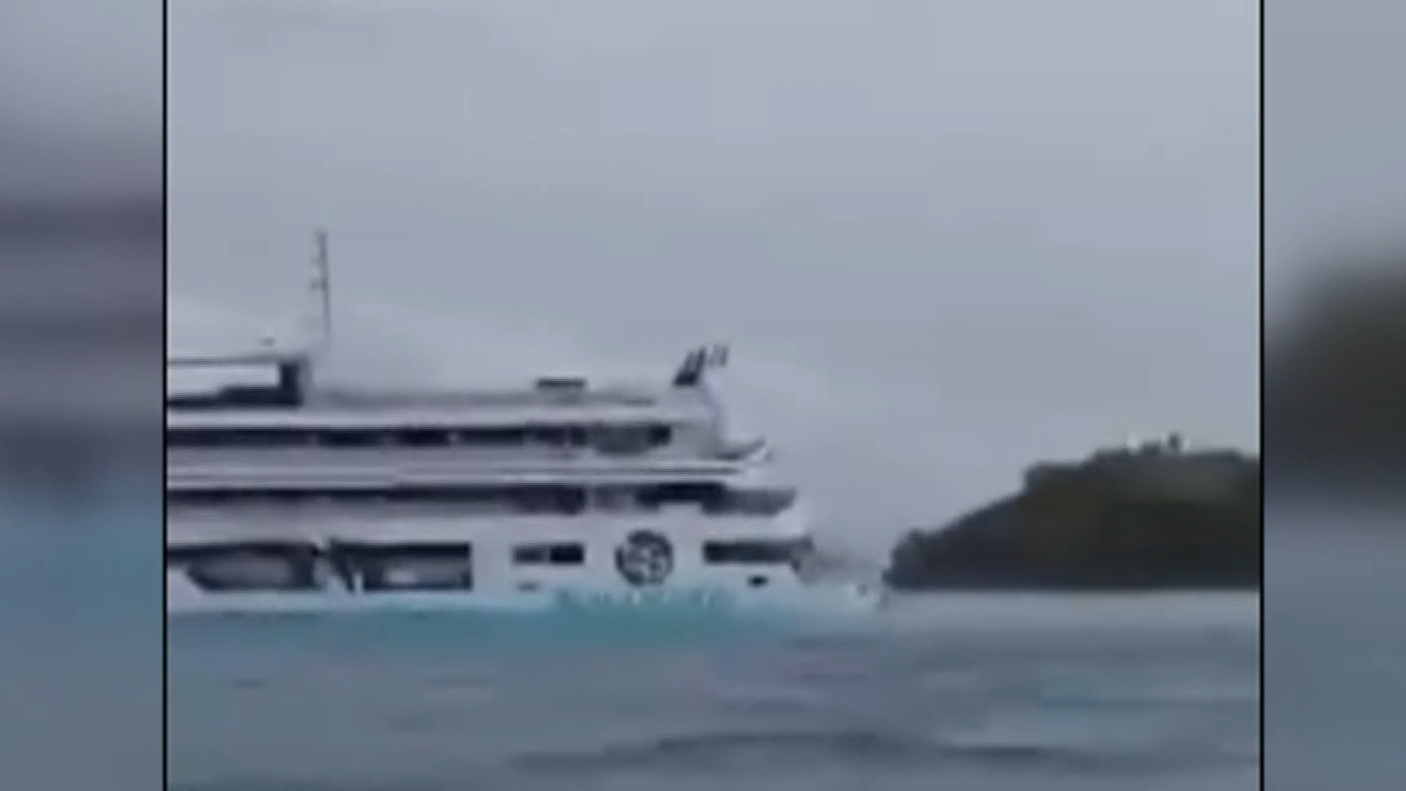
The grounding of a cruise vessel on the fringing reefs near Monuriki—famously known as the backdrop for the film Cast Away—is not an isolated nautical blunder. It is the predictable outcome of a maritime industry pushing larger hulls into increasingly fragile, poorly charted corridors to satisfy a global hunger for "exclusive" tropical experiences. When a ship strikes coral in the Mamanuca Islands, the narrative usually focuses on the immediate rescue of passengers and the mechanical failure of the day. This narrow view ignores the systemic pressures of the South Pacific cruise trade, where the margin for error is thinning alongside the coral itself.
Safety at sea depends on a triangle of factors: accurate hydrographic data, pilotage expertise, and environmental conditions. In the waters surrounding Fiji’s outer islands, all three are under strain. The incident near Monuriki exposes a rift between the high-tech bridge suites of modern vessels and the ancient, shifting reality of volcanic reef systems. While the industry prides itself on satellite navigation, the physical act of maneuvering a ship through a narrow reef passage remains a high-stakes gamble that technology alone cannot win.
The Myth of the Controlled Environment
The cruise industry markets the private island experience as a sanitized, safe version of adventure. Passengers expect to wake up in a turquoise lagoon, far from the industrial grit of Suva or Nadi. To deliver this, cruise lines must navigate "white holes" on charts—areas where the water is too shallow or the coral too dense for traditional survey vessels to have mapped with modern precision.
Many of the nautical charts used in the South Pacific are based on data that is decades, if not a century, old. While GPS can tell a captain exactly where they are on a map, it cannot tell them if a coral head has grown three feet higher since the last survey or if a storm has shifted a sandbar. When a ship runs aground in these waters, it isn't just hitting a rock. It is colliding with the limits of our geographic knowledge.
The Mamanuca Islands are a labyrinth. The passages are tight, and the currents are notoriously fickle. Local knowledge is supposed to bridge the gap, but the rapid expansion of the Fiji cruise market has put an immense strain on the pool of qualified local pilots. We are seeing a dilution of expertise at the exact moment when ship sizes are increasing.
High Stakes in the Mamanuca Reef System
The environmental fallout of a grounding extends far beyond the visible scars on the hull. When a ship’s keel meets a reef, it creates a "grinding" effect that turns vibrant limestone structures into lifeless rubble. This isn't just about aesthetics. These reefs are the primary coastal defense for the islands and the nursery for the fish stocks that local villages depend on for survival.
The Mechanism of Reef Destruction
- Mechanical Crushing: The sheer weight of a cruise ship—even a boutique one—pulverizes the calcium carbonate skeleton of the reef.
- Antifouling Leaching: Scraping the hull releases toxic paints containing copper or tin, which can poison the surrounding marine life for years.
- Sediment Plumes: The struggle to refloat a vessel kicks up massive clouds of silt. This silt settles on healthy coral nearby, "suffocating" the polyps by blocking the sunlight they need for photosynthesis.
In the case of the Cast Away island vicinity, the irony is thick. The very beauty that draws the tourists is the most casualty-prone element of the business model. Recovery for a crushed reef is measured in decades, not seasons. If the industry continues to treat these ecosystems as disposable backdrops, they will eventually run out of "pristine" locations to sell.
The Economic Pressure of the Tight Schedule
Why do these groundings happen in broad daylight under seemingly manageable conditions? The answer is often found in the ledger, not the logbook. Cruise itineraries are timed to the minute. Missing a "beach day" due to cautious navigation isn't just a disappointment for passengers; it's a massive financial hit in the form of port fee losses and refunded excursions.
Bridge officers are under subtle, constant pressure to maintain the schedule. This pressure can lead to "optical navigation," where a crew relies on visual cues that can be distorted by the midday sun or the clarity of the water. In the South Pacific, the water is so clear that a reef ten meters down can look like it's only two meters deep—and vice versa.
Wait-and-see is rarely a popular strategy on a bridge when a thousand people are waiting for their buffet lunch on the sand. The decision to enter a marginal passage often comes down to a split-second judgment call made by a tired crew operating on a grueling back-to-back rotation.
Infrastructure Gaps and Regulatory Shadows
Fiji’s maritime regulatory framework is struggling to keep pace with the sheer volume of traffic. While the Maritime Safety Authority of Fiji (MSAF) sets rules, the enforcement of those rules in remote island chains is a logistical nightmare. There is a lack of heavy-duty salvage equipment stationed near the Mamanucas. If a ship suffers a major breach, the response time is measured in days, not hours.
We are operating in a gray zone. The international maritime community has strict standards for open-ocean transit, but the "last mile" of the cruise experience—the entry into the lagoon—is often governed by local custom and informal agreements. This lack of standardization creates a patchwork of safety protocols that varies from one cruise line to the next.
The industry needs to move toward mandatory, high-resolution multibeam sonar mapping for every corridor used by commercial vessels. Relying on legacy charts in a multi-billion dollar industry is more than just an oversight; it is professional negligence.
The Liability Loophole
When a grounding occurs, the legal battle often disappears into a black hole of maritime law and offshore registrations. Most cruise ships fly "flags of convenience," meaning they are registered in countries like Panama or the Bahamas. This makes it incredibly difficult for local Fijian communities to sue for damages to their traditional fishing grounds (qoliqoli).
The cost of the damage is externalized. The cruise line pays for the ship's repairs, but the villagers lose their protein source and their coastal protection. The "Cast Away" fantasy is maintained for the next boatload of tourists, while the underwater reality is one of grey, broken stone and disappearing biodiversity.
Rethinking the Island Access Model
The current model of bringing the ship to the reef is fundamentally flawed. If we want to preserve the South Pacific’s ecological integrity, the industry must transition to a "hub and spoke" system. Large vessels should remain in deep-water berths, with passengers ferried to sensitive areas in low-impact, shallow-draft tenders.
This change would be expensive. It would require more staff, more fuel, and more time. But the alternative is a slow-motion wreck of the very environments that sustain the Pacific tourism economy. We are approaching a tipping point where the "exclusive" nature of these islands is being destroyed by the very machinery required to see them.
The grounding near Monuriki should be a final warning. It wasn't just a ship that hit the reef; it was an entire business model. Without a radical shift toward transparent mapping, mandatory pilotage for all reef entries, and a legal framework that holds cruise lines accountable for ecological destruction, the "Cast Away" island will eventually be nothing more than a graveyard for expensive hulls and dead coral. The industry must decide if it is a guest in these waters or a predator.
The next time a hull scrapes the limestone in the Mamanucas, the excuse of "unforeseen conditions" will no longer hold water. The conditions are known. The risks are documented. The only thing missing is the will to prioritize the ocean over the itinerary. Stop pretending these are accidents. They are the cost of doing business in a system that values a scenic backdrop more than the reef that creates it.