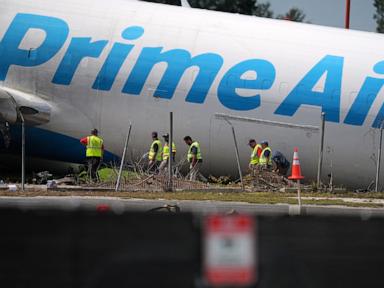
Gravity is not negotiable.
You learn this early if you spend enough time around heavy metal and jet fuel. Down on the tarmac, an airplane looks like an immovable monument of human engineering—a titanium beast designed to conquer the sky. But once it breaks free of the earth, it transforms into something else entirely. It becomes a delicate balance of physics, a fragile equation held together by airspeed, lift, and the relentless ticking of a pilot's situational awareness.
Then comes the landing.
Ask any veteran captain, and they will tell you that taking off is an exercise in optimism, but landing is a reckoning. It is the moment where every variable—weather, weight, wind shear, and human fatigue—converges on a single strip of concrete. Most days, the math works out. The wheels kiss the pavement, the reverse thrusters roar, and the passengers start unbuckling their seatbelts, eager to reach the baggage claim.
Most days.
Consider what happens when the math breaks down. Picture the cockpit of a cargo plane bearing down on Miami International Airport. It is late, or perhaps the transition between shifts has blurred the edges of the crew's alertness. The instrument panel glows in the dim light. Inside that tight cabin, the air is thick with the scent of coffee and ozone. The throttles are back, but the weight of the aircraft is telling a different story.
The plane was heavy. It was carrying cargo that shifted the center of gravity just enough to demand respect. And it was coming in too fast.
We know this because of the black box, because of the frantic whispering of transcripts, because the hard data eventually strips away the noise and leaves behind a stark truth. The warning alarms did not whisper; they screamed. The pilot knew. Seconds before the wheels met the earth, the voice from the jumpseat or the automated system chimed in with the cold reality of excess velocity.
Energy. That is all an airplane in motion really is. Kinetic energy multiplied by mass and velocity squared. When you carry too much speed across the threshold, you are not just landing an aircraft; you are trying to wrestle an avalanche to a halt.
The runway at Miami stretches out like a paved promise, but physics does not care about promises. When the cargo jet touched down long and fast, the friction coefficients of the rubber against the damp or rubber-slicked asphalt suddenly became the only thing standing between safety and catastrophe. Hydroplaning is a silent predator. You do not feel it until you press the brakes and realize nothing is happening. The pedal goes down to the floor, but the horizon keeps rushing toward you.
Imagine the visceral jolt of that realization.
For a fraction of a second, the human brain tries to negotiate with reality. Maybe we will scrub off enough speed. Maybe the threshold will catch us. But the runway lights are blurring past outside the thick glass windows at a terrifying clip. The perimeter fence is growing larger. The drainage ditches and service roads are no longer abstract concepts on a Jeppesen chart; they are immediate, physical hazards waiting to swallow the landing gear.
When the plane finally careened off the end of that runway, breaching the perimeter, the sound would have been deafening. The crunch of sheared metal, the violent shudder tearing through the airframe, the sudden deceleration slamming bodies against harnesses. It is the kind of violence that defies the sterile comfort of modern aviation.
Yet, in the aftermath, the headlines often focus only on the mechanics. Investigators sift through twisted wreckage, parsing data points from the flight data recorder. They talk about approach speeds, V-speeds, flap settings, and glide slopes. They reduce a terrifying human experience into a spreadsheet of errors and deviations.
The numbers matter, of course. Aviation safety is written in the blood of past mistakes. Every rule in the Federal Aviation Regulations exists because someone, somewhere, ignored a similar warning sign. But numbers alone fail to capture the weight of the cockpit door.
Flying a commercial or cargo jet is an act of relentless decision-making under pressure. By the time an approach becomes unstable, the crew is already racing against a cascade of compounding factors. Fatigue wears down the cognitive edges. A minor delay earlier in the route forces a rushed descent. Air traffic control issues a last-minute vector change. None of these things cause an accident by themselves. Instead, they stack up like dry kindling, waiting for a single spark.
That spark is usually pride, or exhaustion, or the quiet, insidious voice of normalization of deviance. We are a little fast, but we can save it. It is the pilot's eternal curse: the belief in one's own capability to bend the rules of physics just this once.
We look at aviation disasters and near-misses with a detached morbid curiosity, treating them like a grim reality show unfolding on our screens. We read the National Transportation Safety Board updates as if they were plot summaries for a disaster film. But behind every incident report is a human being staring at a flashing red light, calculating the odds in real time, knowing that a miscalculation could be their last.
The cargo plane in Miami did not just slide off the pavement because of a faulty gauge or a sudden gust of wind. It slid off because speed is a jealous master. Once you invite too much of it into the descent, it demands to be paid back in distance. And when the runway runs out, the debt is collected all at once.
There is a profound humility in walking the perimeter of an airport runway after the smoke has cleared. You look at the painted white numbers, the rubber marks left by thousands of safe landings, and the sudden drop-off where the concrete ends and the rough terrain begins. You realize just how thin the margin is between routine travel and absolute chaos.
The warning was issued. The speed was too high. The plane ran out of room.
These are the cold facts of the incident. But the story lives in the space between the warning and the impact—that breathless moment where human limitation collides with the unyielding laws of the sky, and the silence that follows when the engines finally spool down for good.