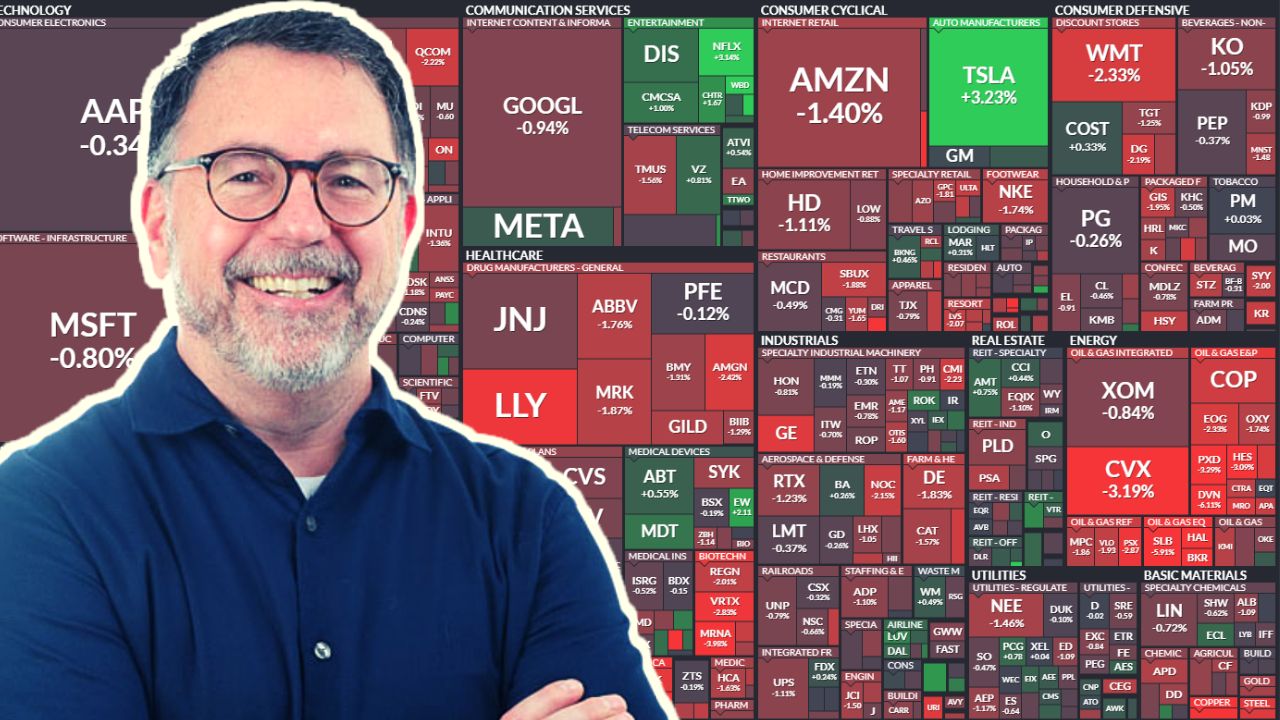
Fear is a powerful sedative for the average investor. When the screen turns red and the Dow drops 500 points, most people freeze. They stare at their brokerage accounts, watch their net worth dip, and do absolutely nothing—or worse, they panic sell at the bottom. But if you’ve spent any time listening to Jim Cramer, you know that these "tough days" are exactly when the real money is made.
The secret isn't some complex algorithm. It’s about identifying which companies are being unfairly punished for the crimes of the broader market. When the index drops, it takes the "babies" out with the "bathwater." Your job is to find the babies.
The Art of the Market Panic
Most investors treat a market selloff like a building fire—they just want to get out. But seasoned pros look at it like a clearance sale at a high-end department store. Cramer often argues that a brutal day in the market is the only time you get a "fair" price on great companies.
Think about it. On a green day, everyone feels like a genius. Stocks are expensive because everyone wants them. On a red day, high-quality names like Nvidia (NVDA) or Microsoft (MSFT) might drop 3% or 4% not because their business changed, but because a hedge fund somewhere had to liquidate a position or a macro report scared the "weak hands."
You don't buy the whole market on a bad day. You buy the "best of breed" names that have the balance sheets to survive a downturn and the pricing power to thrive when things stabilize. If a company's fundamentals are intact but the stock is down, that's a gift.
Stocks That Stand the Heat
When the market gets ugly, I don't look for the high-flying, speculative junk. I look for the "shelter from the storm" stocks. These are companies that provide essential services or have such a dominant market position that a bad CPI print or a geopolitical flare-up won't stop them from printing cash.
- The Infrastructure Plays: Cramer has been pounding the table on Boeing (BA) recently, citing CEO Kelly Ortberg’s "fix-it-first" strategy. When the market dips, a company like Boeing—which has a massive backlog of orders through 2030—isn't going anywhere.
- The AI Winners with Real Earnings: Don't confuse 2026 with the dot-com bubble. Companies like ServiceNow (NOW) and CrowdStrike (CRWD) are delivering actual productivity gains. If they get hit during a general tech selloff, they're often the first to bounce back.
- Consumer Staples and Health: People still need to eat and take their meds. Names like Eli Lilly (LLY) or even a "hold" name like Pfizer (PFE) offer a level of stability that pre-profit tech startups can't touch.
Why the Selloff Happens vs Why You Should Care
Understanding the why behind a tough day helps you stay rational. Usually, it’s one of three things:
- Interest Rate Fears: The Fed hints at staying "higher for longer," and suddenly every stock is worth less in a DCF model.
- Geopolitical Shocks: Oil spikes because of conflict overseas, and everyone assumes a recession is imminent.
- Systemic Deleveraging: One big player gets a margin call, and they have to sell everything—even the good stuff.
If the reason for the selloff doesn't affect the long-term earnings power of the stock you want to own, then the price drop is noise. It’s an opportunity.
How to Scale into a Position Without Getting Crushed
One of the biggest mistakes I see is "blowing your wad" all at once. You see a stock you like down 5%, you buy a full position, and then it drops another 10% the next day. Now you're underwater and out of cash.
Cramer’s "25-25-25-25" rule is a lifesaver here. Instead of buying 100 shares at once, buy 25. If the stock goes lower, you buy another 25. This lowers your cost basis. If the stock starts to move up, you're already in the game. You don't need to catch the absolute bottom to make a fortune; you just need to be in the right ZIP code.
Don't Ignore the Charts
While fundamentals tell you what to buy, technicals tell you when. Even a "bulletproof" stock like AT&T (T) can have a floor that needs to be respected. Look for "capitulation" volume—that massive spike in trading where it looks like everyone finally gave up. That’s usually the sign that the sellers are exhausted and the bottom is in.
Common Mistakes to Avoid on Red Days
Don't be a hero. Just because a stock is down 50% doesn't mean it can't go down another 50%. I see people "bottom fishing" in speculative garbage all the time. If a company doesn't have earnings, a tough market will stay tough for them a lot longer than for the giants.
Another trap? Margin. Never, ever use margin to buy the dip. A "tough day" can turn into a "tough week," and if your broker forces you to sell at the bottom because of a margin call, you're finished. Cash is your best friend when the market is screaming.
The Power of the Read-Through
Successful investing is about connecting the dots. If Micron (MU) says they see a bottom in chips, you don't just buy Micron. You look at Western Digital (WDC) or other competitors in the space. This "read-through" allows you to find stocks that the market hasn't realized are good yet.
What to Do the Next Time the Dow Sinks
The next time you see a "Breaking News" banner on CNBC and the anchors look like they're announcing the end of the world, take a breath.
First, check your "shopping list." You should always have a list of five stocks you want to own but felt were too expensive. Second, check the "why"—is this a company problem or a market problem? If it's the latter, it's time to work.
Start by buying a small "starter" position in a high-quality name you've researched. Don't worry about the headlines. Focus on the earnings, the balance sheet, and the management. If you can keep your head while everyone else is losing theirs, you won't just survive the tough days—you'll profit from them.
Go through your portfolio right now and identify which stocks you’d actually want to buy more of if they dropped 10%. If the answer is "none," you're holding the wrong stocks. Fix that before the next red day hits.