Turn on the news right now and you'll probably want to throw your remote through the screen. War updates, economic dread, political screaming matches, and a thousand pundits telling you why everything is falling apart. Most networks feed on that anxiety because panic keeps eyeballs glued to commercials.
Finland's public broadcaster, Yle, took the exact opposite bet. They pointed cameras at a litter of puppies and hit "live." For a closer look into similar topics, we suggest: this related article.
It sounds like a joke. A cheap gimmick cooked up by desperate TV producers during a slow news week. Except it wasn't a joke, and it certainly wasn't a slow news week. When Yle launched Pentulive (literally "Puppy Live"), Europe was dealing with inflation, energy crises, and the ongoing war in neighboring Ukraine. Instead of doubling down on doom, Finland's national media outlet offered millions of people a quiet room full of clumsy golden retrievers, dachshunds, and mutts learning how to walk.
And people watched. Millions of them. To get more context on the matter, extensive reporting is available on BBC News.
What Yle Actually Did With Pentulive
If you haven't seen how Nordic public broadcasting works, the concept of Pentulive feels almost radical compared to American cable news. Yle didn't hire a hyperactive host to narrate every sneeze. They didn't add cartoon sound effects or dramatic background music.
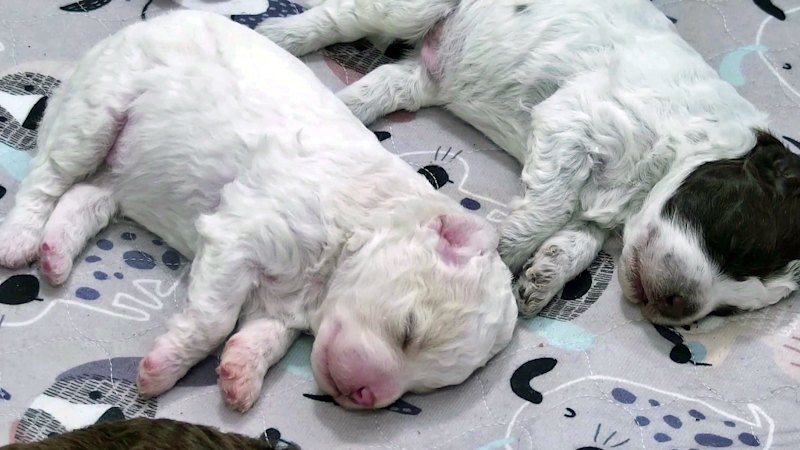
They set up fixed cameras inside a regular Finnish home—or a dedicated puppy room—and streamed a real litter of puppies growing up from birth until the day they left for their forever homes at around seven or eight weeks old.
Viewers tuned in via Yle Areena, the broadcaster's free streaming platform. You got to watch the mother dog nurse them. You watched their eyes open for the first time. You watched them stumble over their own paws, wrestle over a chew toy, and pass out in a giant pile of fur for three hours straight.
It's the purest form of "slow TV," a genre that Norway's NRK pioneered over a decade ago with seven-hour broadcasts of train rides and knitting marathons. Yle took that quiet, unhurried format and gave it a pulse. Literally.
Why Your Brain Craves Slow TV When the World Feels Broken
There's a real psychological reason Pentulive became a cultural phenomenon in Finland rather than just a cute distraction. Modern news is engineered to hijack your amygdala—the part of your brain responsible for the fight-or-flight response. Every breaking news banner, red chyron, and urgent voiceover tells your nervous system that a predator is in the bushes.
The problem? You can't fight a geopolitical crisis from your couch, and you can't outrun inflation. So your body stays stuck in a low-grade stress loop.
Watching puppies sleep on a live stream breaks that loop. It's predictable. Nothing explodes. Nobody yells. Researchers who study media consumption and stress—including psychologists looking at the effects of nature and animal videos—have noted that low-stakes visual stimuli lower cortisol levels and slow down heart rates. You aren't tuning out reality because you're ignorant; you're giving your nervous system twenty minutes to reset so you can actually function.
Honestly, most media executives think audiences only want outrage. Yle proved that people are starving for relief.
The Secret Weapon of Publicly Funded Media
Could CNN, Fox News, or a commercial network pull off something like Pentulive? Probably not, and the reason comes down to money.
Commercial broadcasters live and die by ad impressions and second-by-second retention metrics. If a viewer gets bored during a twenty-minute stretch where six puppies are fast asleep, commercial TV logic says you have to cut to a commercial or manufacture fake drama. Silence is dead air, and dead air loses sponsors.
Yle is funded by Finnish taxpayers through a dedicated public broadcasting tax. Because they don't answer to quarterly ad sales, their mandate is completely different. Under Finnish law, Yle is required to support democracy, culture, and social cohesion—basically, keeping society healthy and connected.
During periods of intense national stress, a public broadcaster isn't trying to monetize your fear. They're trying to serve the public good. Giving the entire country a shared, wholesome experience that sparks conversations at the office coffee machine instead of arguments at the dinner table fits that mission better than another hour of talking heads.
It Was Never Just Cute Fluff
Look closer at how Yle produced Pentulive, and you'll notice something smart. They didn't just throw dogs in front of a lens and walk away. They used the massive audience to sneak in genuine education about responsible pet ownership.
During the pandemic, pet adoptions skyrocketed across Europe and North America. A lot of first-time owners bought dogs on impulse without understanding the time, money, or training required. When lockdowns ended, animal shelters got slammed with abandoned pets.
Yle brought in veterinarians, dog trainers, and ethical breeders to answer viewer questions in real time. While people tuned in to watch adorable puppies tumble over a blanket, they also learned:
- How much sleep a newborn puppy actually needs (up to 18-20 hours a day)
- Why separating a puppy from its mother before seven or eight weeks causes behavioral damage
- What to look for in a responsible breeder versus a puppy mill
- How early socialization shapes a dog's temperament for the rest of its life
That's the trick. If Yle had aired a dry 45-minute documentary titled Responsible Canine Husbandry in Finland, maybe four thousand people would have watched it. By wrapping expert advice inside a 24/7 puppy stream, they reached millions.
What Other Newsrooms Keep Getting Wrong
Most legacy media outlets are currently panicking about "news avoidance." According to the Reuters Institute Digital News Report, a growing percentage of people worldwide actively avoid the news because it leaves them feeling exhausted, powerless, and depressed.
The standard industry response to news avoidance is depressing in itself. Editors try shorter videos, flashier graphics, or "solutions journalism" pieces that still read like homework. They rarely question the fundamental premise that news has to feel like an emergency.
Yle's approach flips the script. They recognized that a national broadcaster can be a steady, comforting presence in people's living rooms without abandoning serious journalism. Yle still produces hard-hitting investigative reporting, rigorous political coverage, and deep war correspondence. Having Pentulive running on another channel didn't dilute their credibility—it made viewers trust the institution more because it felt human.
You don't need to be a Finnish taxpayer to apply this lesson to your own media diet.
How to Build Your Own Version of Pentulive
If you feel burned out by constant doomscrolling, waiting for your local news station to air a puppy cam isn't going to help. You have to curate your own off-ramp.
- Swap one doomscroll session for a real-time nature cam. Platforms like Explore.org run free, 24/7 live streams of brown bears catching salmon in Alaska, bald eagle nests, and African watering holes. No commentary, no algorithms pushing outrage—just real life happening at its own pace.
- Put a hard boundary on breaking news alerts. Turn off push notifications from news apps on your phone. If something truly world-altering happens, you'll hear about it. Getting pinged every twelve minutes about minor political drama just keeps your stress hormones elevated for no reason.
- Follow outlets that respect your nervous system. Seek out slower, long-form journalism—weekly print magazines, independent newsletters, or public broadcasters—rather than 24-hour cable loops designed to keep you agitated.
Finland's puppy broadcasts worked because they reminded people that even when politics and headlines look bleak, ordinary, quiet life keeps moving forward. Sometimes the smartest thing a media company—or a burned-out human—can do is stop screaming for five minutes and watch a golden retriever trip over its own ears.