A Whisper Across the Waves
The dark water of the Strait of Hormuz does not care about energy contracts.
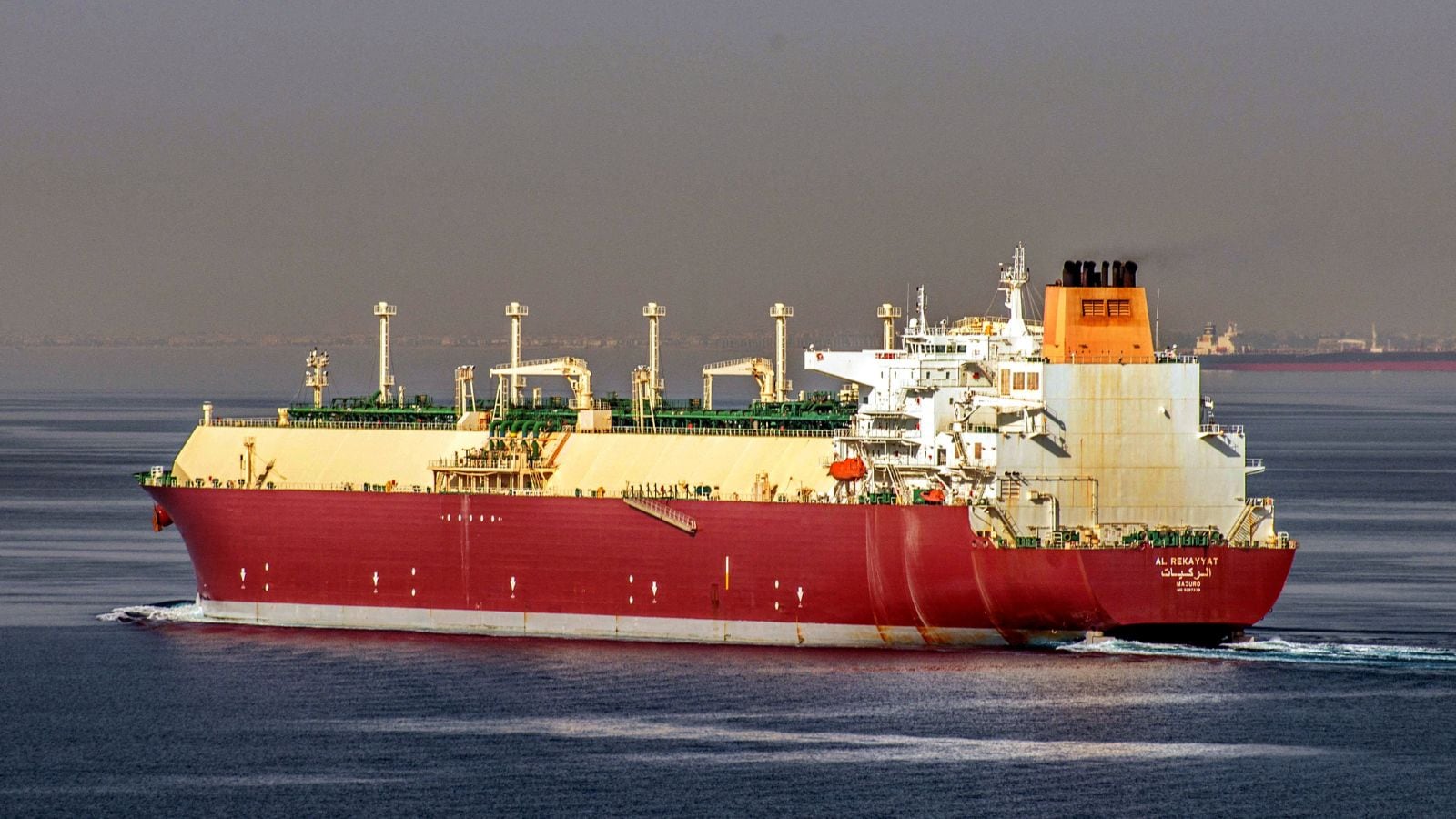
Late on a Tuesday evening, somewhere in that narrow, sun-scorched choke point where thirty percent of the world’s liquefied natural gas passes, steel met explosives. The Al Rekayyat—a massive, insulated Qatari tanker carrying millions of cubic feet of supercooled gas meant for the power grids and fertilizer plants of India— shuddered. A drone strike. Iranian in origin, officials later confirmed.
Explosions at sea make loud headlines in financial capitals. But thousands of miles away, in the quiet suburbs of Gujarat or the bustling industrial hubs outside Mumbai, the explosion sounds like something else entirely. It sounds like a sudden, terrifying silence.
The silence of a gas stove that won't ignite.
Consider Ramesh, a small-scale textile dye operator in Surat. He doesn't track drone technologies. He doesn't monitor geopolitics in Tehran or Doha. But Ramesh knows that when his factory’s gas-fired boilers lose pressure, his entire day’s yield is ruined. His fifteen workers go home without pay. The fabric stiffens in the vats, useless.
When a ship like the Al Rekayyat is hit, news outlets report on shipping routes, insurance premiums, and maritime safety zones. They talk about barrel equivalents and spot-market price spikes. They miss the human strain. The real story isn't just the burning metal in the Persian Gulf. It is the cascading tremor that travels down the supply line until it lands squarely on the shoulders of ordinary people.
The Choke Point Nobody Thinks About
Geography can be a cruel landlord.
If you map the global transit of energy, you quickly realize that modern civilization hangs by a few impossibly thin threads. The Strait of Hormuz is perhaps the thinnest. At its narrowest, the shipping lanes are barely two miles wide in either direction. On one side sits the Arabian Peninsula; on the other, the rugged coastline of Iran.
Every single day, dozens of supertankers navigate this delicate corridor. They move slowly. They are large, vulnerable, heavy targets laden with enough energy to power whole metropolises—or trigger catastrophic disasters if breached.
+---------------------------------------------------------------+
|                      THE HORMUZ BOTTLENECK                    |
|                                                               |
|   IRANIAN COASTLINE                                           |
|   ~~~~~~~~~~~~~~~~~~~~~~~~~~~~~~~~~~~~~~~~~~~~~~~~~~~~~~~~~   |
|         [ Inbound Shipping Lane: ~2 Miles Wide ]              |
|   ---------------------------------------------------------   |
|         [ Outbound Shipping Lane: ~2 Miles Wide ]             |
|   ~~~~~~~~~~~~~~~~~~~~~~~~~~~~~~~~~~~~~~~~~~~~~~~~~~~~~~~~~   |
|   ARABIAN PENINSULA (Oman / UAE)                              |
+---------------------------------------------------------------+
For decades, we treated these choke points as theoretical risks. We drew diagrams in policy journals. Analysts gave lectures with laser pointers. But when remote-controlled munitions start dropping from the sky onto commercial vessels, the theory evaporates.
Liquefied natural gas, or LNG, is a bizarre substance. To ship it, engineers cool natural gas to a chilling negative 260 degrees Fahrenheit. At that temperature, the gas condenses into a clear liquid, shrinking its volume by more than six hundred times. It is a miracle of modern engineering, allowing energy to travel across oceans without pipelines.
Yet that miracle relies on absolute stability.
A single drone attack breaks the spell of safety. Insurance underwriters immediately recalculate risk, sending war-risk premiums soaring overnight. Shipping companies order captains to cut engines, anchor in open water, or take absurdly long detours around entire continents. Shipments don't just get delayed; they get rerouted to the highest bidder.
When the Heat Turns Off
India’s energy hunger is vast, constant, and growing at a breathtaking pace. To feed its factories, power its cities, and manufacture the fertilizer that grows food for 1.4 billion people, the nation relies heavily on imported gas. Qatar is its largest, most trusted supplier.
When news of the strike on the Al Rekayyat hit trading desks, the reaction was immediate. Spot prices for natural gas surged.
In real terms, what does a price surge mean?
It means difficult, painful choices.
"When global gas prices double because of sea-lane instability, state power utilities cannot simply pass that cost onto citizens overnight. Instead, they cut supply. They rotate blackouts. They prioritize hospitals and critical infrastructure, leaving light industry in the dark."
The industrial belts of western India depend on a steady, pressurized stream of natural gas. When that stream falters, the machinery stops. Brick kilns go cold. Glassworks risk having molten material solidify inside their furnaces, causing millions of dollars in permanent equipment damage. Farmers face delays in acquiring urea, the crucial nitrogen fertilizer synthesized using natural gas, directly threatening the next season's crop yield.
We like to think of our digitized, hyper-connected world as resilient. We imagine that our lives are anchored by cloud servers, artificial intelligence, and sophisticated financial instruments. But strip away the digital polish, and society remains fundamentally physical. It runs on molecules. It runs on heat.
When those molecules are trapped at sea on a damaged ship, the digital world cannot fill the void.
The Illusion of Distance
It is easy to watch war unfold through a screen and feel safely detached. The drone strike looks like a video game clip: grainy black-and-white footage, a flash of white, a plume of smoke over a gray sea.
That detachment is a dangerous lie.
The conflict in the Middle East is no longer contained within its geographic borders. Through the mechanism of globalized trade, a conflict in one hemisphere instantly taxes the pocketbooks of families in another. The strike on the Al Rekayyat was not merely an act of regional aggression; it was a strike against the economic security of a developing nation thousands of miles away.
Consider the crew on board that vessel. Seafarers from the Philippines, India, and Sri Lanka, working weeks at sea, surrounded by millions of gallons of volatile liquid, suddenly finding themselves in an active war zone. They aren't soldiers. They are merchant mariners earning a living to send money home to families who rely on those remittances for rent and school tuition.
When an asymmetric attack occurs, these workers become collateral in a game played by regional powers testing the limits of international law.
The Unforgiving Reality
So where does this leave us?
Countries across Asia and Europe are scrambling to diversify their energy imports. They are building more receiving terminals, investing heavily in domestic renewables, and signing long-term contracts with suppliers in Australia and the Americas.
But infrastructure takes years to build. Pipelines cannot be laid overnight. Solar panels and wind turbines, while vital for the future, cannot instantly replace the high-density thermal energy required for heavy industrial processes today.
For the immediate future, ships like the Al Rekayyat will continue to navigate the narrow waters of Hormuz. Captains will stare anxiously at their radar screens. Insurance brokers will revise their algorithms. And business owners like Ramesh will wake up every morning, walk to their factories, and turn the valve, holding their breath as they wait to see if the gas flows.
The iron hull of a tanker can be patched. The burnt steel can be replaced. But the trust in the seamless flow of global trade, once fractured by a single strike on the open sea, takes far longer to repair.


