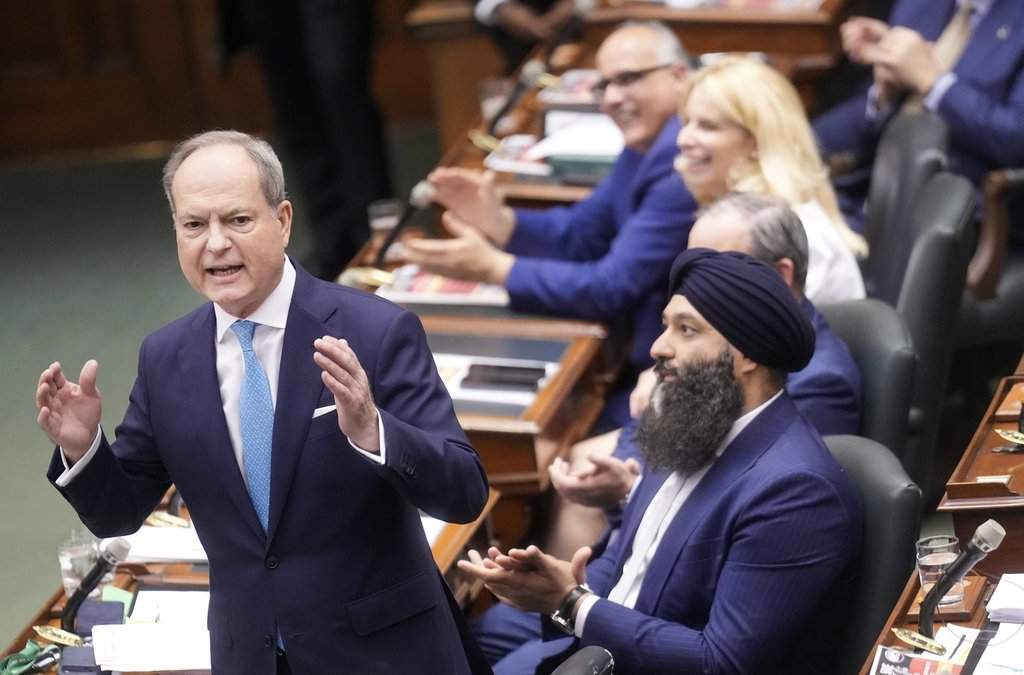
A politician bows in front of a wall of microphones. A housing minister hands in a resignation letter. The headlines write themselves, the public gets its pound of flesh, and the media moves on to the next outrage cycle.
Everyone calls this accountability. It is actually an institutional cover-up disguised as remorse.
When a residential fire exposes systemic regulatory failures in a dense metropolis like Hong Kong, the lazy consensus demands heads on pikes. Pundits treat a cabinet resignation as a victory for governance and an official apology as the first step toward reform. That narrative is comforting, simple, and completely divorced from how complex urban infrastructure actually fails.
Sacking the person at the top of the org chart does not fix corroded pipes, bypassed fire alarms, or an inspection regime starved of enforcement teeth. In fact, it actively prevents those fixes from happening.
The Scapegoat Trap in High-Density Urban Governance
In organizational behavior and safety engineering, this is known as the "bad apple" theory. When a disaster strikes—whether it is a tenement blaze in Kowloon, an industrial explosion, or a high-rise cladding failure—bureaucracies instinctively isolate the blame onto a single human node. By removing the housing minister, the administration creates an immediate psychological release valve. The pressure drops. The inquiries lose momentum. The system survives completely intact.
I have spent years auditing municipal compliance frameworks and watching post-crisis fallout up close. Every single time an executive takes the fall for a structural failure, the exact same sequence plays out behind closed doors:
- Institutional amnesia sets in immediately. The outgoing minister takes the political heat, and the incoming minister claims a "fresh start," distancing themselves from the messy audit trail left behind.
- Middle-management inertia deepens. Civil servants who actually sign off on building permits and fire code variances realize that survival depends on hiding paperwork, not flagging hazards.
- Capital allocation stalls. Major retrofitting budgets get frozen while a new leadership team spends six to nine months "reviewing the file."
You cannot fire your way out of an engineering and enforcement deficit. When you treat a systemic regulatory collapse as a personnel issue, you guarantee that the underlying mechanics of the disaster remain untouched.
What the Headlines Missed About Building Safety Failures
To understand why a minister's resignation is meaningless, look at the physical and economic reality of aging urban housing stock.
In hyper-dense cities, older residential buildings operate on a razor-thin margin of maintenance. Subdivided units, unauthorized structural alterations, blocked egress routes, and degraded electrical wiring do not appear overnight. They are the predictable result of three intersecting pressures: severe housing shortages, fragmented building ownership, and reactive enforcement.
The Fragmented Ownership Bottleneck
In many older multi-story residential blocks, ownership is split across dozens or even hundreds of individual landlords and shell companies. Forming an owners' corporation capable of approving and funding a mandatory fire safety upgrade is a legal nightmare.
Even when the government issues statutory fire safety directions—requiring upgraded fire doors, sprinkler systems, or pressurized stairwells—compliance drags on for years. Why? Because the state relies on private owners to coordinate multi-million-dollar capital works without providing a streamlined mechanism to override holdouts.
The Inspection Mirage
Standard media coverage loves to point out how many inspections were missed before a fire. That misses the real flaw. The problem is rarely a lack of inspections; it is the hollow nature of compliance theater.
Inspectors operate under rigid checklists that measure paperwork rather than physical risk. If a building submits a certified contractor's form claiming the fire doors were serviced, the box is ticked. Nobody checks whether those doors were wedged open ten minutes later to improve airflow in a stifling corridor, or whether illegal drywall partitions turned a standard flat into a maze with zero secondary exits.
Why Apologies Are Toxic to Systemic Reform
System safety pioneers like Dr. James Reason—whose "Swiss Cheese Model" revolutionized aviation and healthcare safety—proved decades ago that catastrophic accidents rarely stem from a single blunder. They happen when multiple layers of defense fail simultaneously, aligning holes in regulation, maintenance, design, and oversight.
When a political leader apologizes and sacrifices a cabinet member, they violate the foundational rule of root-cause analysis. They stop asking why the holes aligned and start celebrating that someone was punished for letting it happen.
Consider the alternative. Imagine a scenario where, following a fatal fire investigation, the housing minister is explicitly forbidden from resigning. Instead, their compensation, pension, and political survival are tied directly to measurable, audited reductions in high-risk building violations over a 24-month window.
A resignation lets the architect of the failure walk away from the wreckage. Forced accountability keeps them chained to the cleanup.
Dismantling the Public's Wrong Questions
Whenever a major building fire dominates the news cycle, public discourse floods with predictable, fundamentally flawed questions.
"Why didn't the government inspect this building sooner?"
Because a reactive inspection model cannot scale to tens of thousands of aging structures. Expecting civil servants to manually police every stairwell in a vertical city is a fantasy. If a safety system requires a government inspector to physically stand in a hallway to keep it clear of combustible clutter, the system has already failed.
"Will tougher penalties for landlords stop this?"
No. Raising fines on paper does nothing when enforcement takes three years to wind through the magistrate courts. Unscrupulous operators treat occasional fines as a predictable operating expense—a minor tax on running high-yield, non-compliant rentals. Unless non-compliance triggers immediate, automated financial liens or utility disconnections, higher statutory fines are pure fiction.
"Does a new housing chief mean stricter enforcement?"
Usually, it means the exact opposite. A newly appointed minister enters office terrified of making a mistake that could trigger another scandal. In bureaucracies, fear produces paralysis. Approvals slow down, bureaucrats demand triple-redundant sign-offs for basic maintenance permits, and property owners end up delaying upgrades because the regulatory red tape becomes impossible to navigate.
The Uncomfortable Trade-Off Nobody Wants to Admit
Here is the brutal truth that neither opposition politicians nor angry editorial boards will tell you: aggressive, uncompromising fire code enforcement causes immediate housing displacement.
If the Buildings Department and Fire Services walked into every aging tenement block tomorrow and strictly enforced modern fire safety codes to the letter of the law, tens of thousands of low-income residents would be evicted onto the street by nightfall.
Subdivided flats exist because affordable housing does not. Landlords carve single apartments into six cramped cubicles, blocking windows and overloading circuits, because desperate tenants have nowhere else to go. Regulators know this. Politicians know this.
So, the state quietly tolerates a shadow tier of substandard housing to avoid a massive homelessness crisis. Everyone looks the other way until a spark catches, smoke fills an unventilated stairwell, and people die. Then, suddenly, the administration acts shocked that the rules were broken, offers a somber apology, and tosses a minister to the wolves.
Admitting this trade-off is political suicide, which is why leaders rely on the ritual of the resignation. It allows society to pretend the tragedy was an aberration caused by bad management, rather than the inevitable mathematical outcome of an unresolved housing crisis.
How Real Urban Fire Reform Actually Works
If a government genuinely wanted to prevent the next disaster rather than manage the current PR crisis, it would abandon political theater and execute four ruthless, unglamorous operational shifts.
1. Shift from Periodic Inspections to Continuous Telemetry
Stop relying on human inspectors with clipboards. Mandate low-cost, tamper-evident IoT smoke and heat sensors connected directly to municipal dispatch networks in all high-risk, pre-1980s residential buildings. If a sensor is disconnected or a hallway fire door is propped open for more than fifteen minutes, the system flags it automatically.
2. State-Led Retrofitting with Statutory Liens
Stop waiting for fragmented owners' corporations to agree on contractors. When a building fails a critical fire safety audit and misses its remediation deadline, a dedicated state engineering corps should step in, execute the upgrades immediately, and attach the cost directly to the property titles as a super-priority tax lien. Fix the building first; litigate the bill later.
3. Decouple Enforcement from Immediate Eviction
Create rapid-deployment transitional housing modules before launching enforcement sweeps. You cannot shut down illegal subdivided flats if the displaced tenants have zero viable alternatives—they will simply move into the next firetrap down the block. Enforcement without absorption capacity just relocates the risk.
4. Publish Radical, Building-Level Risk Scores
Strip away bureaucratic opacity. Every residential building in the city should have a publicly searchable, real-time fire safety rating displayed on rental platforms and posted physically in the lobby. When tenants, insurers, and mortgage lenders can see an "F" rating in plain sight, market pressure forces landlords to fix defects faster than a government summons ever could.
The Downside of the Ruthless Approach
This model is not painless. State-led retrofitting overrides private property rights and invites fierce legal pushback from landlord lobbies. Public risk ratings tank property values overnight, trapping honest, cash-poor elderly homeowners in unsellable apartments they cannot afford to fix. Continuous sensor monitoring raises legitimate privacy concerns about state surveillance inside private residential corridors.
Those are hard, messy problems that require political capital, massive budgets, and years of thankless execution.
Bow-and-resign politics requires none of that. It costs nothing, offends no entrenched property interests, and buys the administration another news cycle of peace.
Keep applauding the apology. Keep celebrating the resignation. Just do not act surprised when the alarms fail to ring the next time a building burns.