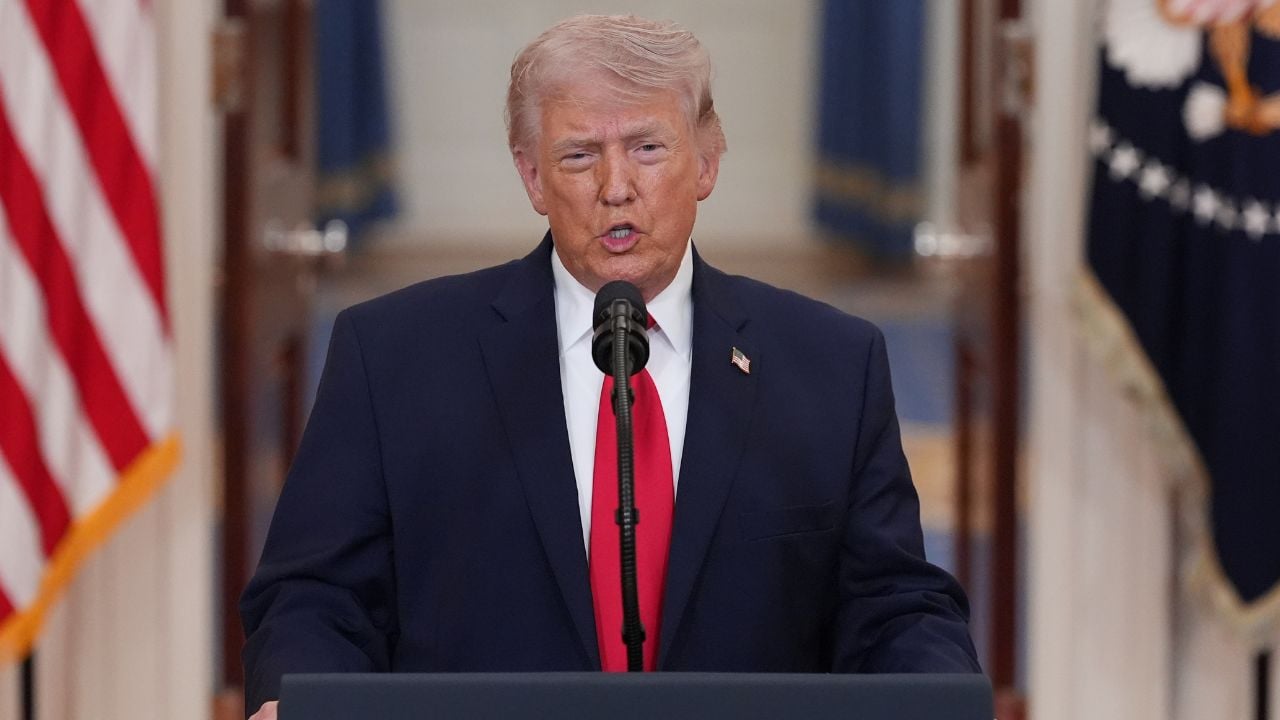
The tension between national security and the public’s right to know has reached a breaking point. Donald Trump’s recent demands for the imprisonment of a journalist who reported on a sensitive Iranian airman rescue operation represent more than just campaign rhetoric. They signal a fundamental shift in how the executive branch intends to handle the flow of classified information in the coming years. This is not just a dispute over a single headline. It is a direct challenge to the legal protections that have allowed investigative journalism to function in the United States for over two centuries.
At the heart of the controversy is a report detailing the extraction of an Iranian individual, a story that the Trump team claims compromised active military operations and put American lives at risk. The demand for "jail time" for the reporter involved moves the needle from standard government pushback into the territory of criminalizing the act of journalism itself. While the government has every right to protect its secrets, the move to punish the person who publishes those secrets—rather than the official who leaked them—breaks a long-standing, if fragile, consensus in American law.
The Invisible Shield of the Press is Cracking
For decades, the Department of Justice has generally followed a policy of restraint when it comes to prosecuting members of the media. This wasn't necessarily out of a love for the press, but because the legal hurdles are immense. The Supreme Court has historically set a high bar for "prior restraint" and the prosecution of publishers. But that shield is not made of vibranium. It is a collection of norms, guidelines, and judicial precedents that can be dismantled by a determined administration.
Trump’s focus on this specific Iran rescue story highlights a strategic pivot. By framing the leak as a matter of immediate physical danger to service members, the narrative shifts from "whistleblowing" to "treason." This framing is designed to bypass the usual First Amendment defenses. When the public perceives a report as a direct threat to the troops, the appetite for protecting the reporter’s "source" evaporates.
The Espionage Act as a Blunt Instrument
The primary tool for this crackdown is the Espionage Act of 1917. Originally intended for actual spies, it has increasingly been used against leakers. However, the legal community is now watching to see if it will be used directly against the journalists who receive the information.
Prosecutors have long hesitated to go this far. Why? Because doing so turns the journalist into a defendant, forcing a constitutional showdown that the government might lose. If a court rules that a journalist cannot be prosecuted for publishing leaked info, the government loses its most effective scare tactic. Conversely, if the government wins, the era of independent investigative reporting on the military-industrial complex effectively ends.
Sources will not talk if they know the person they are talking to can be forced into a cell. The goal of these threats is to create a "chilling effect" so cold that the gears of investigative reporting simply grind to a halt. You don't need to jail every reporter to stop the leaks; you only need to jail one to make the rest think twice.
The Myth of the Controlled Leak
Governments leak information every day. It is a standard tool of statecraft used to float trial balloons or damage political rivals. The current anger over the Iran rescue story reveals a deep hypocrisy in how "classified" information is treated. When a leak serves the administration’s goals, it is "strategic communication." When it exposes a failure or a messy reality, it is "a threat to national security."
In this case, the rescue of an Iranian airman is a complex geopolitical event. The public has a legitimate interest in knowing how the U.S. military interacts with Iranian personnel, especially as tensions in the Middle East simmer. If the government can unilaterally decide that any mention of an operation is a crime, they gain total control over the narrative of war.
Technology has Eliminated Anonymity
In the era of the Pentagon Papers, a source could hand over a physical folder in a dark parking lot. Today, the digital trail is inescapable. Metadata, signal towers, and encrypted messaging apps that aren't as secure as they claim have made it nearly impossible for a source to remain hidden from a motivated federal investigation.
The threat to jail a reporter is often a tactic to force the disclosure of a source. If the reporter refuses to name the "deep throat" within the Pentagon or the CIA, they are held in contempt of court. This is the "backdoor" method of source hunting. The government doesn't necessarily want the reporter in jail for the story; they want the reporter in jail until they give up the name of the leaker.
The Failure of the Media Shield Law
Despite years of advocacy, there is no federal shield law that protects journalists from being forced to reveal their sources in federal court. Many states have them, but they are useless when the FBI comes knocking. This legislative vacuum is what allows the executive branch to use the judiciary as a weapon against the fourth estate.
Politicians on both sides of the aisle have been guilty of using the DOJ to pursue leakers, but the current rhetoric suggests a move toward a more systematic prosecution of the media. The Iran airman story is the perfect vehicle for this because it involves "the enemy" and "the military," two elements that make it hard for the average citizen to rally behind the reporter.
The Global Implications of U.S. Press Threats
When the leader of the United States calls for the imprisonment of a journalist, the rest of the world takes notes. Dictators and authoritarian regimes have long used the excuse of "national security" to silence dissent. For decades, the U.S. State Department has criticized these nations for jailing reporters.
If the U.S. begins to use the same tactics, it loses its moral authority on the global stage. This isn't just about one reporter or one rescue mission. It’s about whether the U.S. continues to be the global standard for press freedom or if it joins the ranks of nations where the news is merely an extension of government PR.
Beyond the Rhetoric
We must look at the legal infrastructure being built to support these threats. It isn't just a tweet or a speech. It is the appointment of judges who have a narrow view of the First Amendment. It is the expansion of the "national security" definition to include anything that might embarrass the executive branch.
The defense against this isn't just more reporting. It is a structural reinforcement of the legal rights of the press. Without a federal shield law, and without a clear judicial ruling that the act of publishing is protected regardless of the source’s legality, the threat of jail will remain a powerful muzzle.
The reporter who revealed the Iran airman rescue is currently the target, but the target is moving. Tomorrow it could be a reporter covering financial corruption, environmental disasters, or political scandals. Once the precedent is set that "national security" is a catch-all for anything the government wants to hide, the concept of a free press becomes an ornamental relic rather than a functional tool of democracy.
How Sources Must Adapt
The reality for investigative journalists now is that they must act more like intelligence officers than writers. The reliance on digital communication must be replaced with tradecraft that predates the internet. Face-to-face meetings without phones, the use of dead drops, and the absolute minimization of a digital footprint are the only ways to protect sources in this environment.
But even with the best tradecraft, the risk remains. If the government is willing to put a journalist in a cell to get a name, the journalist becomes the single point of failure in the information chain. This pressure is designed to break the bond of trust between the source and the media. If that bond breaks, the public is left with nothing but the official version of events.
The focus on the Iran rescue story is a calculated choice. It is a story that balances on the edge of the public's comfort zone, making it the ideal test case for a new era of prosecution. The outcome of this specific threat will dictate the boundaries of American journalism for the next generation. If the government succeeds in criminalizing the publication of this story, the "why" and "how" of every future military and foreign policy decision will be hidden behind a wall of legal threats and prison bars.
Information is the only currency that matters in a democracy. When the state claims a monopoly on that currency, the value of the citizen's voice drops to zero. The fight for the reporter's right to stay out of jail is, in reality, a fight for the public's right to know what is being done in its name, with its money, and by its children in uniform.
The demand for jail time is a loud, clear signal that the era of "gentlemanly" disagreements between the press and the state is over. We are entering a period of hard power, where the courtroom and the cell are the primary tools of media management. The only question left is whether the legal system will hold the line or if the First Amendment will be redefined as a privilege that can be revoked at the government's convenience.
Every journalist currently sitting on a sensitive story is now looking at the same calculation. Is the story worth the risk of a federal indictment? For many, the answer will be no. And that is exactly what the threats are intended to achieve. The silence that follows will be the most dangerous leak of all.