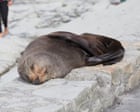
Australia just crossed a dark line in its ongoing wildlife health crisis. A long-nosed fur seal found dead on a stretch of coastline in South Australia has been officially confirmed as the country's first mainland mammal fatality from the H5 avian influenza strain. For months, officials watched the virus sweep through migratory birds and local seabird populations after landing on Australian shores. Many hoped the island continent might somehow dodge the devastating cross-species spillover seen elsewhere in the world. That hope just washed up on the Limestone Coast at Beachport.
The Reality of Spillover on the Coastline
The seal was discovered by a member of the public without any obvious physical injuries. Subsequent laboratory tests confirmed the worst. Federal and state authorities have tried to temper panic by noting that infections in marine mammals are technically "not unexpected" given high viral loads in coastal bird populations. But calling an event predictable doesn't make it any less destructive. For a closer look into this area, we suggest: this related article.
We've watched this exact script play out overseas. When H5 strains hit seal colonies in South America and parts of the sub-Antarctic, the results weren't isolated incidents. They turned into catastrophic mass mortality events, wiping out thousands of marine mammals and pups in weeks.
- The Vector: The seal almost certainly contracted the pathogen directly from infected wild seabirds sharing the same rocky outcrops.
- The Scale: Over 290 positive H5 bird flu events have now been recorded across Australia, heavily concentrated in regions like South Australia.
- The Vulnerability: Native species possess zero evolutionary defense against this specific high-pathogenicity strain.
Why This Changes the Game for Local Wildlife
Up until now, the conversation around Australia's bird flu outbreak focused primarily on avian populations—mass die-offs of terns, gulls, and little penguins. Crossing the barrier into a mammalian host shifts the threat level entirely. Conservation groups and ecologists are bracing for a worst-case scenario where the virus adapts to transmit efficiently between mammals. For further details on this topic, comprehensive coverage can be read at Psychology Today.
Once a pathogen starts moving sideways from mammal to mammal, population-level devastation follows rapidly. Long-nosed fur seals inhabit coastal waters by the hundreds of thousands. They cluster densely during breeding and resting phases, creating a worst-case epidemiological environment for rapid transmission.
What Comes Next for Biosecurity and Monitoring
Agricultural authorities insist that the nation's commercial poultry industry remains untouched. Biosecurity checkpoints and strict containment protocols are holding strong for farms. Yet, managing a virus actively circulating in the wild environment is fundamentally different from managing a contained agricultural facility. You can't quarantine the open ocean.
Field veterinarians and researchers are now scrambling to track carcasses across remote stretches of shoreline before scavenging wildlife can spread the contagion further. If you spot a dead or distressed marine mammal or seabird on the beach, keep your distance, keep pets away, and report it immediately to local environmental authorities. The baseline has shifted, and ignoring the early warning signs of wildlife disease is a luxury we no longer have.