President Volodymyr Zelensky just confirmed something that sounds like it was ripped straight out of a low-budget sci-fi flick. But it's real. Russian soldiers actually surrendered to a pack of unmanned robots during a recent Ukrainian assault. This isn't just another incremental update in a long war. It's a massive shift in how humans interact with the machinery of death on the battlefield.
We’ve seen drones drop grenades. We’ve seen them scout trenches. Now, we’re seeing them take prisoners.
The incident happened during a push by Ukrainian forces where ground-based robotic units led the charge. According to Zelensky, these machines weren't just clearing mines or hauling gear. They were the primary point of contact for Russian troops who decided they’d had enough. Instead of looking into the eyes of an enemy soldier, they looked into a camera lens mounted on a motorized chassis. They threw up their hands to a machine.
Why the Surrender to Machines Actually Happened
Don't think for a second that this was about the robots being "scary" in a Terminator sense. It’s about the sheer efficiency of surveillance. When a drone or a ground robot is hovering over your position, you know you’re being watched in high definition. You know that if you move, a shell is coming your way in seconds.
War is terrifying. Being hunted by something that doesn't feel fear, doesn't get tired, and can't be bargained with makes the decision to give up a lot easier. These Russian soldiers likely realized that the robot wasn't just a machine; it was a tether to a Ukrainian operator sitting miles away with a finger on a trigger. Surrendering to the robot was the only way to ensure the operator didn't hit "fire."
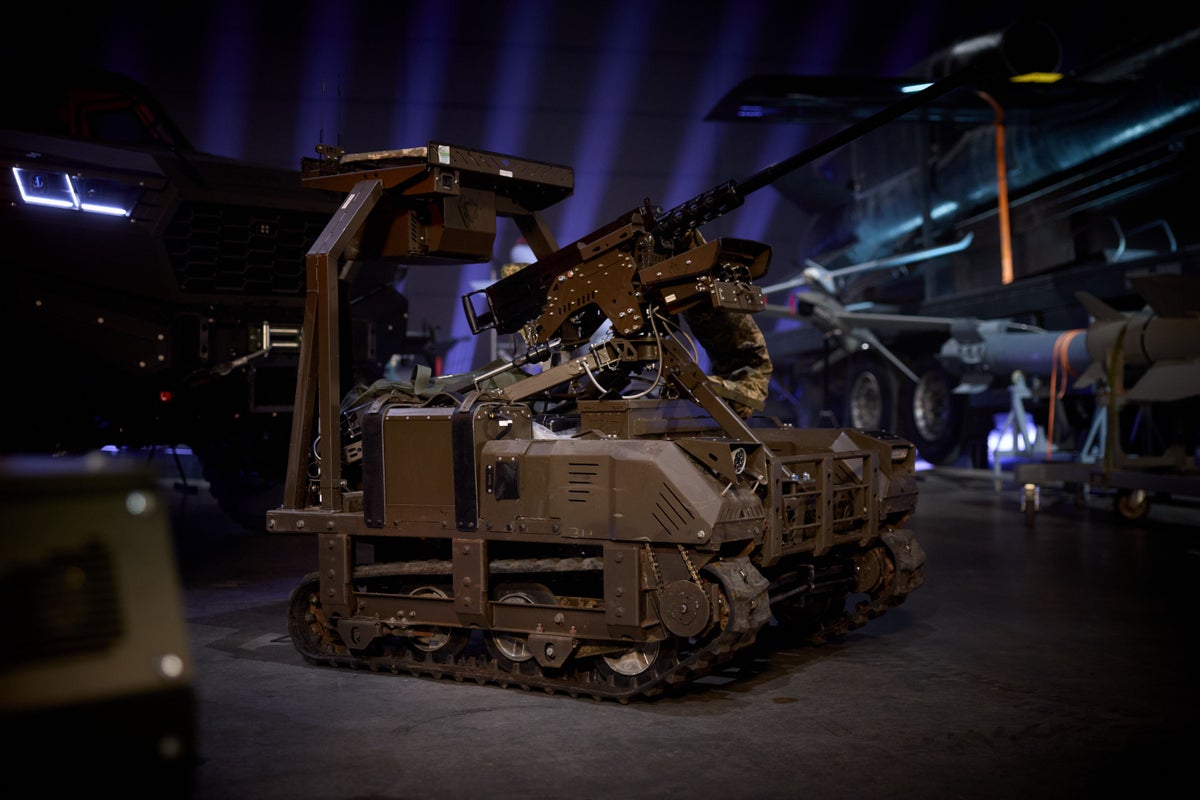
The Ukrainian military has been aggressive about integrating these Unmanned Ground Vehicles (UGVs). They’re using them because they don't want to risk their own people in high-risk trench clearing. If a robot gets blown up, you lose some steel and chips. If a soldier gets hit, it’s a tragedy. It’s simple math.
The Logistics of a Robotic Arrest
How do you actually surrender to a piece of plastic and metal? It’s a messy process. Usually, the robot is equipped with speakers or just high-res cameras. The operator can see the soldiers through the lens. Once the Russian troops showed they were unarmed—hands up, weapons dropped—the robot essentially "escorted" them.
Imagine walking through a gray, muddy field with a humming machine buzzing behind you. It’s weird. It’s dehumanizing in a way that’s hard to wrap your head around. But it works. The Ukrainian "I Want to Live" program, which helps Russian soldiers defect, has probably never seen a case like this before. It shows that the technical barrier to surrendering is dropping. You don't even have to find a human being to save your life anymore.
This Is Not Just Marketing For Zelensky
Critics might say this is just a PR win for Kyiv. Sure, Zelensky knows how to tell a story. He’s a master at it. But the tactical reality on the ground backs him up. Ukraine is currently the world’s biggest laboratory for autonomous warfare. They’re building thousands of these things in basements and small factories across the country.
The robots involved in these surrenders are often small, rugged platforms. Some carry machine guns. Others carry stretchers. In this specific case, they were the tip of the spear. By sending the robots in first, Ukraine forced the Russian defenders into a choice: fight a machine you can't kill easily, or give up to the guy watching the screen. They chose the screen.
The End of Traditional Infantry Charges
The era of the "human wave" is dying. Or at least, it’s becoming much more expensive. If you’re a commander and you know the enemy has robots that can identify surrendering troops and lead them back to base, your entire defensive strategy has to change. You can't just hide in a hole. Thermal optics on these robots see right through camouflage.
We’re seeing a lopsided evolution. Russia has drones, too, but Ukraine’s integration of ground robots with aerial support is leagues ahead. This surrender is a proof of concept. It proves that you can seize territory and capture enemy personnel without putting a single Ukrainian boot in the danger zone for the initial contact.
What This Means For The Next Six Months
Expect to see way more of this. As the weather shifts and the ground hardens or muddies, these tracked robots will become even more common. They don't care about the cold. They don't need soup or mail from home.
If you’re tracking this conflict, watch the "I Want to Live" statistics. If more Russians start surrendering to machines, the psychological break in their ranks will accelerate. It’s one thing to lose a fireback with a person. It’s another thing to be outplayed by a remote-controlled car with a camera.
Keep an eye on the production numbers of Ukrainian UGVs like the "Ratel S." These aren't fancy, expensive toys from a US defense contractor. They’re gritty, functional tools built for one purpose. They’re winning the psychological war as much as the physical one.
The next step is simple. Watch the footage. When the Ukrainian Ministry of Defense releases the drone feeds of these robotic captures, pay attention to the body language of the soldiers surrendering. They look exhausted. They look done. The machines are just giving them an out that doesn't involve a bullet.
Stop thinking about this as the future. The future already showed up, and it’s dragging prisoners across the Donbas right now.